Join the High Fivers Club!
|
"What's the High Fivers Club", you ask? It started with a simple idea: There are nearly 1.2 million registered Democrats in Colorado -- what if every single one of them gave just $5 a month to the Colorado Democratic Party (CDP)?
Answer: The CDP would be the best-funded state party in the country -- with zero dollars from corporate PACs and plenty for flipping red seats to blue!
If you haven't given to the CDP yet, here's a few simple reasons why we're asking you today:
- The CDP is the central base that supports volunteer recruitment, training candidates, and helping county parties win elections. While the Democratic National Committee provides some limited funds, the reality is it is up to us to raise our own money so we can support Democratic candidates running for office in Colorado.
- We knock on doors and meet with voters to talk about voting Democratic even before we know who are nominees are! As part of the High Fivers Club, you can help us get supplies for volunteers so we can knock on 50,000 more doors before we know our nominee!
- Once we have our nominee, we'll use what we've learned about voters to help them jump-start their Get Out the Voter efforts and stay toe-to-toe with Donald Trump and the Republicans.
Will you join the High Fivers Club? Click the logo below to join!
|
Two Articles of Impeachment
|
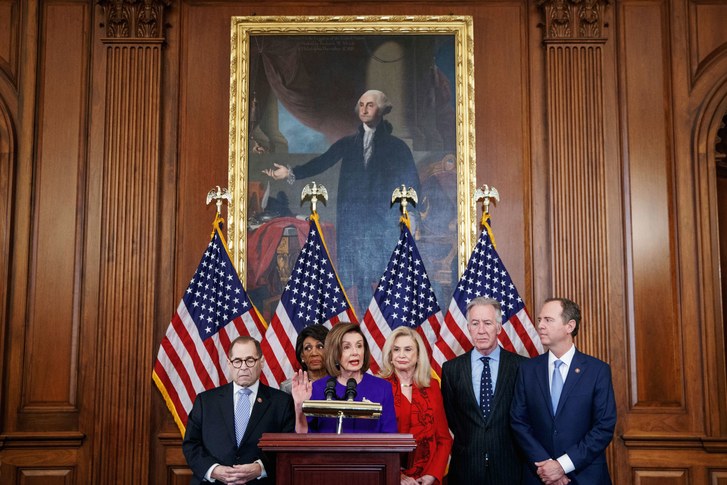
On Tuesday, Speaker of House Nancy Pelosi and House Democrats announced they will introduce two articles of impeachment Tuesday morning, making clear they intend to charge President Donald Trump with abuse of power and obstruction of Congress.
Both articles are based on the Ukraine scandal:
Article I, “Abuse of Power,” focuses on the underlying facts of the Ukraine scandal. It asserts that Trump:
- “Corruptly solicited the Government of Ukraine to publicly announce investigations” into his political rival Joe Biden, and into “a discredited theory” that Ukraine interfered with the 2016 election
- Attempted to condition two “official acts” on this announcement — a White House meeting with Ukraine’s president, and the release of $391 million of blocked military aid for Ukraine
Article II, “Obstruction of Congress,” states that President Trump “has directed the unprecedented, categorical, and indiscriminate defiance of subpoenas issued by the House of Representatives pursuant to its ‘sole Power of Impeachment.’” Specifically, Trump:
- Directed the White House to defy a subpoena for documents
- Directed other executive branch agencies, such as the State Department and Defense Department, to defy subpoenas
- Directed current and former executive branch officials to refuse subpoenas for their testimony.
You can read the full articles of impeachment by clicking here.
|
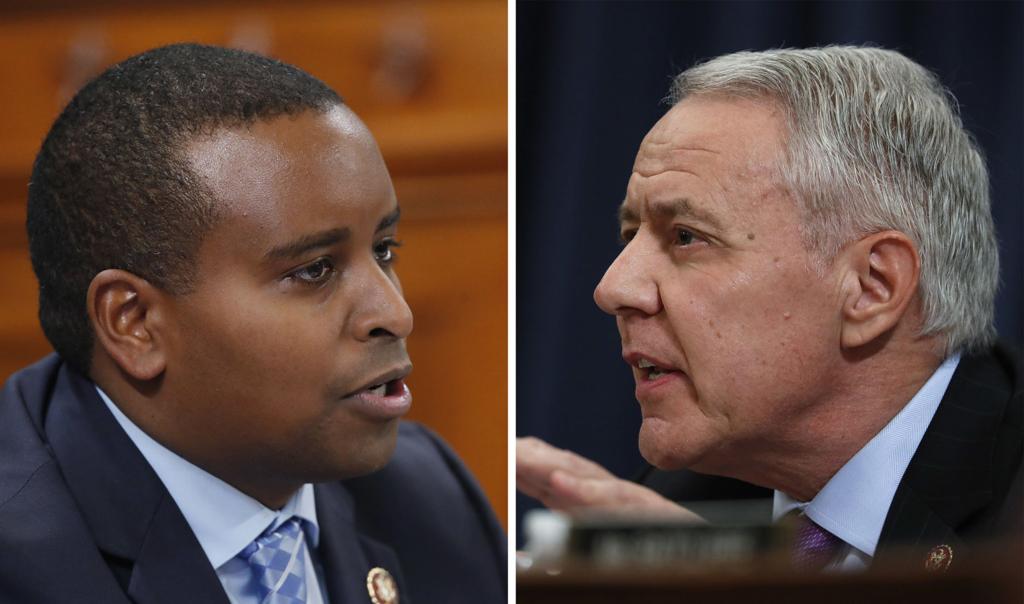
Neguse Shines in Judiciary Impeachment Hearings, While Buck Pushes Debunked Conspiracy Theories
From the Denver Post:
“Isn’t it true that President Trump had a legitimate reason to request help from the Ukraine about the 2016 election?” Buck, a Windsor Republican, asked a House Judiciary Committee lawyer, who was testifying during the impeachment hearing. “And I’m not suggesting for a minute that Russia didn’t interfere. Of course they interfered! But the Ukraine officials tried to influence the election.”
It’s a view asserted by an increasing number of Republicans in recent days despite the intelligence community and even Trump administration officials saying there was no evidence to support it. Democrats reiterated that on several occasions Monday.
Democrats allege Trump gave credence to the idea that Ukraine was to blame when he asked Zelensky “to find out what happened with this whole situation” in a July 25 call. That request, along with a request to “look into” the Bidens, is at the heart of Congress’s impeachment process.
“It begs the question: Why would President Trump perpetuate this conspiracy theory, already disproven by the entirety of the intelligence community, that actually helps our adversary, a country that is attacking our elections in real time?” Neguse asked Monday, referring to Russia.
|
Trump's Conspiracy Theory about the FBI is Rebuffed
From NPR
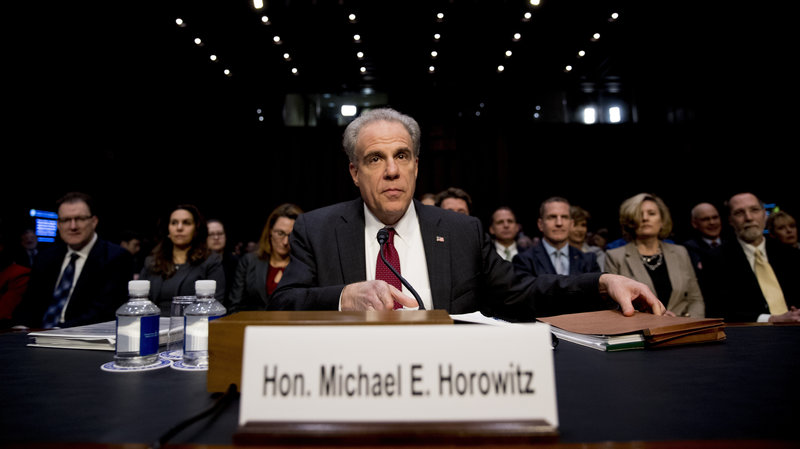
The Justice Department's inspector general, Michael Horowitz, testified before the Senate Judiciary Committee on Wednesday about his report on the origins of the FBI's probe into the 2016 Trump campaign's possible ties with Russia.
The 400-plus page report, released Monday, found that the FBI had ample evidence to open its investigation — despite allegations of political bias.
The top Democrat on the panel, Sen. Dianne Feinstein D-Calif., said in her opening statement that the IG's report rebutted President Trump's claims that the investigation into his campaign was politically motivated.
"There is no deep state," she said. "Simply put, the FBI investigation was motivated by fact, not bias."
In response to Democrats on the panel, Horowitz said his office "certainly didn't see any evidence" in FBI or Justice Department files that former President Barack Obama asked the U.S. government to investigate Donald Trump's campaign, as Trump has charged.
|
So what's important here?
- Trump pressured Ukraine to help his reelection campaign by announcing investigations that would help him politically, including into a potential 2020 opponent.
- On the July 25 call with Zelensky, Trump asked Ukraine to “do us a favor” and investigate a conspiracy theory about the 2016 election and his political opponent.
- Ambassador Sondland, who “followed the president’s orders,” told Ukraine the military aid they had been promised would not be released, and they would not get the White House meeting they sought, until they announced the investigations Trump wanted.
- Former Ambassador Bill Taylor told investigators that Trump made the release of military aid contingent upon Ukraine announcing those investigations, and called that demand “counterproductive” and “crazy.”
- Republicans have pushed debunked conspiracy theories to muddy the waters and distract. Congressman/Colorado Republican Party Chair Ken Buck has been one of several Republicans pushing the debunked conspiracy theory that Ukraine interfered in the 2016 election.
- This is a debunked conspiracy theory pushed by Putin and Russia to distract from Russia’s very real interference in the 2016 election on behalf of Trump.
- The Intelligence Community has stated unequivocally that Russia interfered in our democracy, and continues to do so. Even Republican-led Senate and House Intelligence committees found that was true.
- There is no evidence that Ukraine interfered in our election — the Republican Senate Intelligence Committee investigated that claim and found no basis for it.
- Politicians commenting on a foreign country’s election (as Trump has done himself) is not comparable to Russia’s top-down interference in our elections.
|
VOTE: 2020 Obama Dinner Awardees!
|
Choose who will be honored at the 2020 Obama Dinner on Saturday, April 18 by clicking here and casting your vote! These are amazing Democrats from all across Colorado -- all nominated by folks like yourself during the open nomination period!
|
Countdown to 2020: 9 of our Favorite Moments from 2019 Legislative Session
|
Democrats in the Colorado General Assembly had a busy and productive legislative session this year, passing numerous pieces of legislation held up by Republicans in the State Senate when they had the majority. Bills that addressed education, healthcare affordability, climate change, criminal justice reform, LGBTQ equality, and many other important topics were passed.
As we count down the end of 2019 to 2020, we want to reflect on some of our favorite moments this year, so here are 9 of our favorite moments that happened in the Colorado legislative session in 2019!
|
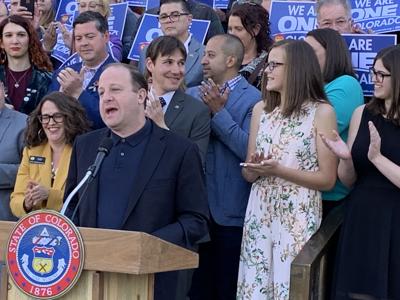
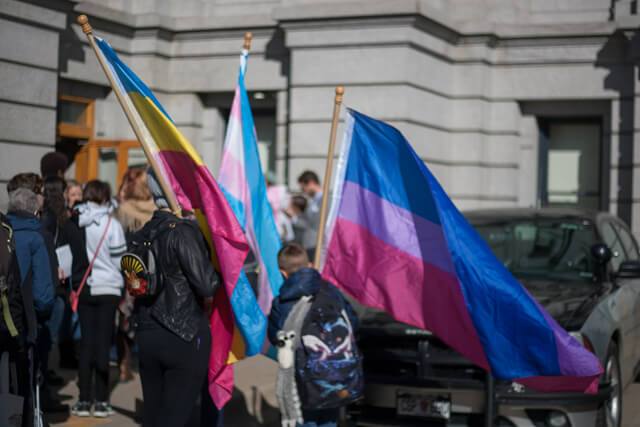
1) Gov. Polis Signs 2 Pro-LGBTQ Bills into Law
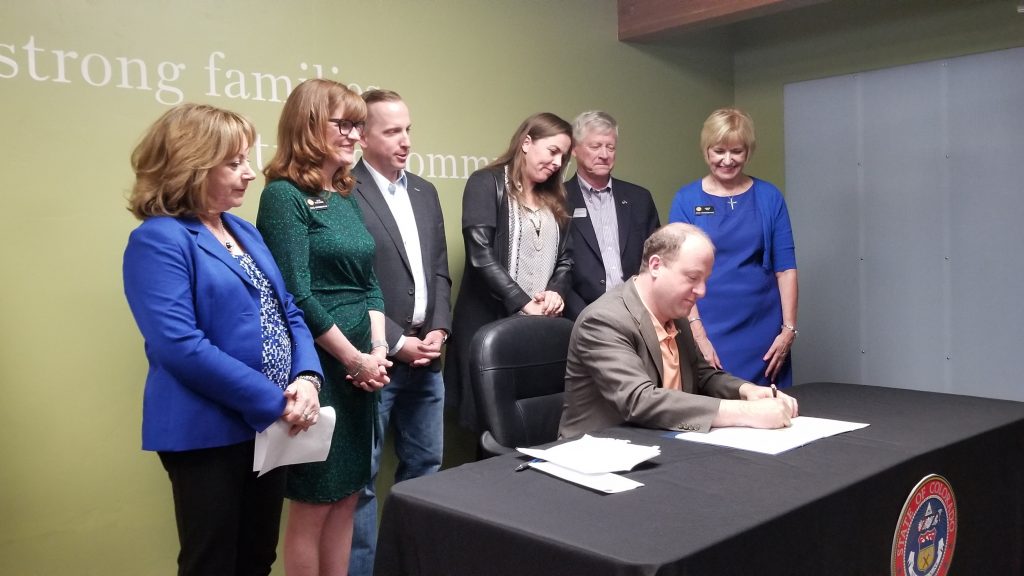
In a year of historic firsts for the LGBTQ community in Colorado politics, Gov. Jared Polis signed into law a pair of bills years in the making that seek to improve the lives of gay and transgender people in the state. Polis signed House Bill 1039 and House Bill 1129 in a ceremony outside of the Colorado Capitol with dozens of supporters flanking him. One of the measures makes it easier for transgender people to change their birth certificates without surgery, a doctor’s note or a court order. The other bans so-called “gay conversion therapy” for minors.
|
2) Democrats Shine a Light on Dark Money
Led by Secretary of State Jena Griswold and Democratic legislative leaders, three new Campaign Finance laws went into effect in Colorado, The Clean Campaign Act (HB19-1318), Contribution limits for candidates for county office (SB19-1007) and Expanded Disclosure of Electioneering Communications (SB19-068). These laws will bolster Coloradans’ confidence in our democracy by shining light on secret political spending, deterring corruption, and barring foreign financial influence.
|
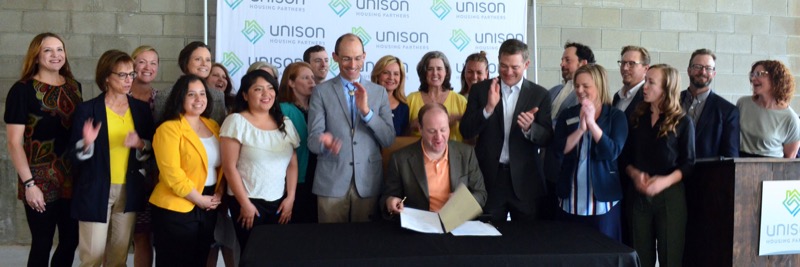
3) Affordable Housing Gets Historic Investment
Amid a sea of housing-related bills this session, there are two that would directly invest public dollars to build units, subsidize rent or provide assistance to homebuyers, and a third to expand an existing tax credit. House Bill 1245, led by State Rep. Mike Weissman, is a measure that would generate up to $50 million a year for the state’s housing development grant fund by revamping a tax break claimed by retailers. House Bill 1228, would double the state’s affordable housing tax credit, costing $150 million over the next decade, according to a fiscal analysis. In 2018, developers used this credit to help finance 533 new affordable rental units and preserve more than 2,500 units.
|
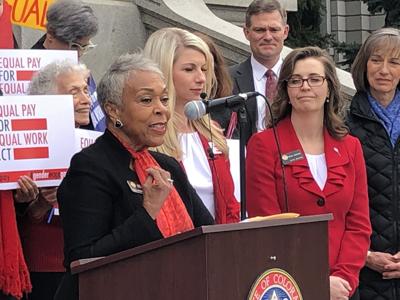
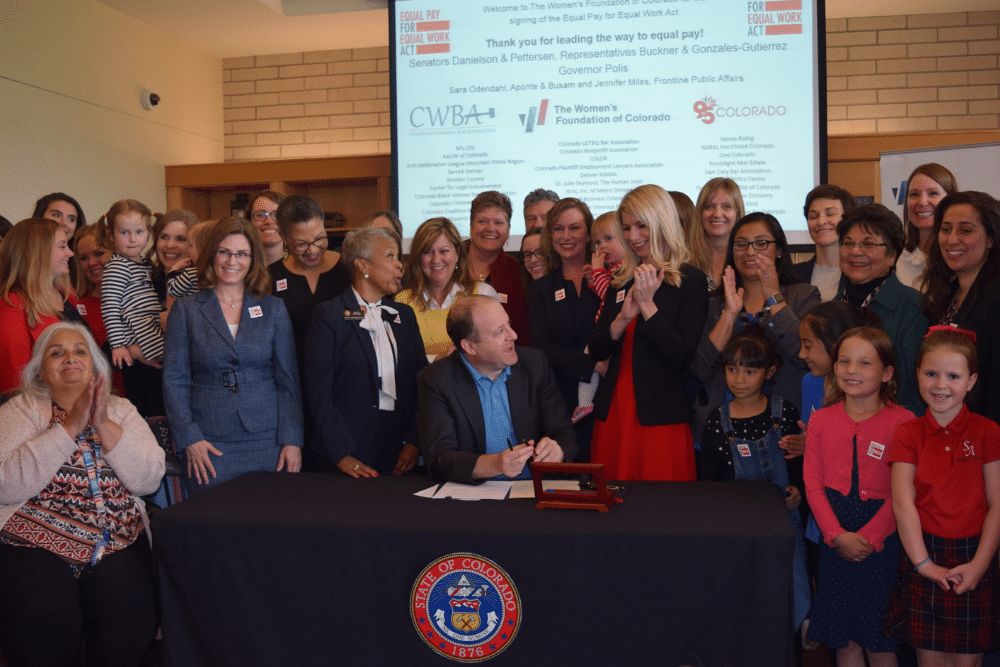
4) Equal Pay for Equal Work
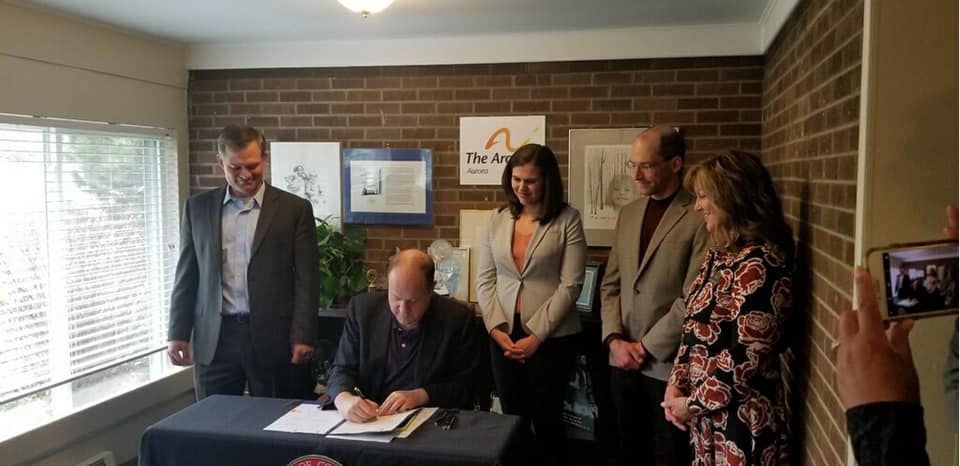
Governor Polis signed into law something that progressive lawmakers have attempted for nearly 40 years to pass: equal pay for equal work. Most labor statistics indicate women get paid around 80 cents for every dollar a man makes in Colorado. For minority women, the statistics are even worse. Led by State Senators Brittany Pettersen and Jessie Danielson, and State Reps. Janet Buckner and Serena Gonzales-Gutierrez, the new law allows employees who believe they are being paid less due to their gender to file a lawsuit within two years. Employers found to have paid someone less due to their gender must pay the amount the employee would have made the previous three years if there had not been discrimination.
|
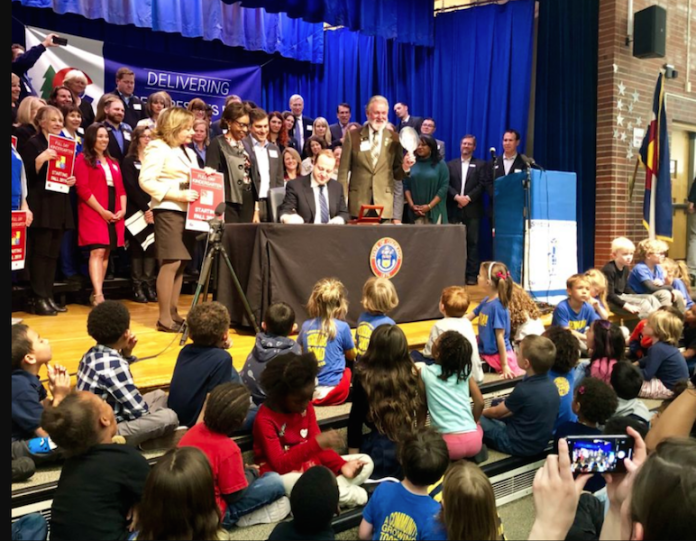
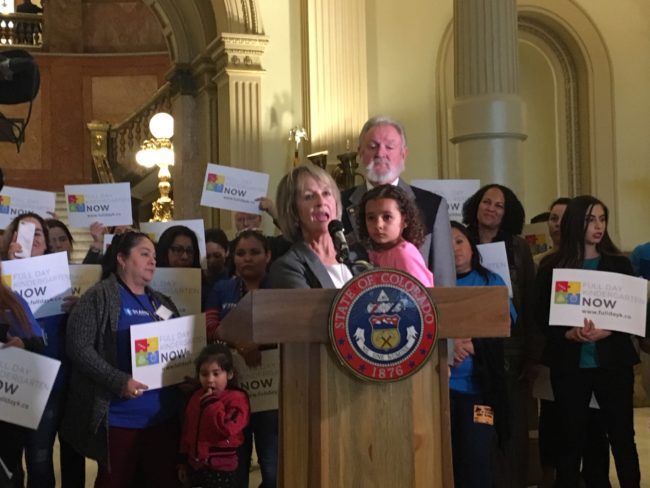
5) Colorado gets Full-Day Kindergarten
For years, Colorado has lagged behind other states in making kindergarten accessible. Colorado currently pays districts a little more than half the standard per-pupil rate for kindergarten students. While most kindergarten students already attend full-day programs, in many districts parents pay tuition or districts pull from other needs to cover the cost. Tuition can be more than $400 a month in some districts. Roughly 13,000 students — 20%— attend half-day programs. Legislation to make kindergarten free passed this session, thanks to a strong economy and determined lobbying from Gov. Jared Polis and education advocates. In one sense, it’s pretty simple. It’s kindergarten. For a full school day. At no cost to parents.
|
6) Combating the Climate Crisis
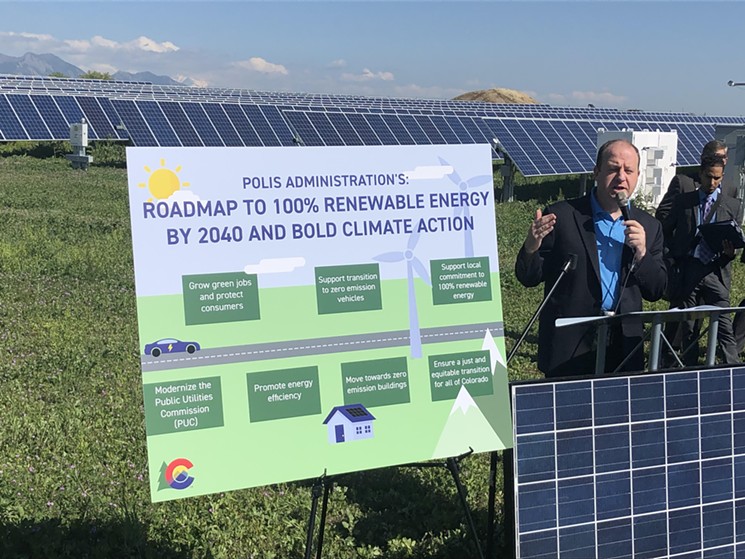
Legislation passed in the session that ended in early May is incorporated throughout the governor’s new “Roadmap to 100% Renewable Energy by 2040 and Bold Climate Action.” Among the many provisions of a bill reauthorizing the Colorado Public Utilities Commission is a requirement that utilities submit plans to reduce greenhouse-gas emissions. The bill also directs the PUC to look at ways to encourage utilities to be more energy efficient and cut emissions. “This is a bill that is reauthorizing and reforming and, frankly, modernizing our Public Utilities Commission,” said Senate Majority Leader Steve Fenberg, D-Boulder, one of the bill’s sponsors. “This is about making sure that as the energy system, as the utility systems change and evolve at such a rapid pace, that our regulators are keeping up with it.”
|
7) Addressing the Cost of Healthcare
One of the biggest issues facing hardworking Colorado families is the rising cost of healthcare, and Democrats made that issue a primary focus in the 2019 session. Democratic lawmakers voted to ask for a federal waiver to import cheaper prescription drugs from Canada, and to make sure the savings were passed on to consumers in out-of-pocket costs and in lower premiums. Led by State Rep. Dylan Roberts and State Senator Kerry Donovan, Colorado became the first state to cap out-of-pocket insulin costs. Governor Polis and the legislature authorized state Attorney General Phil Weiser to investigate what Polis called "price fixing" on insulin by drugmakers. Polis also talked about the state's new hospital pricing transparency law and the public insurance option created by the Democrats in the General Assembly this year.
|
8) Reforming our Criminal Justice System
Democratic lawmakers passed bills that reduced personal drug possession to misdemeanors. Those already convicted will face less strict penalties for some parole violations and could gain the right to vote before they finish parole. And once parole is completed, people convicted of certain crimes now have a more streamlined way to seal their records. Legislators like State Rep. Leslie Herod also passed "Ban the Box" bills, which would prohibit most employers across Colorado from including questions about criminal history on initial job applications. The bill makes exceptions for jobs like teachers and bankers because state law says certain convictions are disqualifying. Another bipartisan bill -- led by State Senator Robert Rodriguez, applies this policy to college applications.
|
9) The Passing of the Gavels
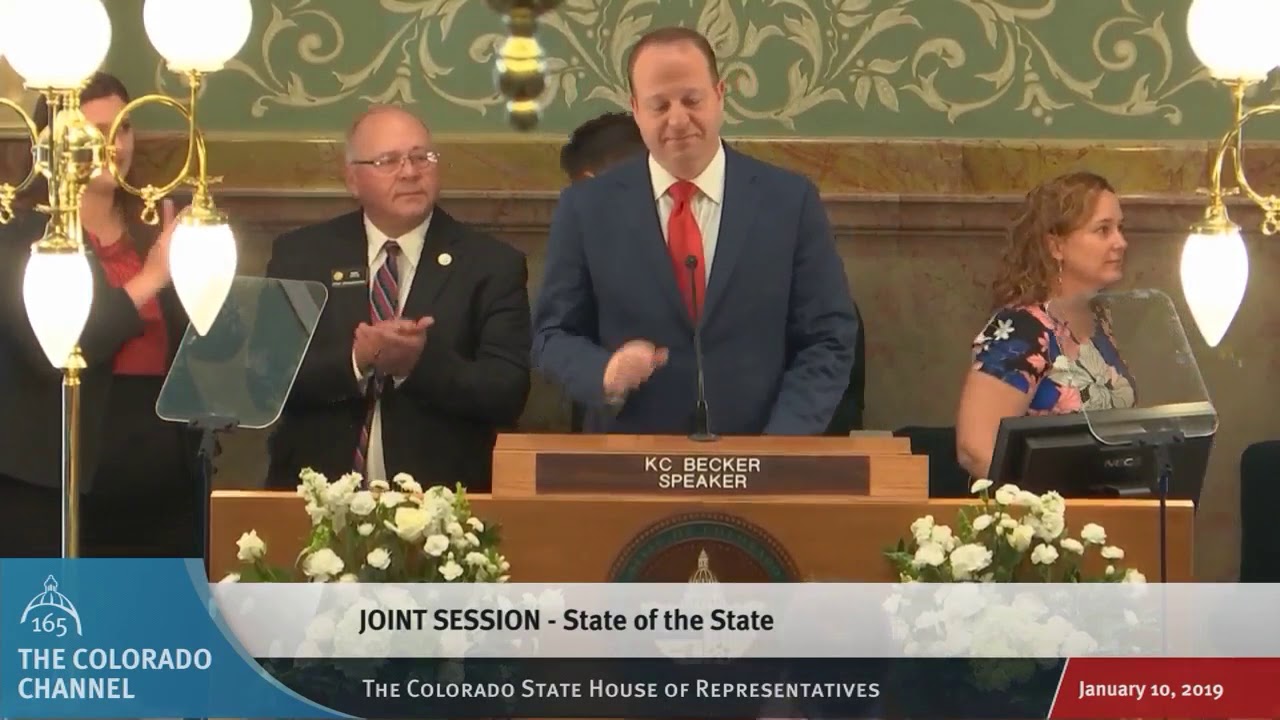
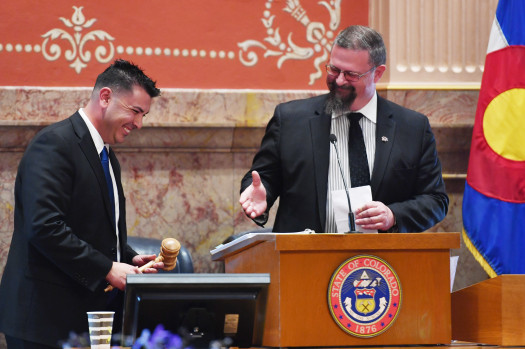
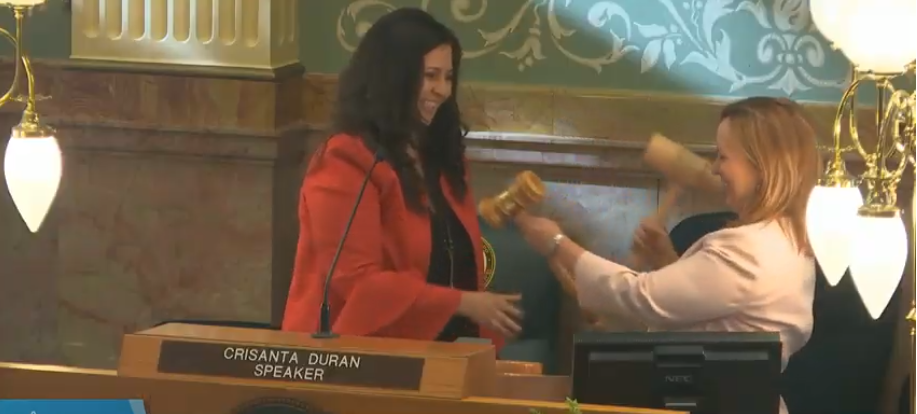
Elections and campaigns can be frantic and stressful, but all the work we put in together in 2018 came into a clear picture when we watched State Senator Leroy Garcia and State Representative KC Becker each receive the gavels of Senate President and House Speaker respectively from their predecessors. With Democrats holding a trifecta in the General Assembly for the first time in years, it was clear Colorado had an opportunity to pass good legislation the people wanted. And based on what we reviewed above, we'd say they delivered!
|
Next DNC Debate: Thursday, 12/19
|
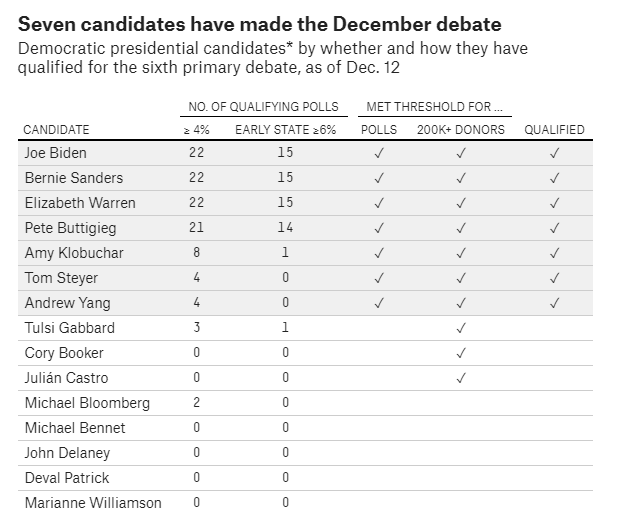
Currently, 7 candidates have qualified for the next DNC debate between Democratic Presidential Candidates. Be sure to tune in next Thursday, December 19, 2019 at 6:00 PM MST. It will be broadcast on PBS CNN, CNN International, CNN en Español, and will stream on CNN.com's homepage, PBS.com's home page, and Politico.com's homepage.
|
Democratic Candidates for President
|
(read from left, listed by alphabetical order) Senator Michael Bennet (CO), former Vice President Joe Biden, former Mayor Michael Bloomberg (New York City, NY), Senator Cory Booker (NJ), Mayor Pete Buttigieg (South Bend, IN), former HUD Secretary Julián Castro, former Congressman John Delaney (MD), Congresswoman Tulsi Gabbard (HI), Senator Amy Klobuchar (MN), former Governor Deval Patrick (MA), Senator Bernie Sanders (VT), Tom Steyer, Senator Elizabeth Warren (MA), Marianne Williamson, Andrew Yang.
|
Rural Spotlight from Shelia: Montezuma County
|
In the far southwest corner of Colorado is Montezuma County. It's known as the Four Corners region, where the boarders of four states meet, Colorado, Utah, New Mexico and Arizona. Montezuma County covers 2,040 square miles and is made up of 1/3 Tribal Lands, 1/3 Federally managed lands and 1/3 lands privately, state or county owned. Elevations in Montezuma county range from 6,000 feet to 14,000 feet. To the north of Montezuma County is Dolores County, to the northeast is San Juan County, to the east is La Plata County and to the west is the state of Utah. Cortez is the county seat of Montezuma County.
Montezuma County is the home of Mesa Verde National Park and Canyons of the Ancients National Monument. The Ute Mountain Ute Reservation and it’s capital Towaoc, which means “just fine”, are located in the southern part of Montezuma County. Approximately 2,200 years ago the Paleo-Indians, known also as the “Basketmakers”, lived in cliff dwelling they found along the massive mesa. The Ancestral Puebloans converted their earlier “Pithouse” design into the famous sandstone Kivas, large one room ceremonial structures. By the 1300’s the Ute peoples were present in the Four Corners area. By the 1500’s the Weenuche (meaning “long time ago people”), a band of the Ute people, were the dominant group. Other groups of Ute peoples, Muache and Capote, as well as Navajo and Southern Paiute frequented the Four Corners area. In the early 17th century the northern frontier of New Spain pressed against the lands of the Weenuche and other Utes in southwestern Colorado. Montezuma County area belonged to Mexico when it won independence from Spain in 1821, but was ceded to the United States after the Mexican-American War (1846-48)
|
In 1889 Montezuma County was created by the Colorado Legislature. Named for Moctezuma II, a revered Mexican chief of the Aztec Indians. Miners soon moved to the area along with famers and ranchers. Today agriculture, ranching and tourism top the economic growth. With a rich history of Native Americans, Hispano Ranchers and farmers from New Mexico, Montezuma County offers miles of land to hike, explore and enjoy. The Delores River provides fishing and rafting galore.
|
There are approximately 3,965 registered Democrats (up 22%), 8,004 registered Republicans (up 9%) and 6,962 Unaffiliated (up 23%) voters in Montezuma County. In 2018, 60.01% showed up to have their ballots counted and in 2019, 44.34% showed up to vote. Mary Dodd heads the Montezuma County Democratic Party. It might be pretty red, but the Montezuma County Democrats keep working hard to elect Democrats to local, state and federal offices.
If you would like more information about the Montezuma County Democratic Party please check out their website, www.montezumadems.org or Facebook page Montezuma County Democrats.
|
Keep Colorado Wild
Shelia
Shelia Canfield Jones
Vice Chair, Rural Outreach
Colorado Democratic Party
|
Join us for the 2020 Womxn's March!
|
We need your help to get as many new voters registered as possible during the Womxn's March on January 18th 2020.
We are looking for 120 volunteers so please ask your friends to join us too.
If you can help register voters or table that day please email me at [email protected]
Note that everyone needs to take voter registration training, which can be done by webinar here:
https://attendee.gotowebinar.com/rt/1917936809926228493
|
Volunteer of the Week: Cindy L.
|
Meet Cindy, one of the Arapahoe County Democratic Party's officers and a rockstar volunteer who has a story to tell!
Why do you volunteer for Democratic causes?
I used to be a Republican, and then I became an Independent because I didn't like how the religious right took over the party. As I started seeing what the Republican Party was doing in their policies when it came to LGBTQ rights and abortion rights, and when I experienced homelessness, I became more disgusted with them. I'm on Social Security Disability (SSDI) for my bipolar disorder, and what the Trump Administration and the Republicans are doing to terminate the payments that hundreds of thousands of people depend on to stay on SSDI/SSI is frightening. (READ: Trump administration proposes Social Security rule changes that could cut off thousands of disabled recipients)
The reason I became a Democrat is because I saw that the only way we can make the change we need in this country is to get Democrats elected, and I got really involved in the Jason Crow campaign in 2018. Now I serve as the First Vice Chair of the Arapahoe County Democrats!
What would you say to someone who has thought of volunteering before, but hasn't taken that first step?
There's nothing to lose and everything to gain by volunteering! You'll meet nice people, and we need whatever help every person can give us to take back our country. It's critical, and any help that anyone can give is great. Even if you can only give an hour a month, that's better than nothing!
|
|
Sign up for "Work for the Wave" Webinars!
|
Our party wouldn't be as organized and successful as it is without the talented and dedicated volunteers we have at the local levels. Want to brush up on your skills so you can help make sure Colorado goes blue in 2020? Sign up for an upcoming webinar:
|
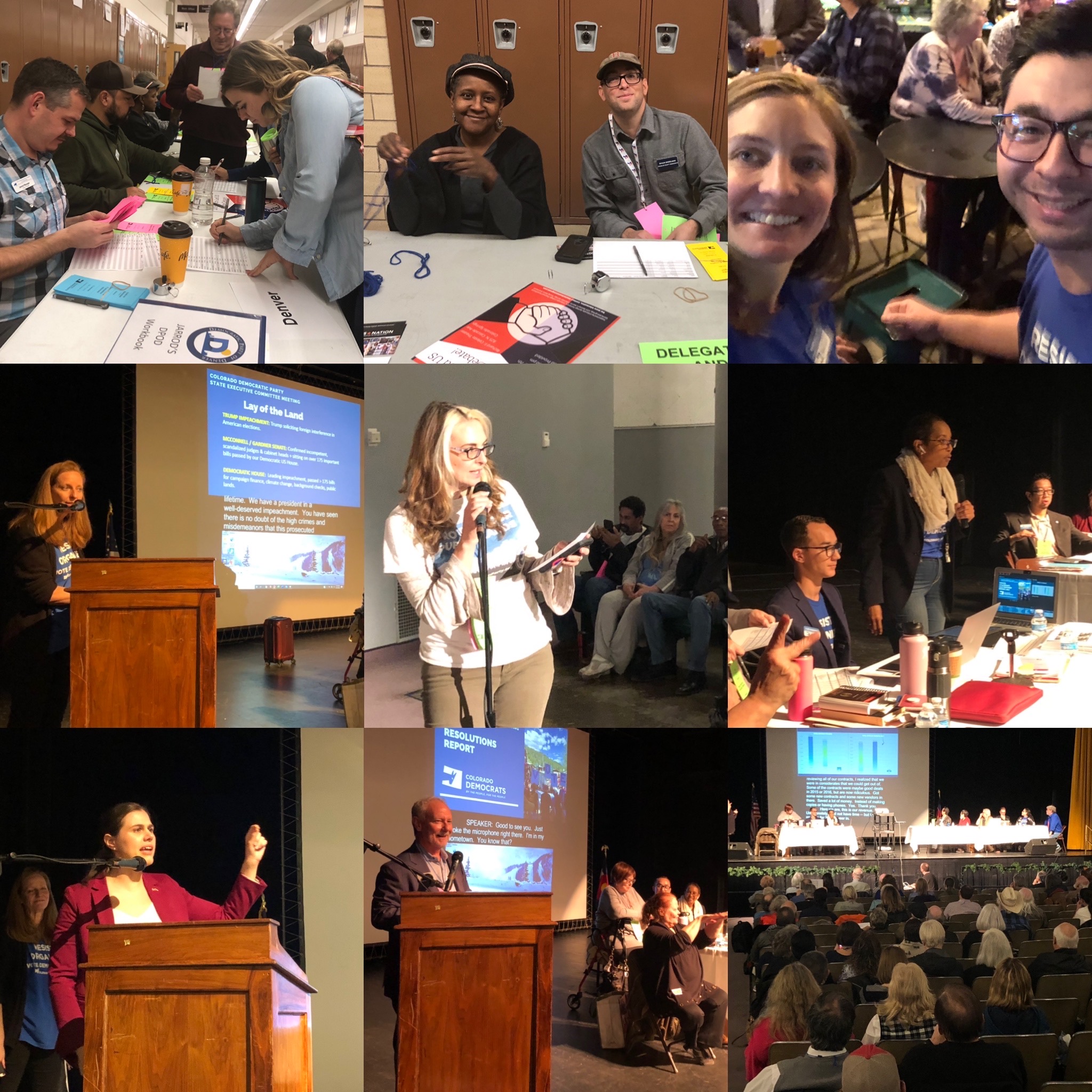
We were so pleased to hold the meetings of our State Executive and State Central Committees in Colorado Springs! Thanks to everyone who came out, and thank you to Secretary of State Jena Griswold and State Treasurer Dave Young for stopping by to speak and say hello!
|
If you know someone interested in receiving our weekly newsletter, they can sign up here!
|
Contributions or gifts to the Democratic Party of Colorado are not tax deductible
|
|
.png "Click Here to get your 2020 Obama Dinner tickets!")
.gif "High Five!")