Ready for a Classroom Exchange?
|
|
Here is how you find a class, engage in dialogue, and deepen constitutional knowledge |
|
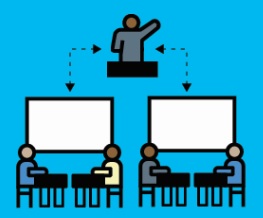
Register your class to discuss a relevant constitutional question with another classroom somewhere else in the United States. The National Constitution Center facilitates these civil dialogues by providing instructional materials, pairing classrooms, connecting them with an expert moderator, and setting up video conferencing sessions.
Exchanges provide a platform for uniting students of different backgrounds and perspectives, increasing students' constitutional knowledge while cultivating habits for civil dialogue.
|
|
Get Started with Classroom Materials
You will receive the necessary planning materials, including videos, lesson plans, and more, to prepare your students for the Exchange using the Center’s pioneering Interactive Constitution: Classroom Edition.
|
|
Create an account with the online matchmaking platform. You can then build profiles for each of your individual classes, and the tool will find perfect matches based on grade level, subject, and class times.
Once you submit your information, the platform will match you with teachers across the country and schedule your online dialogues. We will also send resources on how to use Zoom, the videoconferencing platform used for the Exchanges.
|
|
What to Expect during an Exchange |
|
Each exchange will be moderated by a constitutional expert, including volunteer federal or state judges or other legal professionals who have been trained on how to ensure nonpartisan neutrality and cultivate civil dialogue. The goals of the dialogues are to be student-centered and student-led, and to empower student voice through healthy, civil dialogue practice around constitutional issues. Each Exchange will include the following elements:
-
Welcome and Introduction: The trained moderator will welcome the students and present the essential constitutional question that will be discussed.
-
Welcome and Introduction: The moderator will welcome the students and present the essential constitutional question that will be discussed.
-
Guided Discussion of Constitutional Principles: The moderator will go over any key principles relevant to the day’s discussion, including legal scholarship and landmark cases, and then ask students formulate their own constitutionally-based responses to the essential question.
-
Debate and Dialogue: Students from each class will take turns presenting their arguments, listening to their peers, and then respectfully responding.
-
Practical and Relevant Discussions: The moderator will then introduce examples of the essential questions and how they play out in the real world. Students will then expand the dialogue to engage in the practice of constitutional discussions and understanding of the law.
-
Redirecting Rhetoric: Students may begin arguing in favor of a personal political or policy preference, or rely on passionate rhetoric instead of constitutional reason. The moderator will use these as opportunities to reinforce the importance of focusing on what the Constitution permits or prohibits, rather than what students prefer, and to teach students to make reasoned arguments.
|
|
For more information about Classroom Exchanges,
|
|
Join educators from around the country by signing up for a Classroom Exchange this year. Register by Constitution Day, September 17, and help us achieve our goal of registering classrooms from all 50 states! |
|
Interested in a Classroom Exchange for Constitution Day?
Contact us at [email protected] about participating in our special September 17 Exchanges.
|
|
|
|
|
|
|
|