What's going on with the ACA subsidies? |
|
The Affordable Care Act subsidies were a major sticking point in last fall’s government shutdown. But how do ACA subsidies work, exactly? It’s complicated — and the eligibility rules changed more than once in recent years. |
|
- The ACA provides income-based subsidies, including one called Advance Premium Tax Credits to eligible enrollees.
- Congress temporarily expanded eligibility requirements for the credits in 2021 to help keep healthcare affordable during the pandemic. These enhanced credits expired at the end of December 2025.
- Temporary expansions increased the share of enrollees receiving Advance Premium Tax Credits: In 2020, 84.1% of ACA enrollees received premium tax credits. By 2025, 92.0% did. Meanwhile, the number of people receiving subsidies also grew, up from 9.6 million to 22.4 million 2025.
|
|
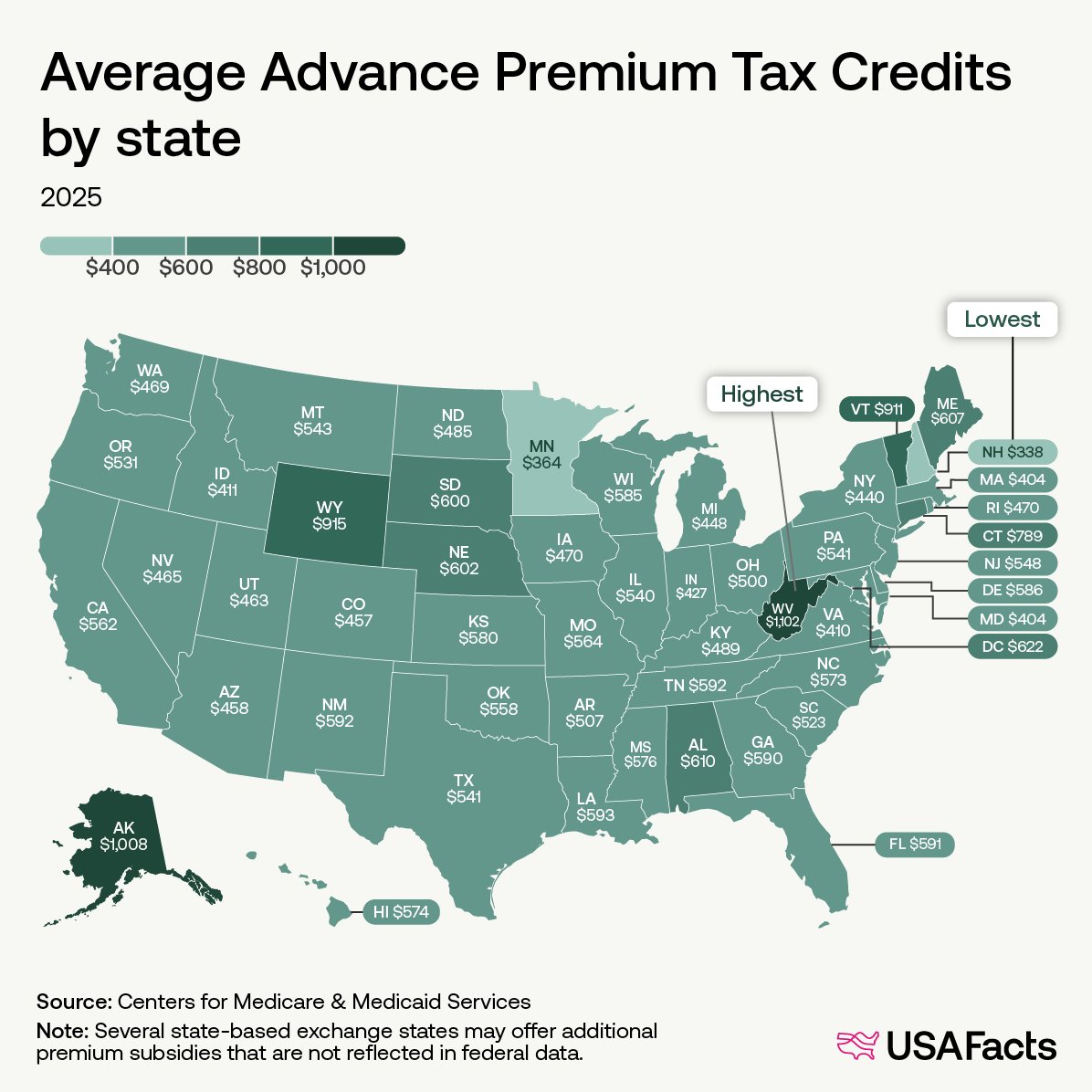
- Nationwide, eligible Advance Premium Tax Credit enrollees received an average of $550 per month toward their insurance premiums in 2025. Average payments ranged from $338 in New Hampshire to $1,102 in West Virginia.
|
|
Ask an Analyst: What's the best source for troop counts? |
|
Ask an Analyst is a new series where our analysts let you know how they make sense of the data. Ever read a USAFacts article and think, “How did they find this info?” In this series, you can follow our team as they scour government sources for data that answer some of readers’ pressing questions.
In this installment, Lucia searches for data on how many active duty the US has and where they’re stationed, from the Army to the Space Force. Find out why one spreadsheet is never enough! (Really, it’s cooler than it sounds.) |
|
How many homes are vacant in the US? |
|
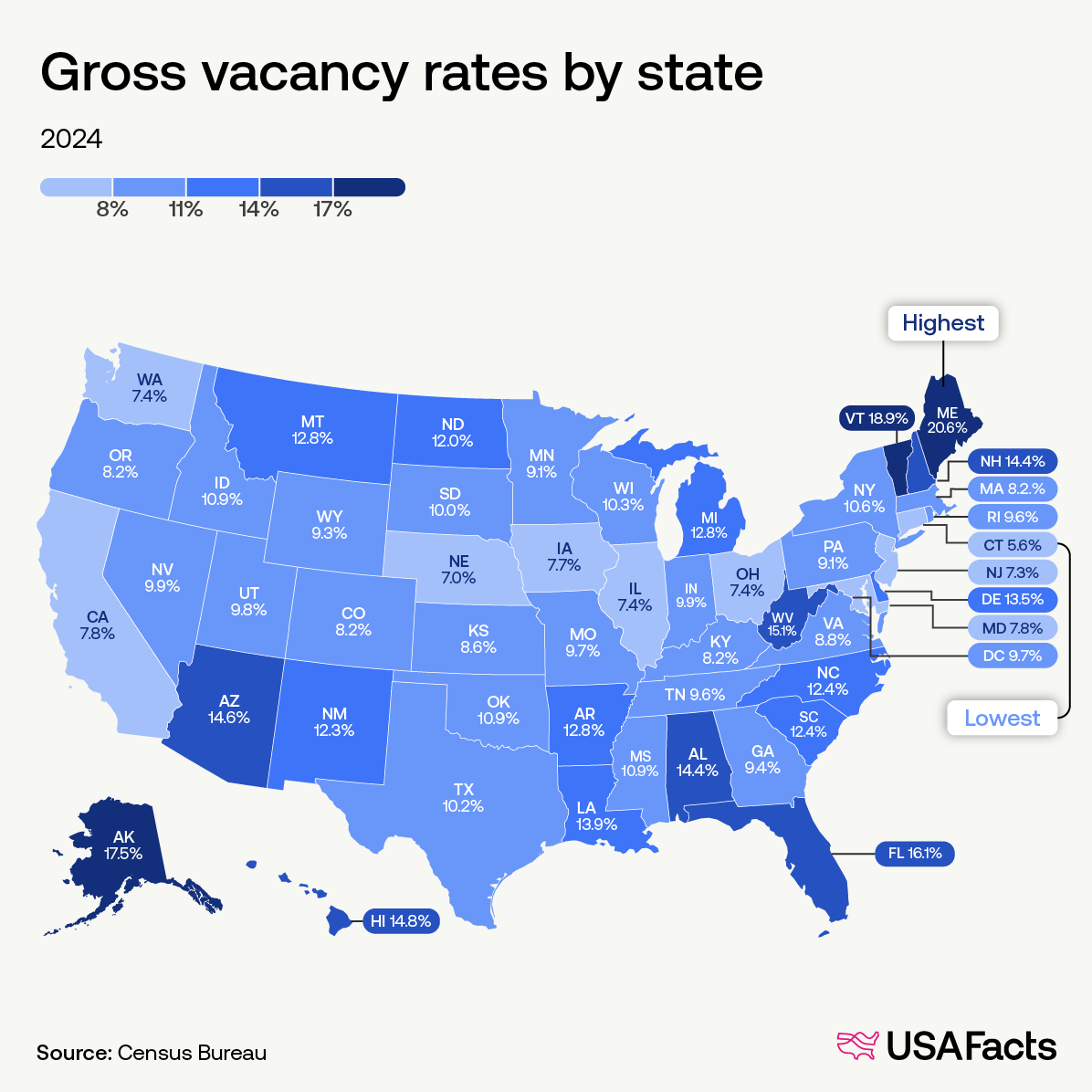
The three most important factors in real estate are location, location, location — and vacancy rates help show how that plays out across the housing market. In 2024, about 15.1 million homes were vacant. That’s approximately 10% of the US housing inventory. Where are these vacant homes, and how has vacancy changed over time?
- Vacant homes include homes for sale or rent, and vacation homes — basically, the majority of units not presently used as a permanent residence. Lower vacancy rates reflect a small real estate market inventory.
- The number of vacant homes peaked at nearly 19 million after the 2008 housing crisis, then fell by more than 20% between 2009 and 2024.
- In 2024, Maine, Vermont, and Alaska had the nation’s highest gross vacancy rates. Maine has had the highest rate in the nation (or tied for it) for 13 of the past 14 years.
|
|
- Florida had the biggest change since 2009 (-8.8 percentage points), followed by Arizona (-7.8) and Alaska (-7.4).
|
|
True or false? Make your pick. |
|
| Privately funded White House renovations typically cost more than $1 million.
| | | | | | | | |
|
The Trump administration finalized a policy that would remove job protections for up to 50,000 federal workers. Here’s the pre-new-policy data on the size of the federal workforce.
Did you place a bet on the Seahawks winning the Super Bowl yesterday? You helped contribute to the growing revenue states bring in from sports betting.
|
|
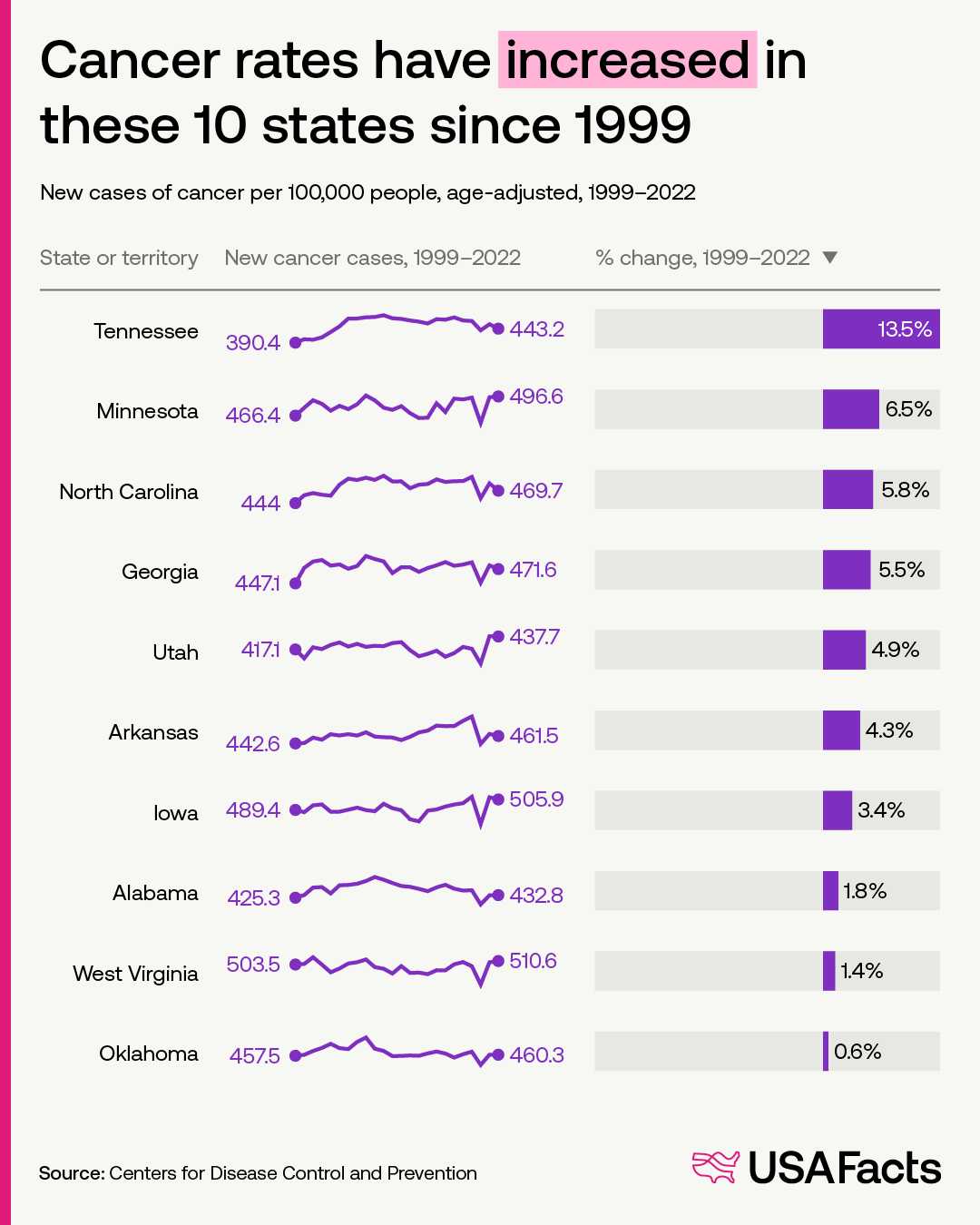
The national cancer incidence rate decreased by 8.1% from 1999 to 2022. However, rates rose in 10 states, particularly in Tennessee (+13.5%). Rates fell the most in Washington, DC (-26.4%). |
|
|
|
|