|
|
John— Abusers should never have access to guns. But right now, House Republicans are pushing to pass a dangerous, gun lobby-backed Concealed Carry Mandate that would override state gun laws—making it easier for people like abusive dating partners to carry a concealed gun in states that wouldn't otherwise let them. This bill would put survivors at risk and strip states of their ability to keep guns out of the hands of dangerous individuals. Survivors need your voice: Send a message to speak up and tell your lawmakers to vote NO on the federal Concealed Carry Mandate.
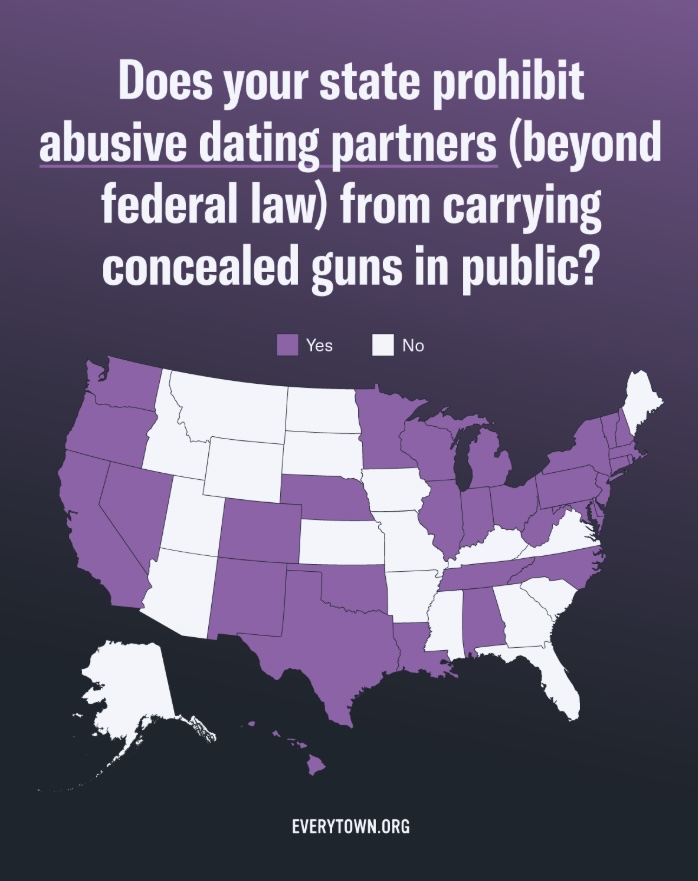
State-by-state protections are not hypothetical—they save lives. But Congress's mandate would erase them, even in places that have deliberately strengthened their laws to protect survivors. To understand what's at stake, consider this scenario: For the first few months of their relationship, Jane and John seemed like the perfect couple. But then, something changed. John started to raise his voice at Jane, and then he started to make threats against her. One night, Jane decided that she had had enough and ended their relationship. John became enraged. He grabbed her by the wrist, dragged her to his car, and shoved her in. Jane hit her head on the dashboard. John reached for his gun under the passenger seat. Somehow, Jane was able to get out and run for her life. To keep herself safe, Jane got a restraining order against John. In Florida, however, a restraining order isn't enough to prohibit an ex-boyfriend like John from carrying a concealed and loaded gun in public. Federal law doesn't stop ex-boyfriends like him either. Fearing for her safety, Jane moved to New York—a state that does stop abusive dating partners under restraining orders from possessing firearms at all. For the first time in months, Jane felt some sense of safety. But John couldn't let go. When he tracked down where she moved, he drove to New York with the same gun in his car. After running a red light in New York, he was pulled over. When the officer asked about weapons, John told the truth—he had a gun, and he was allowed to carry it in Florida. What happens next depends entirely on whether the Concealed Carry Mandate becomes law: Under current law: The officer arrests John, and Jane remains safe from him. That's because it is illegal for a person from another state to carry a concealed gun in public in New York—whether or not that person is allowed to carry in their home state. Under the Concealed Carry Mandate: New York is forced to allow concealed carriers from other states, including those who wouldn't be allowed to do so under New York's concealed carry standards, to carry in New York. Without probable cause to believe that John has committed a crime, the officer would have to let John continue on. That night, John finds Jane—and she becomes another victim of preventable gun violence. This is what's at stake.
Thirty-one states and D.C. currently block abusive dating partners from carrying concealed, loaded guns. But the federal Concealed Carry Mandate would wipe out those protections, forcing every state to honor the weakest standards in the country—no matter how dangerous. Survivors and communities deserve better than a law that empowers abusers and undercuts local decisions about safety. Congress needs to hear from people who refuse to accept this future. John, it only takes one minute: Send a message to your lawmakers demanding they vote NO on the federal Concealed Carry Mandate. Thank you for raising your voice and standing with survivors, Everytown for Gun Safety If you or someone you know is experiencing domestic violence, call the National Domestic Violence Hotline at 1-800-799-7233, available 24/7, for confidential assistance from a trained advocate. You can also find more resources on legal assistance in English and Spanish at WomensLaw.org.  |