|
 |
Has Liberalism Failed?
Intercollegiate Review | Conservatism's sharpest voices, curated weekly. ISI's weekly newsletter brings you the best in serious conservative thought.
|

| |||||||||||||||


In Defense of Liberalism
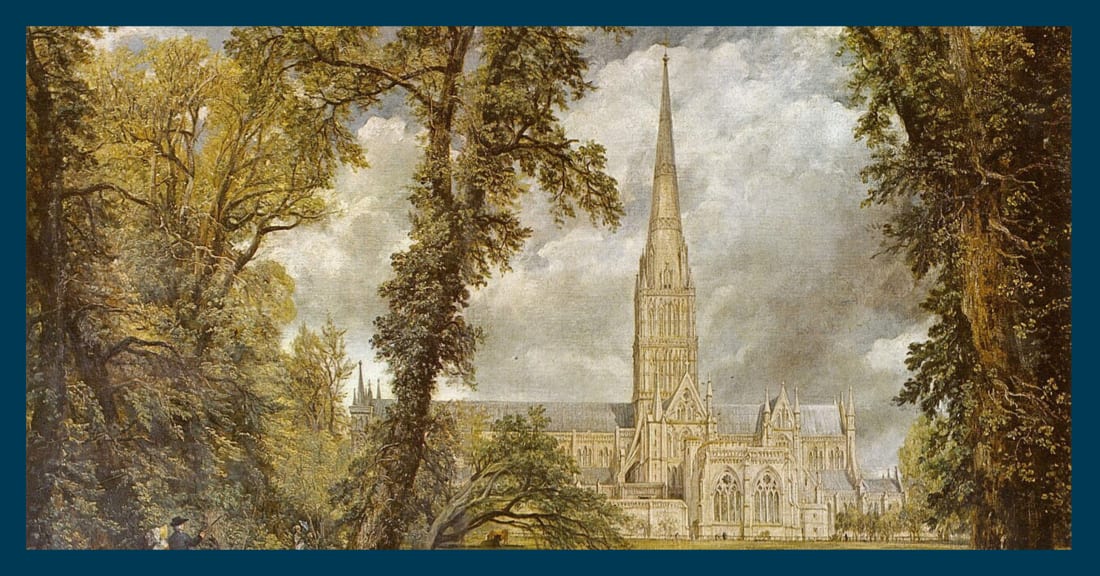 |
Classical liberalism has become a flashpoint in a fierce debate within modern conservative circles. While it tremendously shaped the development of Western civilization, many thinkers argue that it has also caused a range of other societal ills. In this issue of Intercollegiate Review, we highlight articles contributing to this debate.
The first of these pieces comes from Samuel Gregg. Writing in Law & Liberty, Gregg reviews Philip Pilkington’s recent book, The Collapse of Global Liberalism: And the Emergence of the Post Liberal World Order. Gregg takes issue with Pilkington’s criticisms of liberalism, particularly his pushback against what he sees as overgeneralizations about liberal views of equality and rationality.
Gregg argues that while Pilkington treats liberalism as a single, unified system of thought, liberals differ greatly in their understanding of “equality.” Many classical liberals see equality as equal subjection to the rule of law, while leftist liberals see it as using the state to equalize conditions for all. Gregg agrees with Pilkington that liberalism has caused its share of issues, but he traces contemporary pathologies instead to what he calls “distinctly non-liberal movements such as populism of the left and right, wokeism, and ethno-nationalism.”
What do you think? Read more of Gregg’s article here.
In Defense of Postliberalism
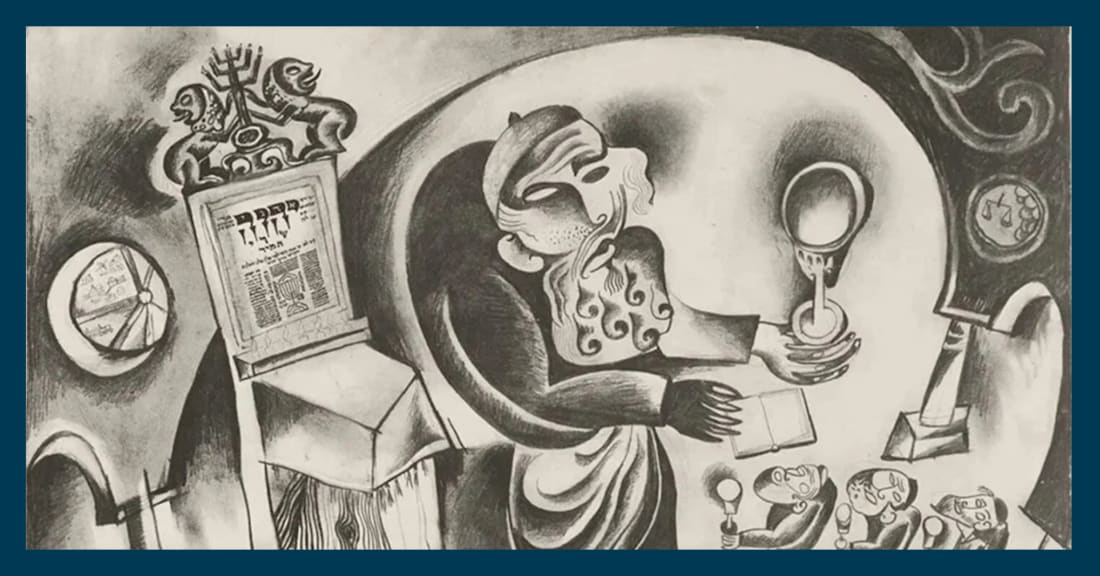 |
Just as Gregg defends liberalism against what he sees as unfair criticism, others have sought to defend postliberalism from similar misunderstandings. In First Things, R. R. Reno responds to an article by David W. Congdon from last fall’s edition of The Journal of Religion. Congdon’s piece, titled “What Has New Haven to Do with Hungary? On Theological and Political Postliberalism,” critiques the new postliberal movement. Congdon calls the movement “localist” and claims it leads to “sectarian ecclesiocentrism.”
Reno’s response mirrors Gregg’s approach. He rejects Congdon’s claims as inaccurate, noting that people and nations formed connections across supposedly “sectarian” lines before the rise of modern liberalism. He also turns the critique back on liberalism itself, arguing that its modern iteration has fostered greater rigidity and a refusal to find common ground.
Congdon additionally describes postliberalism as authoritarian and hostile to freedom. Reno counters that postliberalism simply doesn’t treat individual autonomy as the highest social good and instead affirms appropriate places for state action. Ultimately, Reno contends that postliberalism provides what liberalism cannot: a foundation of “love and devotion” that society desperately needs.
Read more of Reno’s argument here.
|
Compendium
Every article we feature here is available to read for free. Articles from paywalled publications are available through gift links.
Ross Douthat on the rise of vice in American life in The New York Times.
Amber Lapp on male and female grievance culture in Institute for Family Studies.
Walt Hunter on the necessary difficulty of studying the humanities in The Atlantic.
On a Thomistic interpretation of immigration and obligation in Atlas Press.
Chris Rufo on the emergence of a “Sovietized” system in California in his Substack.
Benjamin Ryan on changing perspectives toward gender-transition surgeries in UnHerd.
Austin Suggs on the conversion of theologically serious Protestant students in his Substack.
Louise Perry on the partisan fertility gap in The Wall Street Journal.
Charles Carman on the need to precisely define our technological era in The New Atlantis.
 |
Upcoming ISI Events
If you enjoy what you’re reading here, we invite you to engage with ISI at one of our upcoming in-person events.
43rd Annual Evening of Viennese Waltzing | February 7 | Washington, DC
Join the Intercollegiate Studies Institute on Saturday, February 7, at The Organization of American States for the 43rd Annual Evening of Viennese Waltzing! This annual event brings together over 200 couples for a luxurious recreation of the sumptuous balls of turn-of-the-century Vienna.ISI Networking Reception at Butterworth’s | February 26 | Washington, DC
This event is an opportunity to connect and learn alongside members of the ISI community. Spend the evening in conversation with ISI alumni, supporters, scholars, and friends, then engage with ideas during a 20-minute lecture and Q&A with a featured conservative speaker.America 500 Gala for Western Civilization | April 30 | Washington, DC
The America 500 Gala for Western Civilization is the flagship event of ISI’s America 500 Campaign that celebrates America’s 250th anniversary. Join us at the Andrew W. Mellon Auditorium on Thursday, April 30, 2026, for an elegant evening with inspiring speakers.Conservative Book of the Year Award Ceremony and Luncheon | May 1 | Washington, DC
ISI’s annual Conservative Book of the Year Award Ceremony honors a distinguished nonfiction work that has contributed to the advancement of conservative thought. Join us on May 1 for a luncheon buffet, award ceremony, and panel discussion in Washington, DC.
Visit our events page on our website to see all upcoming events.
Thanks for reading the Intercollegiate Review! Subscribe for free to receive new posts.

This week, from ISI’s Digital Media:
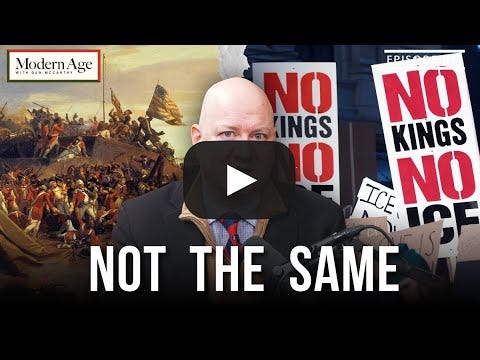
In this week’s episode of Modern Age with Dan McCarthy, Dan clarifies America’s Founding as a conservative revolution. He argues the Founders wanted to defend inherited rights, lawful government, and constitutional liberty, which is a far cry from the ideals hailed by the Left in today’s political protests.
Subscribe to Modern Age with Dan McCarthy here.
Subscribe to our YouTube channel for more content like this.
This week, from the Collegiate Network:
ISI’s Collegiate Network supports over 80 student-run publications across the country, empowering students to run independent college newspapers, magazines, and journals that report on important issues ignored by the mainstream media.
Interview with the Director of Iranian Studies: How the West Gets Iran Wrong via The Stanford Review
Stanford's Director of Iranian Studies argues that the West fundamentally misreads Iran by conflating a 12,000-year-old civilization with its current regime, and that Iranian society today may actually be more secular than America.
Frank Devito's "Future of the Republican Party" via The American Postliberal
JD Vance's evolution from Never-Trumper to MAGA heir wasn't a cynical flip-flop, Devito argues, but a shift in diagnosis.
A Crisis of Catholic Fidelity at Notre Dame via The Irish Rover
A critique of Notre Dame's claim that its "Catholic character informs all endeavors," especially after the university just appointed a vocal abortion-rights advocate.
I Studied Angry White Males for a Week via The Free State Journal
A student enrolled in a rebranded version of the university's controversial "Angry White Male Studies" course gives a full report on the university’s taxpayer-funded curriculum.
Liturgy and Labor via Cogitare Magazine
Reflections on Genesis, Tolstoy's Ivan Ilych, and Christ's healing miracles, and an argument that body and soul are inseparably united.
Visit our Student Journalism section to read more from the Collegiate Network.
Prophets of the Postliberal Debate
 |
Although today’s debates over liberalism feel quite modern, some thinkers have been discussing its strengths and weaknesses for much longer.
In this week’s article from Modern Age, we return to 2000, when Allan C. Carlson reviewed Paul Gottfried’s 1999 book, After Liberalism: Mass Democracy in the Managerial State. Gottfried’s book warned of liberalism’s collapse into a social order bent on destroying old traditions. He distinguished this modern version from genuine classical liberalism, which respected the separation of powers and private property.
Carlson particularly highlights Gottfried’s critique of the thinkers he believed hastened the downfall of the old order, including figures such as John Stuart Mill and John Dewey. What consequences did this transformation have for America at the turn of the millennium? As Carlson summarizes Gottfried’s argument, “The now dominant American ideology of pluralism grants legitimacy to social plans that ‘transcend the present social reality by shattering it,’ and at the same time justifies the projection of American power around the globe.”
Read more of Carlson’s piece here on the Modern Age website.
Modern Age is ISI’s flagship publication. Visit modernagejournal.com and subscribe to receive a free daily newsletter.
“The political class has adopted inclusiveness and diversity as a political instrument, as a means of controlling a society it has set about reshaping. The ‘diversity machine’ is a mechanism of state power that operates without anyone being permitted to notice its coercive nature.”
–Paul Edward Gottfried, Multiculturalism and the Politics of Guilt: Towards a Secular Theocracy
Celebrate America’s semiquincentennial with ISI and help shape the next 250 years of our country. Your support of the America 500 Education Fund will help ISI reach, teach, and launch the next generation of conservative leaders. Visit isi.org/america500 to learn more.
| ||||||||||

