Forwarded this email? Subscribe HERE |
HIGHLIGHT PIECE OF THE WEEK |
It Was Too Easy for Eileen Mihich to Kill Herself
|
Elizabeth Bruenig, staff writer at The Atlantic, shares Eileen's story and says, "When some people in severe distress imagine a peaceful end to what feels like unbearable pain, the availability of medical assistance in dying may shape their thinking, and current safeguards do not seem sufficient to prevent tragic outcomes. Torina suspects that her niece would still be alive had it been just a little harder for her to secure lethal medication." |
|
|
Assisted Suicide Endangers the Most Vulnerable |
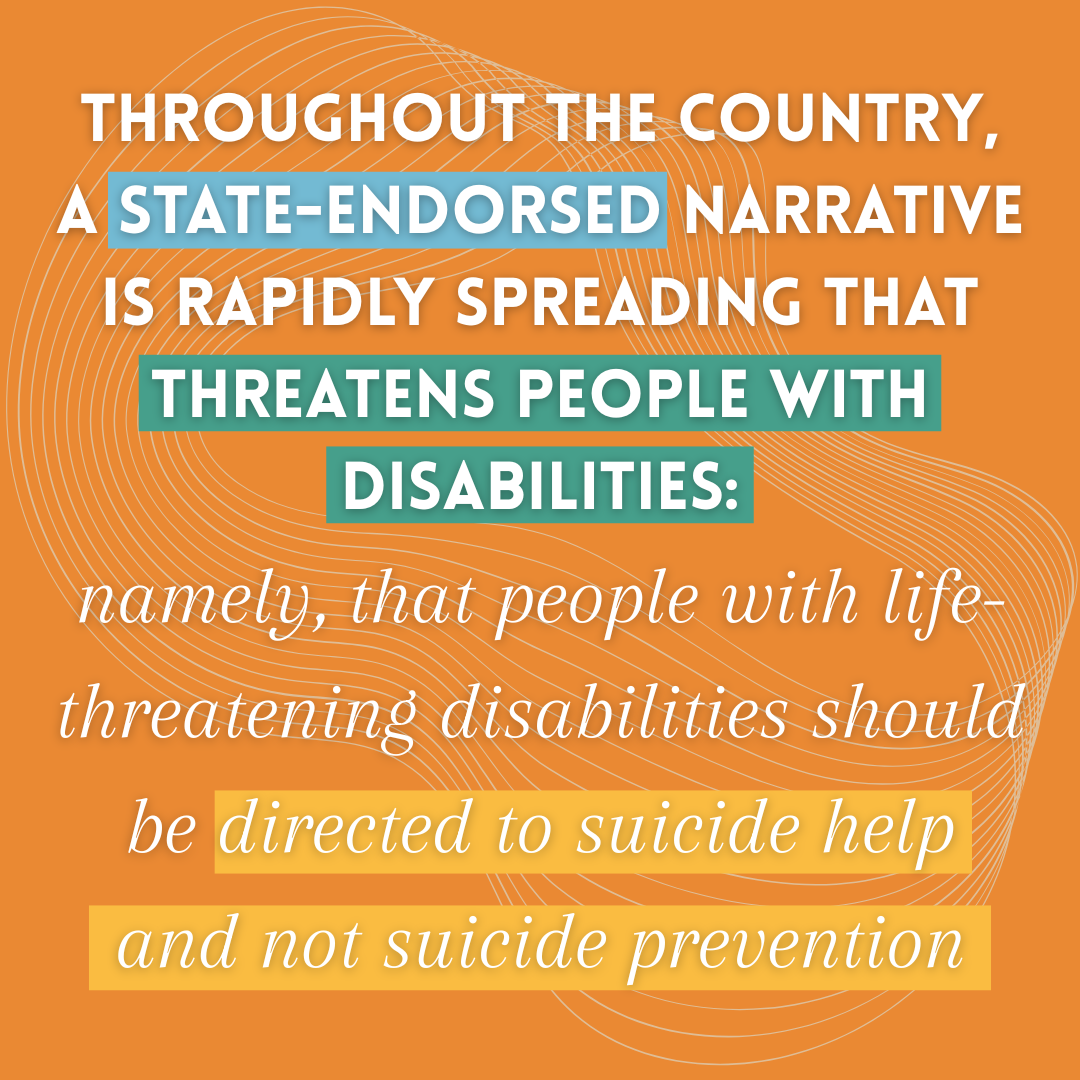
Mary Vought, disability advocate, former presidential appointee of the National Council on Disability and a mother of a child with a disability, writes "The bill claims that 'no person will be considered a qualifying patient … solely because of advanced age or disability.' But this supposed 'protection' amounts to little more than a political fig leaf to hide the obvious implications: the most vulnerable patients would be at risk — quite possibly because a friend, medical professional or family member has encouraged them to end their own life."
|
|
Those Suffering Deserve More Than Death |
John Schwenkler and Philip Reed, both philosophy professors, states, "Advocates for legalization often insist that there is no evidence of coercion in the states where this practice has been made legal. In making this argument, they seem to imagine only the kind of situation where a greedy individual, anxious to receive a promised inheritance, terrorizes a terminally ill relative into ending his or her life." |
|
Better Palliative Care Could Diminish Assisted Suicide |
Several writers from Policy Options, share findings from a report on access to palliative care in Canada. "According to the World Health Organization, palliative care is recognized as part of the human right to health. But access to palliative care in Canada is neither equitable nor universal, in spite of repeated calls to address this." |
|
|
We’ve joined a federal lawsuits in California, Colorado, and Delaware with a coalition of national and state-based disability and patient advocacy organizations.
The plaintiffs argue that assisted suicide law violates core protections under the U.S. Constitution and federal civil rights laws, including the Americans with Disabilities Act (ADA), and Section 504 of the Rehabilitation Act. |
If you’re in crisis, there are options available to help you cope. You can call or text the 988 Suicide & Crisis Lifeline at any time to connect with a trained crisis counselor. For confidential support available 24/7 for everyone in the U.S., call or text 988 or chat at 988lifeline.org. |
|
|
The Patients' Rights Action Fund (PRAF) is a 501(c)(4) and a leading national, non-partisan single-issue organization that protects the rights of patients, people with disabilities, older adults, and other historically underrepresented groups from deadly harm and discrimination inherent in assisted suicide laws. |
The Institute for Patients' Rights (IPR) is a 501(c)(3) founded to conduct research, educates the public, and work to expand and implement tools of empowerment for older adults, people with disabilities, marginalized persons, and their families to combat policies and medical practices that devalue some people’s lives, putting them at great risk of deadly harm, as with assisted suicide laws. |
| Forwarded this email? Subscribe HERE |
954 Lexington Ave, #340 New York, NY 10021 (609) 759-0322 |
|
|
|