It doesn’t happen often, but local law enforcement can arrest and charge federal agents. Legal experts say there’s a moral obligation to at least try to hold federal immigration officers accountable when they violate the Constitution and the law.
Nonprofit, investigative journalism on a mission to hold the powerful to account. Donate

ProPublica
ProPublica

The Big Story

February 05, 2026 · View in browser

In today’s newsletter: Why local and state police rarely investigate federal agents; Louisiana paroles its lowest number of prisoners in 20 years under Gov. Jeff Landry; and the inside story of how Trump destroyed USAID.

“You’re Not Going to Investigate a Federal Officer”

It doesn’t happen often, but local law enforcement can arrest and charge federal agents. Legal experts say there’s a moral obligation to at least try to hold federal immigration officers accountable when they violate the Constitution and the law.

Read story
 

That Stat


185

The number of prisoners paroled in Louisiana during Gov. Jeff Landry’s tenure. Under Landry, who campaigned on “tough on crime” policies, that figure has plummeted to its lowest point in 20 years.

It’s a 78% drop from the 858 prisoners released in the two years before Landry’s January 2024 inauguration, according to a Verite News and ProPublica analysis of data provided by the Louisiana Board of Pardons and Committee on Parole.

Hundreds of people who would have been paroled under previous administrations now remain in state prisons with little chance of earning an early release through good behavior or by showing they are fit to reenter society and are unlikely to reoffend.

Landry’s office did not respond to requests for comment.

Read story
 

Watch on YouTube


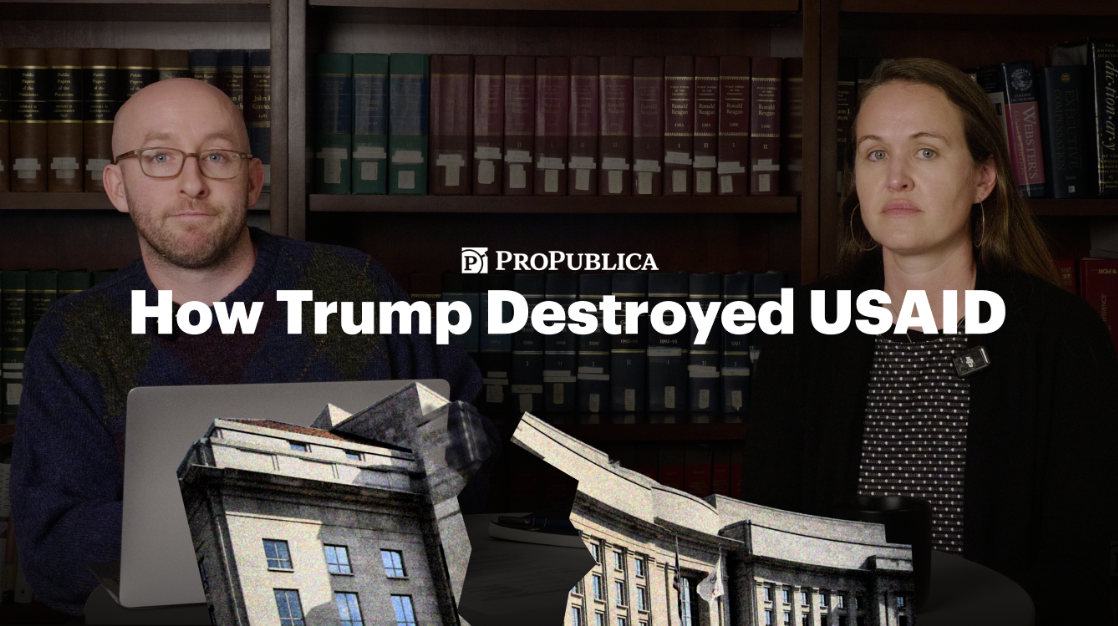
The Inside Story of How Trump Destroyed USAID

Last summer, reporters Brett Murphy and Anna Maria Barry-Jester journeyed to refugee camps in Kenya and South Sudan, some of the places most devastated by President Donald Trump’s dismantling of foreign aid. They spoke to hundreds of government and aid officials, as well as refugees, who witnessed and experienced how political appointees cut programs in arbitrary ways.


In response to a detailed list of questions, a senior State Department official said fast, drastic changes to foreign aid were necessary to reform a “calcified system.” The official also said they had a limited budget to work with, “which required some tradeoffs on what programs to continue.”

Watch now
 

More from the newsroom


After Years of Silence, Texas Medical Board Issues Training for Doctors on How to Legally Provide Abortions

The Dramatic Rise of Farm Labor Contractors Has Led to Rampant Abuses. Here’s Why Regulators Have Failed to Stop Them.

The Real Story Behind the Midnight Immigration Raid on a Chicago Apartment Building

A Mississippi Synagogue Was Attacked in 1967 and 2026. The Antisemitic Rhetoric Looked the Same Then and Now.

We Found New York’s Guardianship System in Shambles. Now State Lawmakers Say They Have a Plan to Help Fix It.


Find us on Facebook Find us on Facebook Threads Find us on Instagram Find us on Instagram Instagram Watch us on TikTok Watch us on TikTok TikTok Find us on X Find us on X (Twitter) Find us on Mastodon Find us on Mastodon Mastodon

Was this email forwarded to you from a friend? Subscribe.


This email was sent to [email protected].

 
Preferences Unsubscribe
 

ProPublica

155 Ave of the Americas, 13th Floor

New York, NY 10013