|
 |
from the desk of Dana Criswell



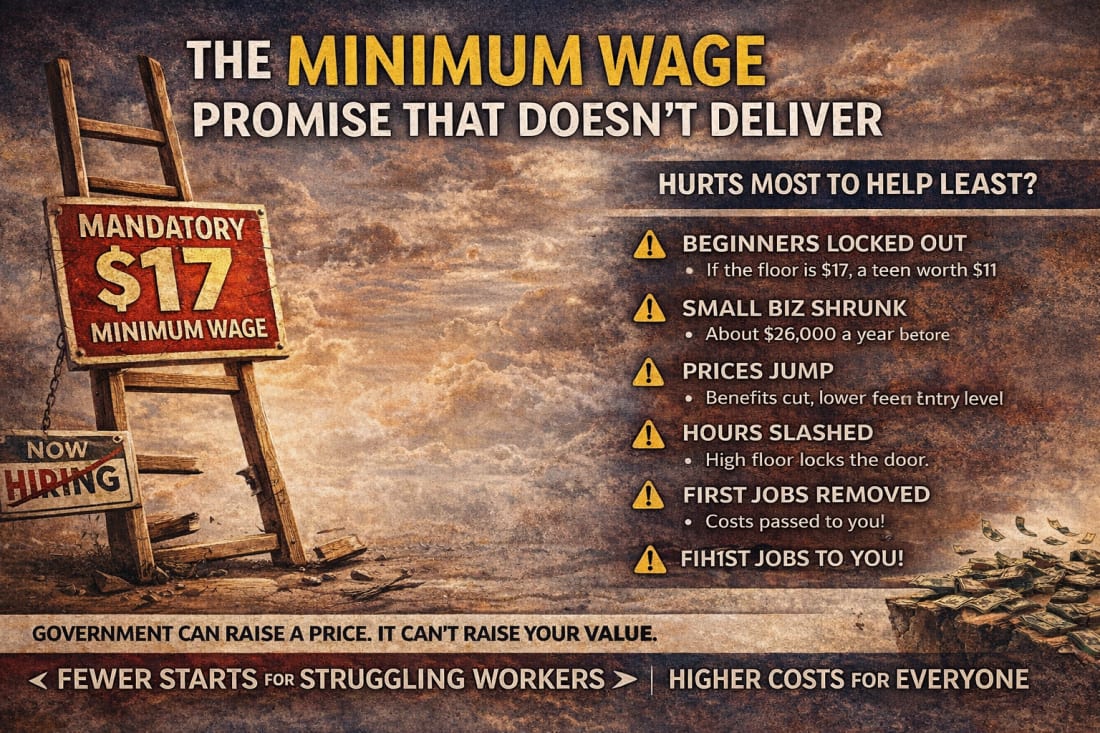 |
Raising the minimum wage sounds kind. Politicians say a bigger number on a paycheck will lift people out of poverty. But wages don’t come from speeches or slogans. They come from the value a worker creates for a customer. When government sets a high, one-size-fits-all floor, it doesn’t raise value—it bans low-paid work and hopes the rest sorts itself out.
Who gets hurt first? Beginners. Teenagers, people reentering the workforce, folks with disabilities, and anyone who needs that first rung on the ladder. A small shop might happily hire a 17-year-old at $11 to wash dishes and learn. Make the legal floor $17 and the job doesn’t improve; the job disappears. You can’t climb a ladder with the bottom step sawed off.
Small businesses take the next hit. Picture a rural diner paying three dishwashers $11 an hour. A mandated jump to $17 is $6 more per hour, per person—about $36,000 a year before payroll taxes and insurance. That owner can’t raise prices 50% overnight and keep customers. So they cut hours, eliminate positions, buy a machine, or shut the doors. None of those options helps entry-level workers.
Families and seniors feel it too. Higher labor costs show up as higher prices for groceries, meals, haircuts, childcare, lawn care—everything. Hours get trimmed. Overtime dries up. Perks like free meals, flexible schedules, or paid training quietly vanish. On paper the hourly rate looks better; in real life the paycheck can be smaller.
Nonprofits and local government don’t escape. Church daycares, shelters, libraries, and EMS can’t raise prices enough to cover big payroll jumps. Taxpayers are told to make up the difference, or services get cut. It’s a hidden tax that never appears on a budget line.
Meanwhile, hiring standards ratchet up. If every hour costs more, managers favor already-trained workers and reject anyone with a thin résumé or a gap. That hurts minority youth and low-income beginners most—the very people the policy claims to help. And the compliance burden tilts the field toward national chains with legal teams. One lawsuit or back-pay claim that a big company shrugs off can sink a family business. Fewer small competitors mean less choice and, over time, higher prices.
There’s a better way to raise pay that doesn’t outlaw opportunity. Cut the cost of hiring by lowering or eliminating employer taxes and fees on the lowest wage brackets. Slash needless licenses and paperwork so people can work and small shops can grow. Protect flexible work, tip credits, and part-time on-ramps. And supercharge apprenticeships and career-tech so beginners gain skills fast and become worth more in the market.
Real prosperity comes when workers produce more value and keep more of it, not when politicians write a bigger number on paper. If we care about people at the margins, we should build ladders—skills, experience, and freedom to make a deal—rather than pulling the first rungs out from under them. The minimum-wage promise is simple; the damage is, too. Let’s choose policies that actually help everyone climb.
Read all of Dana’s post and stay informed about politics in Mississippi
| ||||||||||

