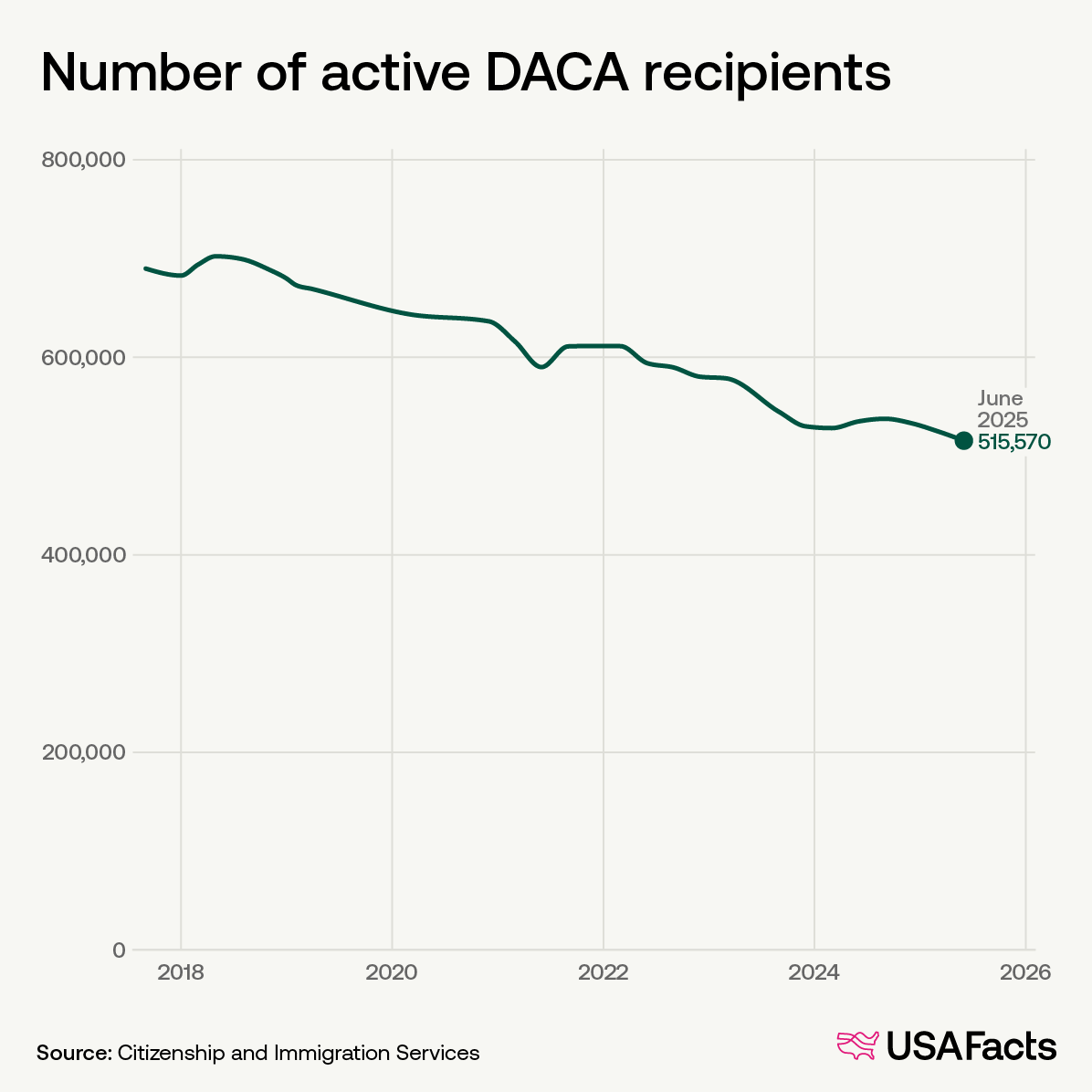
The Deferred Action for Childhood Arrivals program (DACA) offers temporary deportation protection for people who came to the US as children and do not have legal immigration status. DACA status then enables people to apply for work authorization. Roughly 515,600 people had active DACA status at the end of June 2025. But how has the number of active DACA recipients changed since its creation in 2012? |
|
- DACA protections are active for two years, after which they must be renewed. In FY 2024, there were 289,651 DACA renewals, down 4.8% from FY 2023 and down 1.9% from FY 2022.
|
|
- Eighty-one percent of DACA recipients (that’s 419,070 people) were born in Mexico. The other top nations of origin for DACA recipients were El Salvador (20,390), Guatemala (13,830), Honduras (12,720), and Peru (4,560).
- California had the most active DACA recipients (144,250), followed by Texas (86,140), while Vermont had the fewest (20).
- California accounted for 11.6% of the US population, but 28% of all DACA recipients lived there. Pennsylvania, by contrast, was home to 3.8% of the US population, but 0.7% of people with DACA status.
- Courts have blocked Citizenship and Immigration Services from processing new initial DACA requests since September 13, 2023, but it continues to accept them. Renewals, however, are still being processed.
|
|
Medicaid spending by the numbers |
|
Medicaid provided health coverage to 29.2% of people living in the US in federal fiscal year 2023. Most of the program’s costs go to people with disabilities and people who are 65 or older. Here’s what the data shows about how Medicaid spending has changed over time and how it varies across the country.
- In FY 2023, Medicaid spending was $9,109 per enrollee. That’s 1% lower than in FY 2022 and, adjusted for inflation, the lowest level since hitting $10,821 in FY 1999, a recent peak.
- Medicaid's cost per enrollee was about 39.9% lower than Medicare's. However, it was 29.7% higher than employee-sponsored private insurance plans.
- People with disabilities and adults 65 and older account for most Medicaid spending. In FY 2022, the two demographics accounted for 19.7% of all enrollees but 51.0% of costs. In comparison, children make up 35.8% of enrollees and 15.4% of costs.
|
|
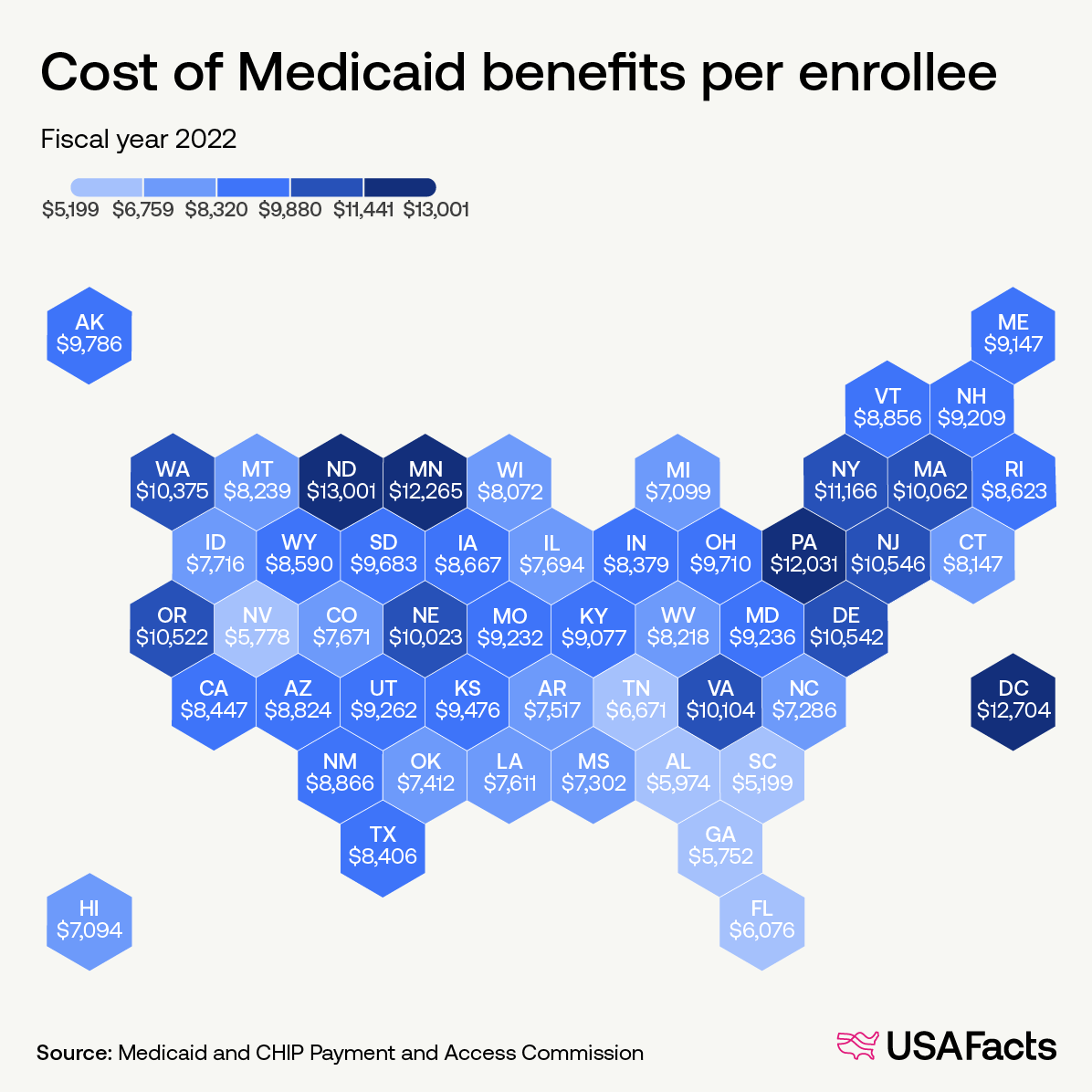
- Spending varies widely by state. In FY 2022, North Dakota had the highest per-enrollee spending ($13,001), while South Carolina had the lowest ($5,199). Click the button to discover what your state spends.
|
|
Ask an Analyst: Searching for ICE data |
|
Ask an Analyst is a new series where our analysts let you in on how they make sense of the data. Ever read a USAFacts article and think “How did they find this info?” Ask an Analyst takes you behind the scenes with our team as they try scour government sources for metrics that answer some of today’s most pressing questions.
In this first installment, Trygve and Chris go on a journey with analysts across government websites as they try to discern how Immigration and Customs Enforcement activity has changed over time. What’s the latest data and how can they find it?
|
|
Think you know the data? Take our poll! |
|
Get the answer this week, come back next week for the full article. |
|
| Where, as a percent of births, produces the most NBA players? | | | | | | | | | | | | |
|
The government is partially shut down. Learn more about what that means here. |
|
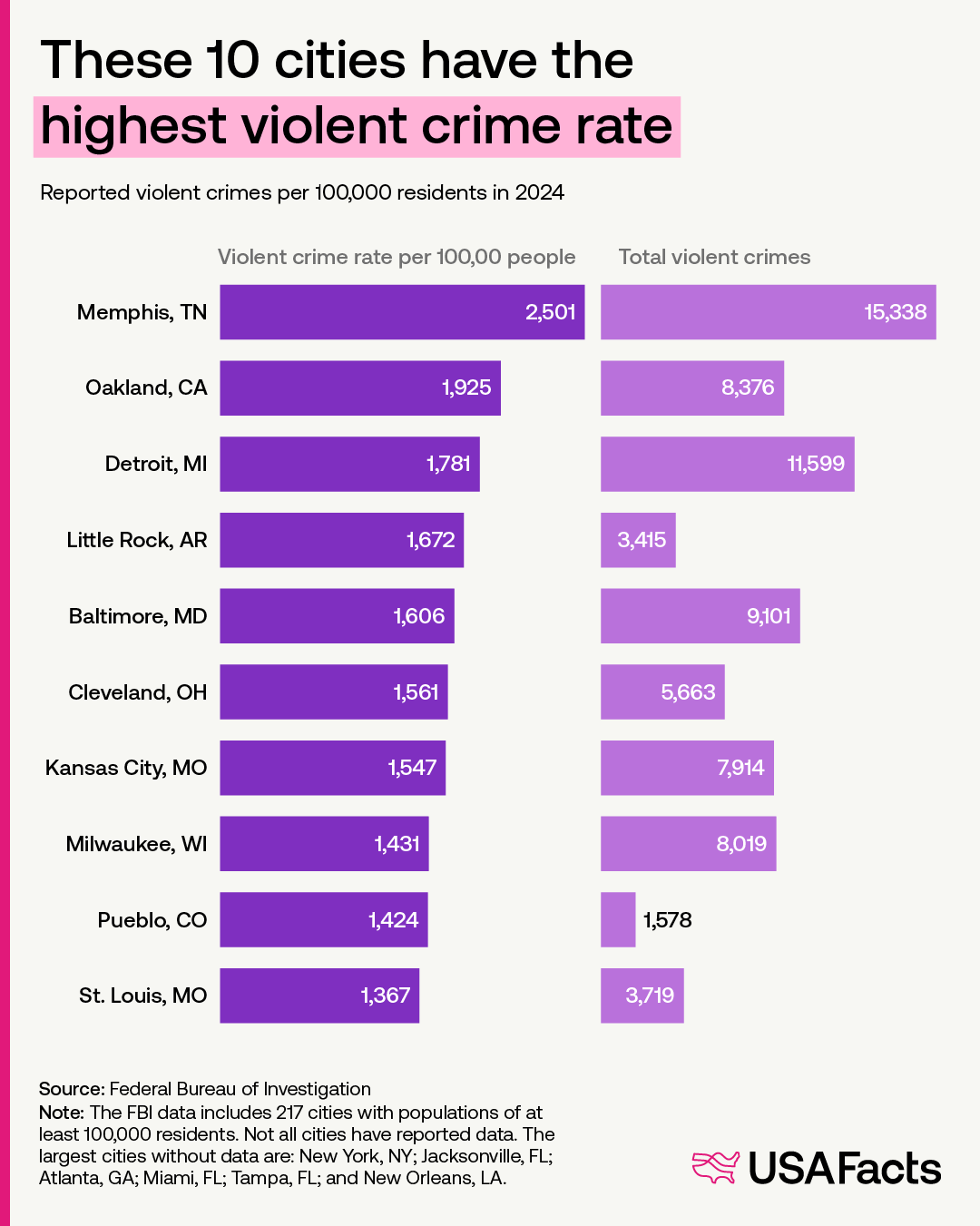
The FBI releases annual crime data for cities and metro areas. Data isn’t available for every US city, but the 2024 metrics (the most recent) cover 217 cities with populations of at least 100,000. Of these, Memphis, Tennessee, had the highest violent crime rate, with 2,501 violent crimes per 100,000 residents. Oakland, California, and Detroit followed at 1,925 and 1,781, respectively. Carmel, Indiana, had the lowest: 66.
|
|
|
|
|