|


 |
In the Lone Star State, we have a well-worn refrain that outsiders nevertheless seem to consistently ignore: “Don’t mess with Texas.”
In a recent case of this phenomenon, I found myself getting a little hot under the collar after reading a recent column by an opinion writer I generally agree with, Michelle Goldberg. Weighing in on whether two comedians should have to apologize for criticizing U.S. Rep. Jasmine Crockett’s campaign for Senate in Texas is standard fare for Ms. Goldberg and the New York Times. If she had stopped there, she would have remained on solid ground. Unfortunately, the column went further and argued – from well outside Texas – that Ms. Crockett is virtually unelectable and that state Rep. James Talarico is the better choice.
She should hold her horses.
I am a fifth-generation Texan, raising two boys who are sixth-generation Texans, and a former U.S. representative who flipped a red seat blue, held that seat in a tough reelection, and overperformed Vice President Harris by nearly 6 points in my own run for the Senate. I have traveled to every part of this state, both personally and as a candidate. In short, I know Texas. And one thing I am sick and tired of is watching coastal elites weigh in as if they do, too.
Let me be very clear: I have not endorsed in the Senate race, and I will work to make sure either Ms. Crockett or Mr. Talarico has all the support I can give in the general election. And though I respect Ms. Crockett, it would be disingenuous of me to not say that she and I have different approaches to politics and different paths to reaching people. But ignoring the way Ms. Crockett is covered and commented on is something I am no longer willing to be quiet about.
Much of the criticism aimed at candidates like Ms. Crockett is wrapped in the language of electability – a word that’s supposed to sound neutral, even scientific. But in practice, it often functions as a quiet veto. It reflects whose instincts are trusted, whose voters are prioritized, and whose style of leadership is deemed acceptable. Black women, in particular, are routinely told they’re too sharp, too loud, too polarizing – even when they are deeply connected to the very communities Democrats keep saying we need to reengage.
Texas is what is known as a majority-minority state – heavily so. Any pathway to winning statewide runs through Black and brown communities, as well as through voters willing to split their tickets. I know that because I’ve done both. I won hundreds of thousands of crossover voters in my last election, outrunning the national ticket in virtually every county and precinct by large margins, nearly 10 points in our border counties. I flipped red counties like Tarrant, Williamson, and Fort Bend. I reject the notion that we can afford to leave swing voters out of the discussion.
Where we as a party have failed, however, is in combating the sense of despair too many Black and brown working-class Texans feel in our major cities – places where we saw dramatic drops in turnout after 2020. Too many people are disengaged not because they don’t care but because, particularly coming out of COVID, where they were likely “essential workers” and their kids were out of school, they don’t feel seen, respected, or fought for.
That’s not a theoretical problem. It’s something you feel when you show up.
Ms. Crockett seems to have a unique ability to set certain observers’ teeth on edge. That may be the point. She is compelling to some of the very people we need to win back – not from Republicans but from not voting at all. In this campaign cycle, I decided to ditch the traditional Democratic circuit stops and go to working Texans wherever they are: high school football games, lowrider club kickbacks, construction sites, grocery stores, and restaurants.
Wherever I go, particularly Black and brown folks tell me how much they appreciate me for being there and for caring. And they invariably tell me how much they appreciate Ms. Crockett for fighting for them. These are not always consistent voters – but they are exactly the people we need to motivate and make into reliable Democratic voters if we are going to win statewide.
Texas’ demographics are very different from other swing states. We are stunningly diverse, disproportionately young, growing rapidly, and – with 31 million people spread out over more than 267,000 square miles – massive. Our ethnic and cultural diversity means that both our swing voters and our nonvoters are likely racial minorities, and with just a third of Texans over the age of 25 possessing a bachelor’s degree or higher, we are often more working class and less affluent than our coastal brethren.
This presents both an opportunity and a challenge. But what I am begging observers who only read about or pass through Texas to understand is that your perception of what electability means here is likely wrong. At a time when entire communities are being terrorized, and fear of both the state and federal government is rampant, you may be misreading what the Texans we need are looking for from their leaders.
Whatever you may think of her, Ms. Crockett has built a brand that working people understand as authentic – that she fights for them, not just for herself. She may not be the perfect candidate. I wasn’t. No one is. And she may not ultimately win the primary or the general election in Texas. But as a Black Texan of mixed racial heritage in a state that looks increasingly like me, I want to tap the sign for columnists and commentators in our coastal blue enclaves:
Don’t mess with Texas.
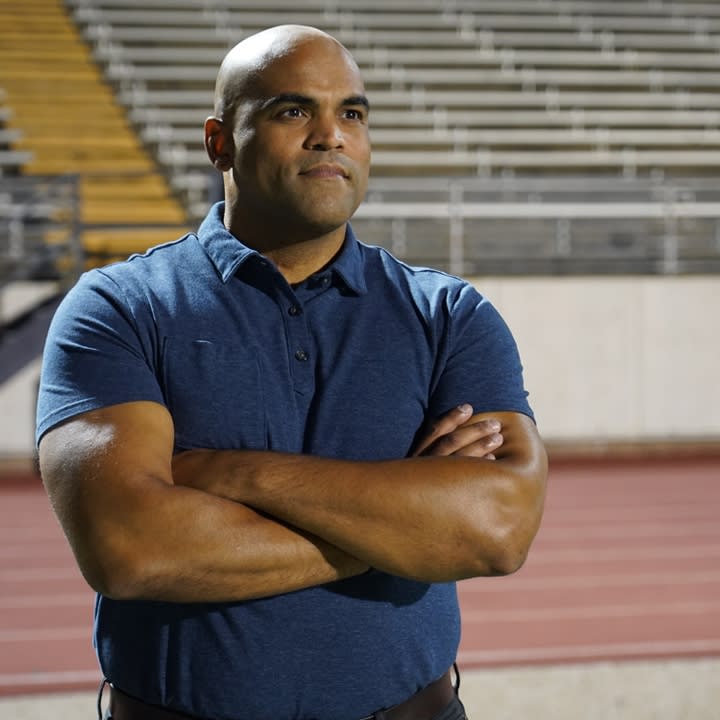
Colin Allred is a civil rights lawyer who has spent his career fighting to protect the rights of Texans.

He’s running to represent Texas’ 33rd District to safeguard the core pillar of our democracy and flip the House blue. But Colin doesn’t take a dime of dark money from special interests or corporate PACs – meaning he’s relying entirely on members of this grassroots team to help him win. Will you chip in today to make sure he has what it takes to win this race and give TX-33 the representation it deserves?Paid for by Allred for Texas
| ||||||||||

