|
 |
The “Great Healthcare Plan” Has a Fatal Flaw
A physician explains why Trump’s proposal risks patients, doctors, and the stability of American medicine
|

| |||||||||||||||


 |
 |
On January 15, the Trump administration unveiled what it grandly labeled “The Great Healthcare Plan,” a proposal that promises lower costs, greater transparency, and more “consumer choice” in American healthcare. Strip away the branding, however, and the plan amounts to a familiar Trump-era formula: deregulation wrapped in slogans, thin on specifics, heavy on disruption. The proposal emphasizes insurer and hospital transparency, targets pharmacy benefit managers, and replaces traditional insurance subsidies with individual healthcare vouchers and expanded Health Savings Accounts. What it notably fails to do is explain—at a policy, clinical, or operational level—how seriously ill patients are supposed to navigate this system, how risk pools remain stable, or how physicians already drowning in administrative work are expected to absorb yet another layer of complexity. As with so many Trump initiatives, the plan gestures toward reform while outsourcing the consequences to patients and frontline providers. What follows is a physician’s view from inside that reality.
Dr. Eric Lullove, wrote this article and Blue Amp Media is publishing it here with permission.
by Dr. Eric Lullove
For those of us in the trenches of private practice—navigating the labyrinth of Medicare LCDs, fighting the “death by a thousand cuts” of prior authorizations, and watching administrative bloat swallow clinical outcomes—the latest healthcare proposal from the Trump administration feels like a case of déjà vu.
They’re calling it “The Great Healthcare Plan.” But as a physician who spends as much time reviewing reimbursement policy as I do treating complex wounds and complex patients, I have to ask: Where is the actual healthcare in this plan?
What we’ve been presented with isn’t a blueprint for clinical excellence or system-wide stability. It’s a deregulatory framework disguised as “consumer choice,” and it risks leaving both patients and providers in a precarious position.
The Anatomy of the Proposal
The administration’s January 15 rollout centers on four primary pillars. On the surface, some of these sound like the common-sense reforms we’ve been advocating for in the wound care and medical communities:
Transparency over Profiteering: The “Plain English” standard for insurers and hospitals is a move toward exposing the opaque “spread pricing” that keeps patients in the dark.
Targeting the Middlemen: There is a renewed focus on Pharmacy Benefit Managers (PBMs) and broker kickbacks—the administrative parasites that inflate costs without adding a single gram of clinical value.
The Voucher Pivot: This is the most radical shift. The plan effectively ends direct subsidies to insurance companies, instead funneling that capital directly into Health Savings Accounts (HSAs) or “Healthcare Vouchers” for individuals.
The Pros: Shining a Light on the “Black Box”
There are elements here that make sense. Price transparency is long overdue. If we are forced to justify every CPT code and CTP application with mountain-high documentation, it is only fair that hospitals and insurers are forced to show their hand regarding profit margins and denial rates.
Furthermore, the $50 billion commitment to Rural Healthcare—leveraging the Working Families Tax Cuts Act—is a necessary acknowledgement that our rural infrastructure is on life support. Investing in tech and facility modernization is a win for access, provided the money actually reaches the bedside.
The Cons: The Administrative Burden and the “Death Spiral”
Here is where the clinical reality clashes with the political “concept.” As someone who understands the intricacies of the CMS fee schedule, I see several red flags:
The “Consumer” Fallacy: The plan treats healthcare like a retail commodity. Expecting a patient with a chronic limb-threatening ischemia or a complex wound or even having a heart attack or stroke to “shop around” with a voucher is not just unrealistic; it’s dangerous. Healthcare isn’t a luxury watch or a high-end espresso machine; it is a necessity that often requires immediate, expert intervention.
Fragmentation of Risk: By moving toward “Association Plans” and vouchers, we risk a market death spiral. Healthy individuals will opt for low-cost, “junk” plans, while the sickest patients—those requiring the most intensive wound care and surgical intervention—will see their premiums skyrocket as the risk pool dissolves.
The Uninsured Surge: Projections suggest that dismantling the ACA’s subsidy structure could lead to 4 million people losing coverage almost instantly. For a private practice, this translates to more uncompensated care and more patients presenting to the ER with complications that could have been managed in-office.
Why This Won’t Work for Americans (or Their Doctors)
This plan fails because it ignores the administrative reality of the physician.
1. Increased Physician Burden: If we move to a voucher-based system, the burden of verifying eligibility and managing payments shifts further onto the practice. We are already drowning in documentation; we don’t need to become HSA administrators too.
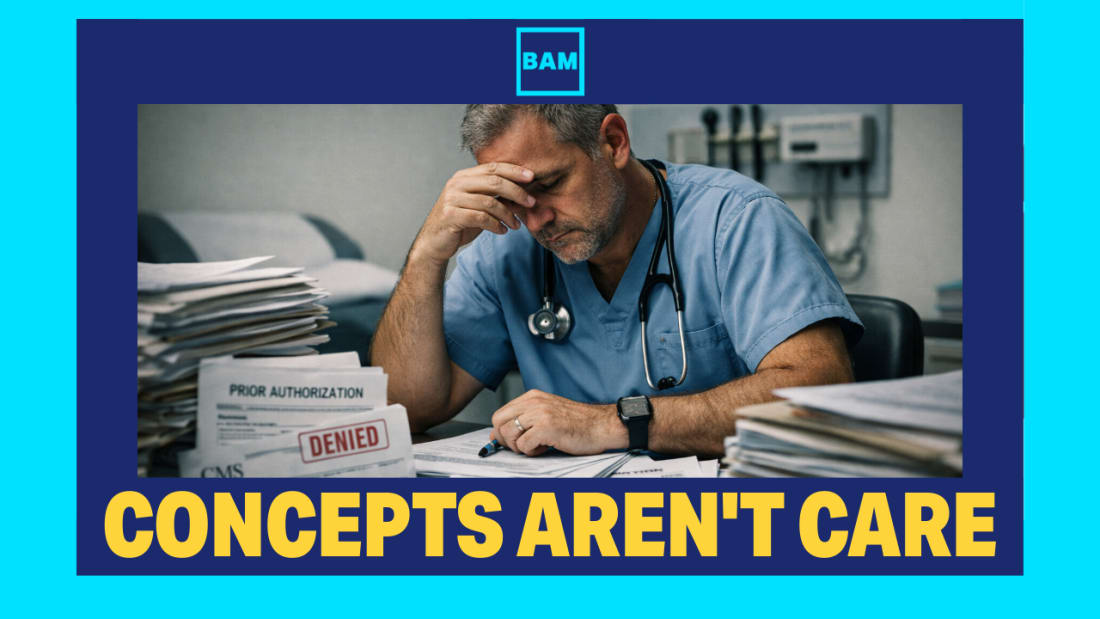
2. Lack of Protective Teeth: The proposal is dangerously thin on how it will protect those with pre-existing conditions once the ACA’s foundational market rules are scrapped. “Concepts” don’t pay for skin substitutes or surgical suites.
3. Fiscal Instability: While the administration claims a $36 billion savings by cutting “insurance kickbacks,” the Committee for a Responsible Federal Budget warns this model could balloon the deficit by $350 billion. We’ve seen this movie before: when the deficit grows, reimbursement rates are the first thing on the chopping block.
Final Thoughts
We need a system that prioritizes clinical outcomes over insurance company profiteering. While I applaud the focus on transparency and PBM reform, “The Great Healthcare Plan” feels more like a financial experiment than a medical solution. We don’t need more “concepts.” We need a stable, evidence-based policy that allows us to do what we were trained to do: treat patients.
 |
READ MORE BLUE AMP MEDIA
The Cold Is Brutal. FEMA’s Failure Will Be Worse. | ||||||
| ||||||
 | ||||||
|


 | A guest post by
|
You're currently a free subscriber to Blue Amp Media. For the full experience, upgrade your subscription.
| ||||||||||

