
Jan. 23, 2026
Permission to republish original opeds and cartoons granted.
The U.S. Should Threaten A Section 301 Investigation Into EU’s Digital Markets Act
|
|
|
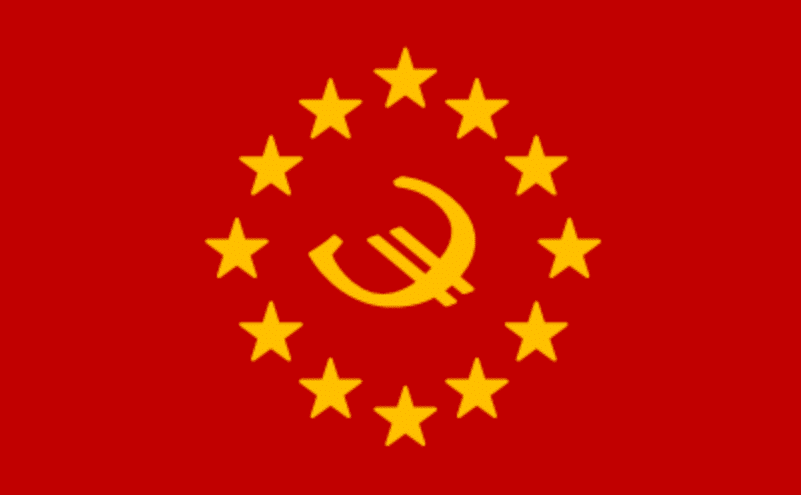
For several years, the European Union (EU) quietly and insidiously attacked these companies through the Digital Markets Act (DMA) and other digital trade regulations. These discriminatory EU regulations have painted a target on the back of American companies and levied taxes on their success. Under the Biden administration, the EU was given free rein to harm American businesses — but no longer. The Trump administration has taken action and must continue to protect American leadership and force the EU to repeal the DMA. Despite earlier commitments, it’s clear that the EU is not close to implementing measures to reduce its digital trade barriers, clearly violating the joint trade agreement framework signed earlier this year. Now the bloc may be running scared. U.S. Trade Representative (USTR) Jamieson Greer recently acknowledged that the EU has not been responsive to the U.S. concerns about these trade barriers. Greer cited that the federal government has various investigatory tools, like a Section 301 investigation, to produce a negotiated outcome. If the bloc refuses to rescind these harmful regulations, Section 301 of the Trade Act of 1974 should be invoked by the Trump administration to launch an investigation into the EU to hold it accountable for this discriminatory burden on U.S. commerce. Section 301 tariffs have proven to bring countries to the negotiating table and communicate that America, under the Trump administration, will not be taken advantage of. During the first Trump administration, USTR used a Section 301 investigation to determine that France’s digital services tax was “unreasonable, discriminatory, and burdens U.S. commerce." In response, the Trump administration announced tariffs on additional French products in July 2020, prompting France to enter negotiations on trade barriers — President Donald Trump’s art of the deal — before the tariffs were set to go into effect in January 2021.
|
More Americans Than Ever Say They Are Independents — And That Could Be Bad News For Democrats
|
|
|
According to the survey released Jan. 12 by Gallup, the share of Americans identifying as independent has reached a record high, with 45 percent of Americans identifying as independent. This number has been increasing rapidly for the past 15 years. Gallup notes that independents now make up 45 percent of the population, while Republicans and Democrats both make up just 27 percent each. Gallup also notes that when accounting for ‘leaners’, independents leaning Democrat outnumber independents leaning Republican by five points, 47 percent to 42 percent. That said, it is impossible to ignore the fact that as independent identity has risen, support for Democrats has fallen significantly. In the 2020 election, 30 percent of the population identified as Democrat, 29 percent as Republican, and 39 percent identified as independent. Independent affiliation has risen six points since 2020, while Democrat identity has fallen three points and Republican identity has fallen two. That might not be much of a switch from Democrat to independent but look back at 2016 and the trend becomes clear. In 2016, Republican identity was nearly the same as it is now — 28 percent — independent identity was 39 percent, and Democrat identity was 31 percent. Compared to 2026 numbers, that is a one-point decline for Republicans, but a four-point decline for Democrats, and a six-point increase for independents.
|
The U.S. Should Threaten A Section 301 Investigation Into EU’s Digital Markets Act
By Robert Romano
For decades, American companies have led the way in technological breakthroughs, benefiting American consumers and ensuring the U.S. continues to lead the rest of the world in innovation. Amazon has revolutionized e-commerce, Google has powered our Internet searches, and Meta has allowed us to expand our social network — along with many others.
However, for several years, the European Union (EU) quietly and insidiously attacked these companies through the Digital Markets Act (DMA) and other digital trade regulations. These discriminatory EU regulations have painted a target on the back of American companies and levied taxes on their success. Under the Biden administration, the EU was given free rein to harm American businesses — but no longer. The Trump administration has taken action and must continue to protect American leadership and force the EU to repeal the DMA.
Despite earlier commitments, it’s clear that the EU is not close to implementing measures to reduce its digital trade barriers, clearly violating the joint trade agreement framework signed earlier this year. Now the bloc may be running scared. U.S. Trade Representative (USTR) Jamieson Greer recently acknowledged that the EU has not been responsive to the U.S. concerns about these trade barriers. Greer cited that the federal government has various investigatory tools, like a Section 301 investigation, to produce a negotiated outcome. This is exactly right.
Dialogue is not enough. Anything short of a repeal of the DMA would still result in an uneven playing field designed to harm American businesses. If the bloc refuses to rescind these harmful regulations, Section 301 of the Trade Act of 1974 should be invoked by the Trump administration to launch an investigation into the EU to hold it accountable for this discriminatory burden on U.S. commerce.
Section 301 tariffs have proven to bring countries to the negotiating table and communicate that America, under the Trump administration, will not be taken advantage of. During the first Trump administration, USTR used a Section 301 investigation to determine that France’s digital services tax was “unreasonable, discriminatory, and burdens U.S. commerce." In response, the Trump administration announced tariffs on additional French products in July 2020, prompting France to enter negotiations on trade barriers — President Donald Trump’s art of the deal —before the tariffs were set to go into effect in January 2021.
Last month, USTR and other administration officials repeatedly warned that a Section 301 trade investigation could be launched against South Korea if its leaders continue to pursue legislation that is harmful to US tech innovators. Additionally, in July 2025, USTR initiated an ongoing Section 301 investigation into the Brazilian government’s acts and policies related to the digital economy and electronic payment services that restrict U.S. commerce. These actions rightfully demonstrate that this administration is not afraid to defend American industry from foreign red tape and harmful regulations.
Initiating a Section 301 investigation on the EU would be another justified effort from President Trump to correct the failures of the previous administration. Under the Biden administration, the Federal Trade Commission (FTC) colluded with the EU on implementing the DMA — all under the guise that it would help consumers and jumpstart innovation, when in fact it was an importation of harmful anti-business policies on U.S. companies.
The DMA is European lawfare against American technology companies, upending years of longstanding trade between the U.S. and the EU. Five out of the seven companies listed as a “gatekeeper” — an EU designation for companies subject to excessive regulatory scrutiny under the DMA — are American.
The trade agreement framework signified the EU’s promise to remove these digital trade barriers, but it’s clear they are either not moving with a sense of urgency or intentionally dragging their feet in an effort to hurt American companies. If the Europeans don’t deliver the news Commerce Secretary Howard Lutnick and Ambassador Greer need to hear in Brussels, USTR should initiate a Section 301 investigation to rectify this wrong.
Robert Romano is the Executive Director of Americans for Limited Government.
To view online: https://dailytorch.com/2026/01/the-u-s-should-threaten-a-section-301-investigation-into-eus-digital-markets-act/
Video: South Texas Rancher Says Trump Fixed Illegal Immigration Crisis After Going Through Hell With Biden

To view online: https://www.youtube.com/watch?v=z5iO09n9qDw
More Americans Than Ever Say They Are Independents — And That Could Be Bad News For Democrats
By Manzanita Miller
Independent identity among Americans has reached a new high, with a full 45 percent of U.S. adults identifying as independent heading into the 2026 midterm cycle according to a new Gallup survey. That number is the highest on record since Gallup began surveying voters on political identity and represents a challenge for both parties. However, there is evidence that this explosion in independent identity has correlated with a strong decline in support for Democrats specifically.
While the mainstream media has been quick to frame the new rise in independent voters as either benign or beneficial to Democrats because a slightly larger share of independents lean toward the Democratic Party in the survey, there is reason to believe this rise in independent-identity correlates to a decline in Democrat power.
According to the survey released Jan. 12 by Gallup, the share of Americans identifying as independent has reached a record high, with 45 percent of Americans identifying as independent. This number has been increasing rapidly for the past 15 years. Gallup notes that independents now make up 45 percent of the population, while Republicans and Democrats both make up just 27 percent each. Gallup also notes that when accounting for ‘leaners’, independents leaning Democrat outnumber independents leaning Republican by five points, 47 percent to 42 percent. That said, it is impossible to ignore the fact that as independent identity has risen, support for Democrats has fallen significantly.
In the 2020 election, 30 percent of the population identified as Democrat, 29 percent as Republican, and 39 percent identified as independent. Independent affiliation has risen six points since 2020, while Democrat identity has fallen three points and Republican identity has fallen two. That might not be much of a switch from Democrat to independent but look back at 2016 and the trend becomes clear.
In 2016, Republican identity was nearly the same as it is now — 28 percent — independent identity was 39 percent, and Democrat identity was 31 percent. Compared to 2026 numbers, that is a one-point decline for Republicans, but a four-point decline for Democrats, and a six-point increase for independents.
On top of that, voter registration numbers and polling throughout much of last year showed a Democratic Party in crisis as voters fled, called for a complete overhaul of Congressional leadership and gave Democrats their lowest approval rating in decades.
A New York Times report from Aug. 2025 found that among the 30 states that maintain voter registration numbers by political party, Democrats lagged behind Republicans in every single state. The report showed that between 2020 – 2024, Republicans added 2.4 million voters while Democrats parted ways with 2.1 million.
A Reuters/Ipsos poll released June 19, 2025, showed Democrat voters saying by a 38-point margin — 62 percent to 24 percent — that they wanted to replace their entire leadership with new leaders.
An Economist/YouGov survey from June 18, 2025 found Democrats said disproportionately that a third party is needed in the United States. 47 percent of Democrats said a third party is needed, while just 35 percent of Republicans said the same thing, a twelve-point difference.
The latest Real Clear Polling survey, which has aggregated data through Dec. 15, 2025, shows Democrats’ approval rating underwater by 23 percentage points, with 56.2 percent of Americans giving them an unfavorable rating, while 32.5 percent give the party a favorable rating. The GOP is also underwater, but by 14.3 points, with 52.5 percent of Americans giving Republicans an unfavorable rating, while 38.2 give the GOP a favorable approval rating.
While new polling will become available to take the temperature of voters in 2026, there is little data showing a “rise” in Democratic Party identity or favorability, and the increase in independent affiliation appears to come largely at the cost of Democrats. It is also worth looking back at 2014 when independent identity exploded, and that increase resulted in a mass political realignment and decline in power for Democrats that the party has never recovered from.
In 2014, Gallup reports that the share of independent voters reached 43 percent — close to 2026 levels but not quite reaching the 45 percent mark. House Republicans in opposition swept the midterm cycle in a revolt against socialized healthcare and excessive government spending under the incumbent Obama administration. The GOP picked up nine seats in the Senate, securing a majority for the first time since the 2006 cycle. Republicans also expanded their majority in the House, turning a net thirteen formerly Democrat seats red. Among record-high independent identity, the GOP won independents by twelve points, 54 percent to 42 percent according to exit poll data.
Two years later, President Donald Trump ran as a Republican with an independent background and upended the way Washington works by winning the presidency against Democrat war-hawk Hillary Clinton. Trump beat Clinton among independents by six points, 48 percent to 42 percent.
In 2024, another year in which independent identity reached 43 percent, President Donald Trump won the popular vote for the first time for a Republican in two decades and Republicans held onto the House and won control of the Senate. Though independents narrowly supported Democrats in 2024 — they supported Kamala Harris by three points — independent support for Democrats has eroded since the election. In Nov. 2024, Democrats were underwater with independents by 34 points, 64 percent to 30 percent. Democrats are underwater with independents by an alarming 47 points now, 71 percent to 24 percent.
It is true that 2026 looks different than 2014 and 2024, namely because now the GOP is the incumbent — and therefore defensive — party. Economic perception is a drag on President Donald Trump and the GOP’s approval ratings, but voters still prefer Trump and the GOP on all major issues except healthcare. Republicans have their work cut out for them staving off Democrat challenges in battleground districts this fall. That said, the increase in independent political affiliation signals that swing voters are not only a growing share of the voter pool, but their presence could put Democrats on defense as well.
Manzanita Miller is the senior political analyst at Americans for Limited Government Foundation.
To view online: https://dailytorch.com/2026/01/more-americans-than-ever-say-they-are-independents-and-that-could-be-bad-news-for-democrats/