In This Issue
In areas with rideable snow, snowmobiling is a common activity on Minnesota’s trails, frozen lakes, and road ditches. The Minnesota Department of Natural Resources reminds riders to be safe when they head out.
Small amounts of snow hiding dangerous obstructions, and pressure ridges or areas of thin ice can be particularly troublesome for riders who aren’t keenly aware of their surroundings.
“Snowmobiling is a great way to enjoy the winter, and we’re seeing lots of people taking advantage of the opportunities that exist right now,” said Capt. Jon Paurus, DNR Enforcement education program coordinator. “We’re just reminding everyone to brush up on the basics of snowmobile safety before they start their sleds.”
The following tips can help ensure a safe ride:
-
Know where you can ride. Riders who stay on marked trails are less likely to strike an obstacle or trespass onto private property. Riders should also check trail conditions (mndnr.gov/snow_depth) before heading out.
-
Avoid alcohol before and during a ride. Drinking plays a role in about 60% of fatal snowmobile crashes.
-
Watch your speed. Going too fast is another main factor in crashes. Many serious and fatal crashes occur when a speeding snowmobiler loses control or strikes an object.
-
Ride on the right. This is an important factor in helping prevent head-on crashes on trails.
-
Be careful on the ice. Obstacles such as pressure ridges have been common this year. Also, be aware of ice thickness — there must be at least 5 to 7 inches of new, clear ice to support the weight of a snowmobile and rider.
-
Take a snowmobile safety course. It’s required for anyone born after 1976 and recommended for everyone. People with a snowmobile safety certification (mndnr.gov/safety/vehicle/snowmobile) are less likely to be involved in serious or fatal crashes.
The DNR has more safety tips on its snowmobiling safety webpage (mndnr.gov/snowmobiling/safety.html) and its ice safety webpage (mndnr.gov/safety/ice/index.html).
###
The Minnesota Department of Natural Resources is soliciting public comments on the draft 2026-2030 Assessment and Strategy for Minnesota’s Lake Superior Coastal Program. The draft document is available on MLSCP’s Coastal Enhancement Program webpage (mndnr.gov/waters/lakesuperior/coastalenhancement).
Comments can be shared with the DNR by sending an email to [email protected] before 4:30 p.m. Monday, Feb. 23.
Every five years, coastal programs like MLSCP review the ways their state can enhance coastal management. They assess nine factors, including wetlands, coastal hazards, public access to the coast, marine or lake debris, impacts of development, special area management planning, ocean and lake resources, energy and government facility siting, and aquaculture.
The draft 2026-2030 Assessment and Strategy document contains a high-level assessment of all nine factors and an in-depth assessment of coastal hazards, the highest priority factor. It also outlines a strategy or five-year plan, for addressing the top management needs related to coastal hazards.
“We’re excited to learn what the public has to say about our assessment and the strategy to enhance Minnesota’s management of Lake Superior’s coast,” said Amber Westerbur, DNR coastal program manager. “Engagement with stakeholders and partners was critically important to get us to this point. Additional feedback will help us improve the final product.”
After the public comment period closes, the DNR will finalize and submit its 2026-2030 Assessment and Strategy to the National Oceanic and Atmospheric Administration. If approved, Minnesota would be eligible for federal funding during the 5-year plan period to implement its strategy.
For more than 25 years, Minnesota has worked with NOAA to protect and improve the 189 miles of Lake Superior coastline within the state. Every year, the DNR administers funding through a competitive grants process and provides core services to keep coastal lakes, rivers and streams clean; reduce risks from coastal hazards like flooding and erosion; restore coastal streams, forests and wetlands; improve access to Lake Superior and its tributaries; and help coastal cities and towns grow sustainably and become more resilient.
For more information visit the DNR’s MLSCP webpage (mndnr.gov/mlscp).
###
Four ways Minnesota forests are adapted to winter
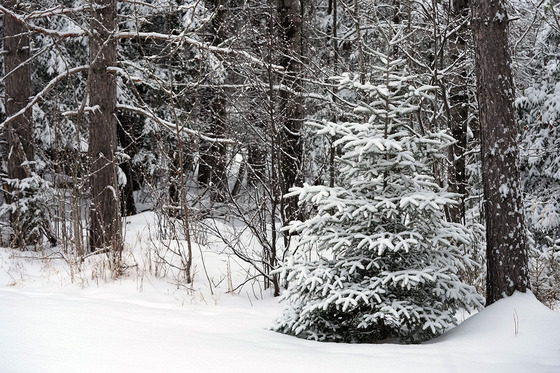 Minnesota is well known for frigid cold and lots of snow, and this winter is no different. According to climate data, average 24-hour temperatures for December through February in the state are around 10 degrees Fahrenheit in the north and 18 degrees Fahrenheit in the south. But temperatures can plunge well below zero, as much of the state will experience over the next few days.
How do trees survive such cold? Like Minnesota’s wildlife (and Minnesotans themselves!) trees have adapted to survive this cold. Here are four ways the forests survive those deep winter days and nights.
-
Trees’ cells have natural “antifreeze”
- Living trees are full of water – but since water expands when it freezes, what keeps trees from bursting open in winter? The water inside their cells contains dissolved substances, like sugar and other compounds, that lower the freezing point and prevent damage. This helps native trees like quaking aspen, which can survive temperatures colder than 50 below zero. Despite this natural protection, trees can get “frost cracks,” which are vertical cracks in the wood caused by rapid temperature drops when the water and sap inside the tree freeze and expand. Those cracks tend to happen at a weak spot in the bark. Native trees can get frost cracks, but non-native trees are more susceptible if they’re not adapted to the weather. Frost cracks aren’t fatal, but they make a tree more prone to decay, insects, and disease.
-
Winter dormancy conserves energy
- Hibernation isn’t unique to animal species. As day length shortens in fall, many tree species such as birch and maple enter dormancy, a resting state similar to hibernation. Their metabolism slows, above-ground growth stops, and energy use drops, allowing them to conserve resources until spring.
-
Trees drop or keep their leaves
- Deciduous trees, like maples, birches and aspen, have leaves that aren’t very cold hardy. To conserve energy and water contained in their leaves, deciduous trees move nutrients from leaves into their hardier woody tissues in the fall, then drop their leaves. Coniferous trees, on the other hand, hold less water in their leaves (or needles), which also have a protective wax-like coating that reduces their risk of freezing. By keeping their leaves through the winter, coniferous trees also continue to produce energy through photosynthesis.
-
Trees are shaped for shedding snow and maximizing sunlight
- Conifer species dominate the coldest forests on the globe. There are a few reasons, but one is their shape. The traditional, conical shape of a pine or spruce helps the snow slide off their branches, and their limbs are shorter and more flexible, reducing risk of breaking. The relatively longer lower branches of conifers, as compared to the more umbrella-like shape of some deciduous trees, also help the tree absorb more sunlight and photosynthesize when the sun is lower on the horizon, as it is during Minnesota winters.
Minnesota’s native trees have evolved strategies like these to survive and thrive in harsh winter conditions. These adaptations set them up for success come spring and highlight the importance of native species in building resilient ecosystems. The DNR offers resources, seedlings and forestry services to help landowners learn more about trees, forests, and what species would grow well on their land through the DNR Woodland Landowner Handbooks (mndnr.gov/woodlands) or by working with a professional forester to develop a woodland stewardship plan (mndnr.gov/foreststewardship/plan-writers.html). The DNR also offers native conifer seedlings through the Minnesota State Forest Nursery (mndnr.gov/forestry/nursery).
###
Participants will leave with snowshoes created in class
Take up a challenge and step back into the art of traditional snowshoe lacing with a two-day class at Lac qui Parle State Park on Saturday, Feb. 28 and Sunday, March 1.
At this event hosted by the Minnesota Department of Natural Resources, a seasoned snowshoe lacing volunteer will instruct the class and other volunteers will be on hand to help. Each participant will keep the pair of snowshoes they make.
“This class offers a wonderful, hands-on opportunity to take part in a traditional artform,” said Terri Dinesen, Lac qui Parle State Park supervisor. “Whether used as décor or to walk in the snow, the snowshoes will serve as beautiful heirlooms.”
The class is limited to 20 participants. The recommended age is 12 or older. The public can register or get more information by calling Lac qui Parle State Park at 320-435-4033 from 8 a.m. to 4 p.m. Monday through Friday. The registration deadline is 4 p.m. Thursday, Feb. 5.
While the class itself is free, participants will need to purchase a $160 Ojibwe snowshoe kit at the time of registration. The kits will be ordered by DNR staff via Minnesota-based Northern Toboggan Co. and distributed at the class. Coffee and light snacks will be provided during the class, but participants are encouraged to bring their own lunch.
The Saturday class will run 9 a.m. to 4 p.m., and the Sunday class will run from 10 a.m. until the snowshoes are complete, or until 3 p.m. The class will be held at the Lac qui Parle State Park education room at 14047 20th St. NW in Watson. The building is outside of the park, so those registered for the class will not need a state park vehicle permit to attend. However, if participants want to visit more of the park outside of class, a vehicle permit will be required (mndnr.gov/permit).
###
|