|
 |
Thank you for being a free subscriber to So, Does It Matter? Please support what we do. And also get 100% of our content (right now you get about 60% of it!).
What We’re Really Arguing About When We Argue About Immigration
The unresolved question of whether illegal entry still has consequences
|

| |||||||||||||||


 |
⏱️ 6 min read
The Real Divide Over Illegal Immigration
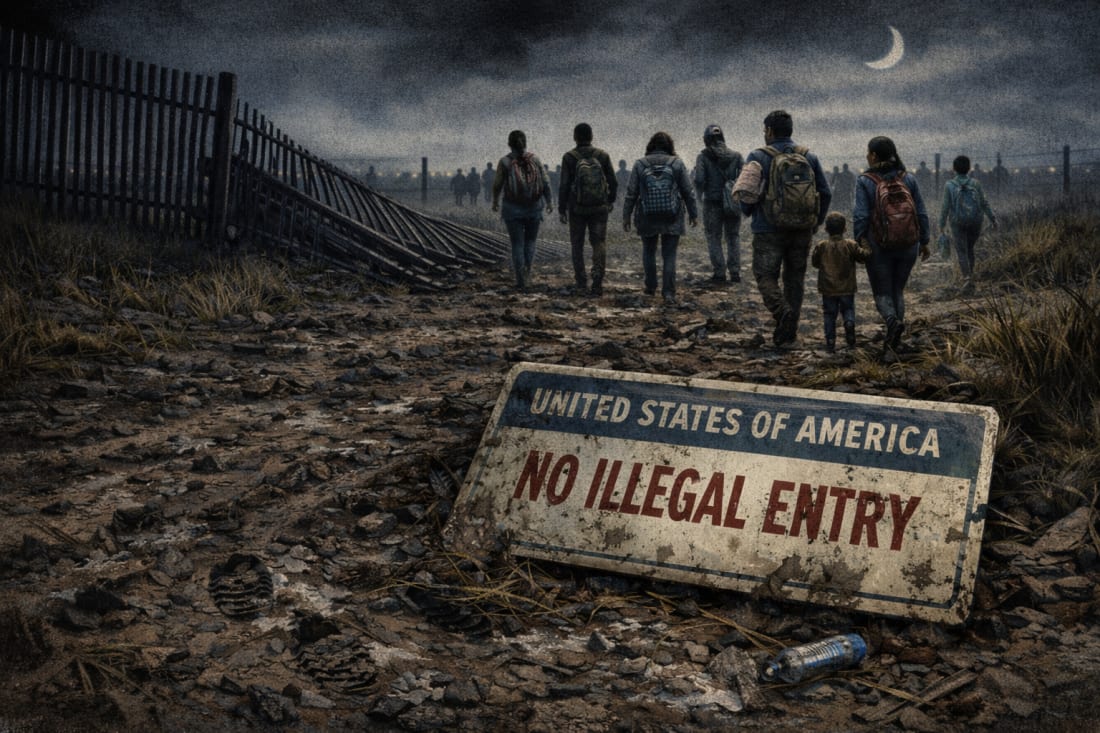
Polls show that Americans are deeply divided on illegal immigration, but this split is often misunderstood. The main disagreement is not about border security or interior enforcement tactics. Instead, it comes down to how people view entering the United States illegally.
Many Americans see illegal entry as a crime, but not a serious one. If someone came years ago, found work, raised a family, and became part of their community, people often treat the violation as a paperwork issue instead of a real crime. This reaction is not out of malice. It shows a natural tendency to judge people by who they are today, not by a choice they made long ago.
Leaders who agree with this view often blur the line between legal and illegal immigration. When enforcement comes up, they usually say, “That’s a civil matter, not a criminal one.”
That claim is not true, at least when it comes to entering the country.
Federal law makes illegal entry into the United States a crime. Under 8 U.S.C. § 1325, unlawful entry can result in fines, jail time, and removal proceedings. Even though enforcement has often been inconsistent or not a priority, the law itself has not changed. Years of lax enforcement, especially in states like California, have led to confusion about what the law really says.
How Permission Structures Took Hold
This confusion did not happen by accident. Over time, a system of permission and forgiveness has grown around illegal immigration. Sanctuary city policies limit how much local police work with federal immigration authorities. More government services are now offered “without regard to immigration status.” California even pays for state-funded healthcare for people in the country illegally, which is one of the most visible examples of this approach.
Public officials have added to this misunderstanding. I saw LAPD Chief Jim McDonnell repeatedly call immigration enforcement a civil matter during press conferences last year. This way of describing it may help politically, but it is not legally correct when talking about unlawful entry.
The result of these policies is easy to predict. People who entered the country illegally start to believe that their original violation no longer matters. Over time, through work and community ties, an illegal act can seem like a right.
Why Trump’s Enforcement Feels So Jarring
Then, President Trump took office twice. In theory, his administration’s actions should not be controversial. Stopping people from crossing the border illegally is a basic part of a country’s authority. Catching people who entered illegally is simply following the law.
But it is controversial, for the reasons already described. If you think illegal entry is a small issue that becomes less important over time, enforcement seems harsh. If you think the law still matters, enforcement seems necessary.
Enforcing immigration laws within the country also raises tough issues. Large-scale deportation is messy and always involves people with complex lives, families, and histories. There is no easy way to find, detain, and remove millions of people who have lived here for years because of weak enforcement. There are also some cases, though still rare, where federal agents make bad decisions or worse. These incidents should be examined, and they naturally cause public concern.
The Structural Problem No One Wants to Acknowledge
The federal government is good at enforcing immigration law at the border. It is much less effective at enforcing within the country, especially in states that do not want to cooperate.
The best and most humane way to enforce immigration laws inside the country would be to work closely with local law enforcement. Targeted actions, guided by local knowledge and input from elected officials, help reduce chaos and limit unnecessary problems.
But as long as leaders in some blue states say illegal immigrants have done nothing to deserve removal, cooperation will not happen. This creates a problem: the federal government is pushed into a role it is not prepared for, and critics then use the resulting problems as evidence that enforcement is wrong.
To make up for this, federal agencies hire more staff, become more visible, and take high-profile actions to encourage self-deportation. This is not by accident. It happens when quieter, cooperative enforcement is blocked by politics.
So, Does It Matter?
Everyone who entered the United States illegally knows they broke the law. Many did it because of desperation, fear, or hope for a better life. These are real reasons that should be recognized honestly. Feeling compassion for these situations is not a weakness. It is simply human.
But compassion does not mean the law no longer matters. For decades, many people have come to believe that breaking the law no longer counts, that enough time, tolerance, and political disagreement can erase it. In many cases, they may be right. They have gotten away with it.
When critics complain about how the Department of Homeland Security or U.S. Immigration and Customs Enforcement handles arrests and detentions, I can’t help but roll my eyes. The awkwardness of enforcing immigration laws within the country stems from policies that reject enforcement in theory but still benefit from not enforcing the law in practice.
If it is not already clear, I strongly believe in the rule of law. I am not happy about a large number of people who have “broken in” to this country without legal permission. I support legal immigration, but only with clear guidelines, controls, and a process that helps people become part of American civic life.
I also have many close friends, truly good friends, who see this issue differently, often because they feel real compassion. I respect that feeling, even if I disagree with the outcome. But compassion without law is not a principle for governing. As with many public issues, even well-meaning people can make mistakes.
Want more? How about a 15 Minute video of me talking more about illegal immigration? You’re in luck. Just below the paywall — I do exactly that. I try to maintain an even keel on an issue that can sure fire me up, so just free-wheel about this issue… Hope you enjoy it. As serious commentary or dark comedy…...
Keep reading with a 7-day free trial
Subscribe to FlashReport Presents: So, Does It Matter? On CA Politics! to keep reading this post and get 7 days of free access to the full post archives.
A subscription gets you:
 | Subscriber-only Afternoon Posts. Analysis on breaking News |
| Saturday’s Popular “What is Jon Reading” Column |
| 100% percent of our site content is yours! |
| ||||||||||

