Trump, Iran and Ukraine: When Promises Meet 'Caution,' the West's Deadly Trap
by Pierre Rehov • January 18, 2026 at 5:00 am
"The ruthless slaughter of anti-government protesters in Iran appears to have stopped — but only because residents are being held hostage in their homes by machine gun-wielding security forces that have flooded the streets... 'There were tanks out — there's tanks everywhere'... 'There are no protests anymore because of massive killings. With 12,000 dead, people are terrified...'" — The New York Post, January 15, 2026.
Iranians have learned through bitter experience that when executions are "paused," this does not mean they are canceled: they are "postponed" or carried out quietly, away from international scrutiny.
What this episode ultimately exposed was not simply a tactical decision by one administration, but a structural failure in how the West approaches popular uprisings against entrenched tyrannies. Western leaders are adept at virtue signaling but conspicuously hesitant and fragmentary at follow-through. Expressions of solidarity are issued quickly; commitments to protection are hedged or left deliberately vague.
The Islamic Republic understands this pattern intimately. It knows that it can absorb rhetorical condemnation, wait out media cycles, and then resume repression once attention shifts elsewhere. Tehran's temporary retreat on executions, whether genuine or tactical, fits neatly into this playbook. A regime that has survived more than four decades through systematic violence does not abandon its methods because of warnings. It adapts, recalibrates and seeks to reduce the immediate risk of foreign intervention while preserving its core mechanisms of control.
The danger for the protesters is that external encouragement, when not backed by sustained pressure, can accelerate this cycle by convincing the regime that it must act more efficiently, more quietly, and more ruthlessly.
[O]ppressed populations are encouraged [by the West] to rise, while those encouraging them retain the option to disengage.... By speaking openly about consequences and then stepping back once Tehran signaled a partial retreat, [Trump] exposed the limits of American power in a way that previous administrations often concealed behind bureaucratic language.
Iran's regime has revealed, once again, the deadly trap at the heart of Western policy, seen in Ukraine as well as in the Middle East: a willingness to praise bravery without guaranteeing protection. Trump's handling of these crises should be read less as a simple failure or success than as a warning. Words can inspire, but they can also expose countless people to monumental danger. In Iran today, and Ukraine, the difference between success and disaster depends not on declarations, but on whether those who speak the loudest are prepared actually to follow through.
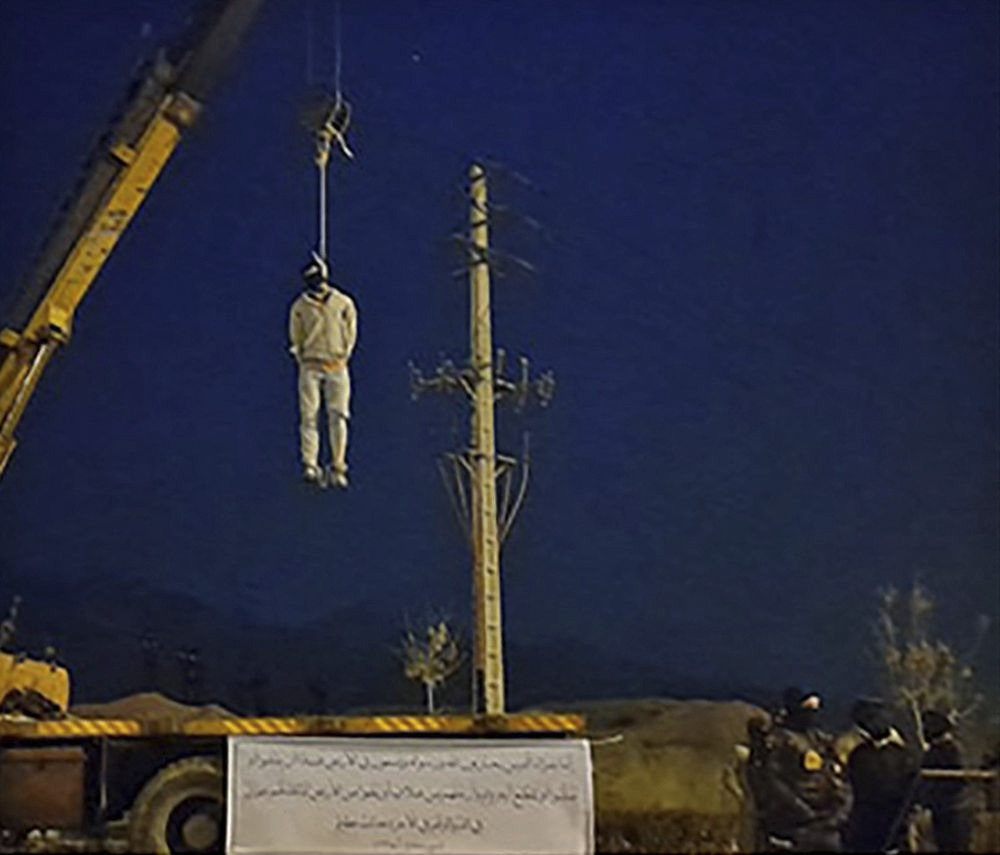
Iran's latest uprising began the way they always do: with humiliation in the marketplace, a collapsing currency, families unable to buy basic necessities, and a generation that has already lived through enough lies to recognize the smell of fear from the regime. What followed was the most serious nationwide challenge to the Islamic Republic since 1979: demonstrations spread across all 31 provinces, cascading through major cities and smaller towns alike, and then the familiar machinery of terror grinding into motion — live fire from police and regime militias, mass arrests, forced confessions, rushed trials, and the deliberate use of executions as a public "lesson."