AEI's weekly digest of top commentary and scholarship on the issues that matter most

aei logo

AEI This Week

AEI's weekly digest of top commentary and scholarship on the issues that matter most

ACHIEVING LESS THAN IT SEEMS

Trump's First Year

January 17, 2026

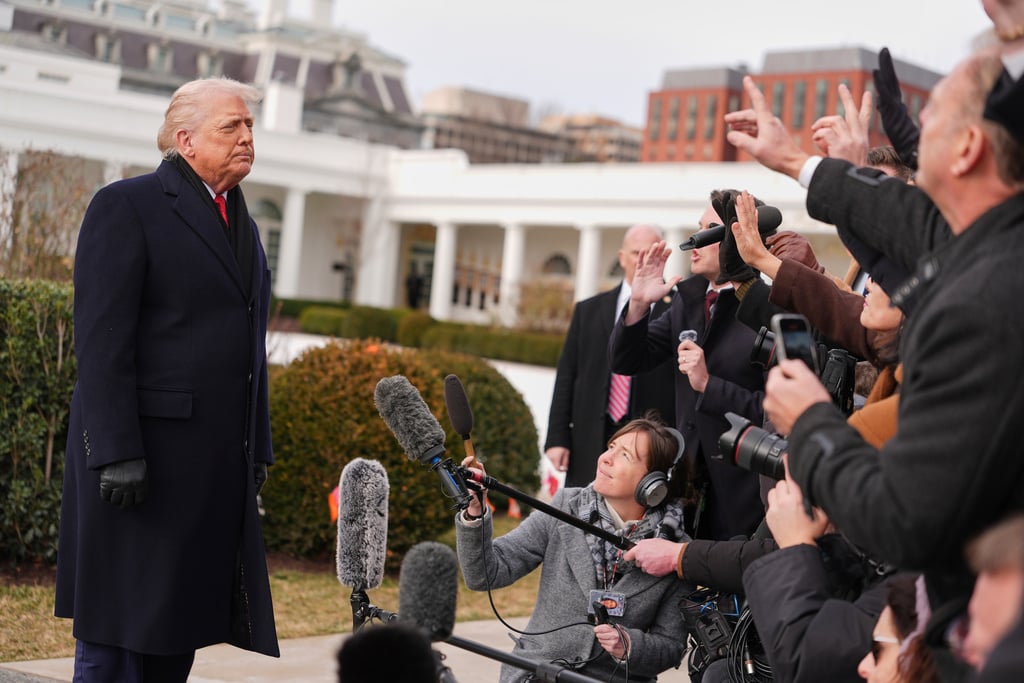
President Trump’s supporters and critics have both treated the story of his second term's first year as one of transformative action. But how much has he actually accomplished? In a new interview with The New York Times’ Ezra Klein, Social, Cultural, and Constitutional Studies Director Yuval Levin assesses Trump’s presidency so far—and explains why his approach to governance is not as effective as it seems.

AP26016643865177

The Trump administration has dramatically changed US immigration policy by stepping up border enforcement, pursuing mass deportations of illegal aliens, and restricting legal immigration programs. In a new report, Stan Veuger and coauthors estimate that these policies drove immigration in 2025 to zero or negative levels—with negative consequences for the American economy.


Last week, President Trump called for a $1.5 trillion defense budget for fiscal year 2027. In a new working paper, Elaine McCusker and John G. Ferrari lay out how Congress and the military could use this $600 billion increase to develop a military posture capable of handling a protracted multi-theater war.


The United States will formally withdraw from the World Health Organization on January 22. Brett D. Schaefer and Roger Bate explain how the US can use this withdrawal to pursue much-needed improvements to transparency and accountability in global health governance.


This week, Federal Reserve Chairman Jerome Powell accused the administration of threatening to criminally prosecute him to induce the central bank to lower interest rates. Desmond Lachman highlights the serious economic risks of this unprecedented threat to independent monetary policy.

General Law Revivalism and the Problem of 1938


From the nation’s founding until 1938, federal courts routinely used a body of non-statutory general law to resolve a wide range of legal issues. The Supreme Court repudiated this practice in Erie Railroad Co. v. Tompkins, declaring that “there is no federal general common law” and requiring courts to follow only federal or state law. In a new draft paper, Jack Goldsmith and Curtis Bradley grapple with the complicated legacy of this decision—which refounded much of contemporary federal court doctrine on non-originalist grounds. Unlike with other non-originalist precedents, the current Supreme Court has largely continued to embrace Erie—despite some scholars’ calls to revive federal general law. Goldsmith and Bradley explain why this revivalism is unworkable but highlight the fundamental dilemma this leaves originalists with as they are forced to compromise their commitments to live with Erie’s legacy.

More from AEI

RESEARCH AND COMMENTARY

Improving Medicare Program Integrity

James C. Capretta and Jack Rowing | AEIdeas


A Path Forward: Institutional Constraints in the Age of Trump

Kori Schake | AEIdeas


Are China’s Students Really Number One? A Statistical Riddle

Nicholas Eberstadt | Milken Institute Review


Iran Is Vulnerable. Is It Time for the US to Intervene?

Hal Brands | Bloomberg Opinion


Colleges Didn’t Only Lose Their Value—They Lost Their Way

Mark Schneider | AEIdeas

PODCASTS AND VIDEOS

What Is Going On in Iran? Michael Rubin Explains.

Danielle Pletka et al. | What the Hell Is Going On?


The State and the Soldier: A Conversation About Civil-Military Relations with Kori Schake and Robert Doar

Robert Doar and Kori Schake | AEI event


Math Academy

Nat Malkus et al. | The Report Card with Nat Malkus


Patriots and Loyalists

Jonah Goldberg and Ken Burns | The Remnant with Jonah Goldberg


Powering Prosperity and the New Electricity Economy

L. Lynne Kiesling | AEI event

QUOTE OF THE WEEK

opening_quote

The courts must continue to limit the President’s kingly instincts, by limiting his power to be our legislator-in-chief. And our actual legislators need to reform their own institution accordingly.

closeing_quote

—Adam J. White

Ensure delivery  |  Subscribe


American Enterprise Institute for Public Policy Research 
 Robert Doar, President 


1789 Massachusetts Ave. NW, Washington, DC 20036

202.862.5800 | www.aei.org

 Unsubscribe from the link below

Facebook
X
LinkedIn
YouTube
Instagram
Podcast Logo New_Gray

Donate to AEI in support of defending and promoting freedom, opportunity, and enterprise.

This message is for: [email protected] | Manage preferences or Unsubscribe