As authoritarian politics harden in the United States, familiar channels of resistance are proving dangerously inadequate. Elections are constrained, courts are under siege, and dissent is increasingly met with repression in the streets. In this moment, questions of power — who has it, how it is exercised, and how it can be withdrawn — are no longer abstract. They are immediate and practical. Labor historian and longtime organizer Jeremy Brecher has spent decades grappling with these questions, and in a recent series of reports, culminating in “Social Strikes: Can General Strikes, Mass Strikes, and People Power Uprisings Provide a Last Defense Against MAGA Tyranny?,” he argues that large-scale noncooperation may be one of the few strategies capable of halting an authoritarian slide.
From escalating resistance to ICE to a growing call for a Jan. 23 Minnesota shutdown following the killing of Renée Nicole Good, forms of mass refusal — to work, to comply, to carry on as usual — are moving from theory into practice. Drawing on historical examples of people power uprisings and on his recent work examining how general strikes and broader “social strikes” are built, in this conversation Brecher reflects on where the U.S. is now, what conditions make such actions possible, and what strategic groundwork is required to turn diffuse outrage into sustained, democratic power.
This interview is co-published by ZNetwork.org, Waging Nonviolence, and the Labor Network for Sustainability.
Could you give a definition of what you mean by social strikes?
Social strike is a broad term that encompasses a wide range of activities that use the withdrawal of cooperation and mass disruption to affect governments and social structures. I use the term “social strikes” to describe mass actions that exercise power by withdrawing cooperation from and disrupting the operation of society. Social strikes represent the withdrawal of cooperation and acquiescence by a whole society, manifested for example in general strikes, political strikes and mass popular “people power” uprisings. The goal of a social strike is to affect not just the immediate employer, but a political regime or social structure. In all their varied forms they are based on Gandhi’s fundamental perception that “even the most powerful cannot rule without the cooperation of the ruled.”
Why is this a winning strategy, and as you put it, a “defense against MAGA tyranny”?
The power of the powerful ultimately depends on the acquiescence and cooperation of those they rule. Social strikes have been one way that people have exercised the power to withdraw that acquiescence and cooperation.
Social strikes provide a possible alternative when institutional means of action prove ineffective. In many countries, where democratic institutions have been so weakened or obliterated that they are unable to disempower tyranny, such methods have been used effectively. My report on “Social Strikes” recounts examples that have brought down tyrannical regimes in Poland, the Philippines, Brazil, Puerto Rico, and most recently South Korea. These large-scale nonviolent direct actions — often referred to as “people power” uprisings — made society ungovernable and led to regime change. In all these cases, popular mobilization and the threat of general social disruption were so great that the autocrat’s supporters abandoned or turned against him and forced him to resign.
Of course there are no guarantees that social strikes can win in the U.S. today or in any other situation. But as MAGA tyranny drives more and more individuals, constituencies and institutions into opposition, its power is being progressively undermined. Historical experience around the world has shown social strikes are a powerful means to manifest that withdrawal of acquiescence and the refusal of the people to cooperate. Indeed, widespread forms of mass resistance like the Tesla and other boycotts, the No Kings Day-type national protests, and the on-the-ground resistance to ICE are already hamstringing the Trump administration’s freedom of action. Social strikes would represent a significant intensification of what I have called “social self-defense” against Trumpian tyranny. They have the potential both to further impede MAGA depredations and to contest for support from the majority of the population.
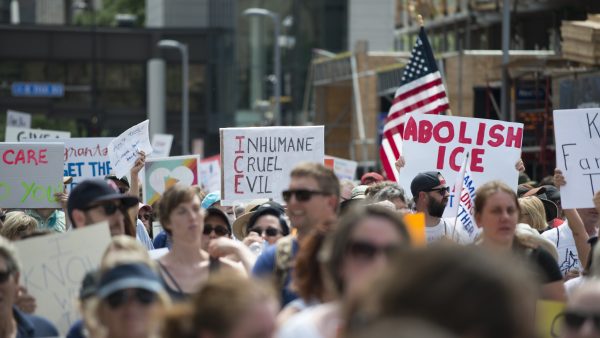 Free Our Future. Families Belong Together. Abolish ICE March and Day of Action, Minneapolis, Minnesota | Image credit: Fibonacci Blue/Flickr, licensed under the Creative Commons Attribution License
Where would you situate us, in our current moment, in terms of the trajectory of the escalating authoritarianism that we have been experiencing? How does this compare to some of the historical scenarios you analyze in the report and what does that mean for our strategic organizing?
An authoritarian takeover is under way in the U.S., complete with the arrest of opposition
political leaders like Rep. LaMonica McIver, unrestrained executive usurpation, and lawless physical violence and kidnapping by masked, unidentified, armed federal agents. The government is now protecting and defending ICE agents who shoot down protesters in cold blood. The president is now threatening to invoke the Insurrection Act, which would allow him to use the military to suppress a “rebellion,” i.e. action by any who oppose him. As his power is threatened, it is entirely plausible that he will turn to a full-scale coup. When a regime starts shooting down unarmed protesters in the street, that’s a Rubicon.
While they have much in common, every tyrannical regime and every opposition has its own dynamics. Growing popular discontent and emerging elite opposition (think Jerome Powell and the Clintons) are likely to lead to intensified repression (think Iran today). Authoritarian regimes are likely to use every means available to them to destroy opposition — something we are seeing every day with the Trump administration and its allies. Such repression can be effective, but it can also provoke still further opposition (think popular response and on-the-ground resistance following the ICE killing of Renee Nicole Good). We need to be prepared for intensified repression, but also be mindful that the people potentially have the power to defeat tyranny.
Following the murder of Renée Good by an ICE agent in Minnesota on Jan. 7, and an ongoing assault on the state by federal immigration forces, a labor-community coalition is calling for residents to refuse to work, shop or go to school on Jan. 23. Could you comment on this and other recent calls for social strikes?
The Minnesota story is developing hour by hour. The escalation of repression, including more and more shooting of unarmed civilians, massive invasion by additional ICE agents, and Trump’s threat to invoke the Insurrection Act, seem to have enraged large swaths of the state’s population without intimidating them into acquiescence. Mass action responses have been cascading. Rapid response networks and neighborhood ICE watch groups, armed with cameras and whistles, are proliferating. A friend in St. Paul wrote to me that there are 1,100 rapid response anti-ICE volunteers in their neighborhood alone.
On Jan. 10, ten thousand joined an “ICE Out of Minnesota” rally and march. On Jan. 14, thousands of St. Paul high school and middle school students marched to the State Capitol Building; nine high schools staged walkouts; a thousand students blocked St. Paul’s main thoroughfare with a two-mile march. On, Jan. 18 union postal workers will rally to demand “ICE Out Of Minnesota!,” followed by a march to the site of Renee Nicole Good’s killing.
The proposed day of refusal to work, shop or go to school is a perfect example of a “social strike,” including work stoppages by workers but also myriad other forms of noncooperation by large and highly diverse sectors of society. A wide swath of immigrant, religious, labor, community, tenant and other groups are deeply involved. Unions already supporting the day of action include the Amalgamated Transit Union Local 1005, SEIU Local 26, UNITE HERE Local 17, CWA Local 7250, and St. Paul Federation of Educators Local 28.
The way Minnesotans are turning to this form of action is a result of the specific situation they face, but also of the growing discussion of and calls for general and social strikes. In that context, the “day of refusal” could have repercussions far beyond Minnesota. Teacher and union activist Dan Troccoli says, “in addition to appreciation, we want emulation. We need that out there in the streets in every city.”
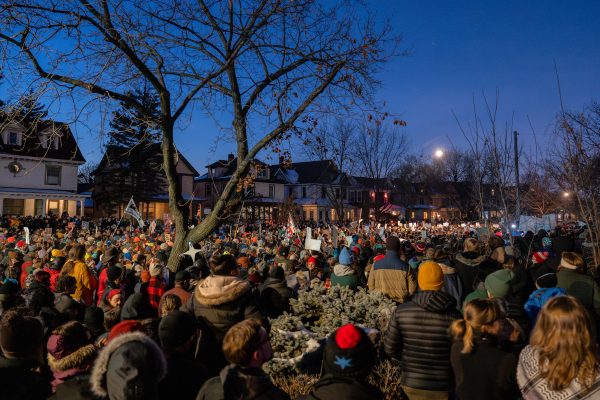 Large vigil for Renee Good in South Minneapolis. Good, who was observing ICE actions, was killed by an ICE agent earlier in the day.m| Image credit: Chad Davis/Flickr, licensed under the Creative Commons Attribution License
Where are we now in terms of strategy and readiness for impactful and sustained mass social strikes?
A crucial development of the past years has been the emergence of what I call the “movement-based opposition.” With the Democratic Party largely failing to effectively play the role of an opposition party, an alliance of social movements has begun playing the role of a “non-electoral opposition” that can mobilize those harmed by MAGA, identify common interests, unify their programs and actions, and articulate alternatives. The movement-based opposition is exemplified by the participation of millions in protest days of action like Hands Off!, MayDayStrong, and No Kings, and the mass civil resistance to ICE raids around the country.
Next steps are already under way. Indivisible’s One Million Rising, which it describes as “a national effort to train one million people in the strategic logic and practice of non-cooperation,” could be a step in preparing those already participating in mass protests for social strikes. Future actions can progressively incorporate elements of noncooperation and disruption that evolve toward social strikes and serve as living representations of their potential power. They can combine strikes with non-workplace actions like boycotts, commercial shutdowns, mass picketing, blockades, occupations and civil disobedience. Such actions will need to constantly seek the “sweet spot” between effective disruption of MAGA oppression and alienation of forces that might otherwise be won over.
Could you outline a medium to long-term organizing vision and priorities for where we should aim to go from here?
I have dubbed the overall struggle against MAGA tyranny “social self-defense” — the defense of society by society against the forces aiming to destroy it.
Social self-defense against a creeping or galloping MAGA coup is most likely to succeed through a combination of electoral and social strike methods. The overcoming of authoritarian regimes in the Philippines, Serbia and elsewhere, while accomplished under circumstances far different from those in the U.S. today, provide examples of how they can be combined.
The detailed timelines of social strikes cannot be known in advance. They are likely to grow out of a gradual, and not always visible, buildup of harm — and resentment at harm. This is already occurring in Trump’s America. It could lead to a series of escalating struggles, possibly punctuated by defeats or by concessions generating temporary quiescence. Popular opposition could also diminish as a result of repression, MAGA counter-maneuvers, a sense of futility, or other “unknown unknowns.” A period of apparent quiescence with a rising sense of grievance might eventuate in a sudden explosion of popular rage and a mass uprising.
Whether gradually or rapidly, social strikes will need to develop the power necessary to reduce MAGA power enough to bring an end to its rule — through elections, collapse of political support, or social disruption.
Resisting the rise of tyranny will no doubt require sacrifice. But that sacrifice will not be primarily on behalf of one political party vs. another, of Democrats vs. Republicans. It will be a defense of democracy — defense of government of the people, by the people, and for the people. Beyond that, it is the protection of that which makes our life together on Earth possible. It is defense of the human rights of all people; of the conditions of our Earth and its climate that make our life possible; of the constitutional principle that government must be accountable to law; of global cooperation to provide a secure future for our people and planet; and of our ability to live together in our communities, our country, and our world. A MAGA tyranny is a threat to all of us as members of society. Overcoming MAGA usurpation of power is social self-defense.
We can hope that social strikes will not be necessary to limit and ultimately end MAGA tyranny. Accomplishing that goal by less drastic forms of social self-defense inside and outside the electoral system would likely require less risk and less pain. But if other means are unavailing, experience around the world indicates that social strikes may provide a way for people facing authoritarian takeover to establish or reestablish democracy.
Join in solidarity: https://www.iceoutnowmn.com/
This interview is co-published by ZNetwork.org, Waging Nonviolence, and the Labor Network for Sustainability.
Jeremy Brecher is a co-founder and senior strategic advisor for the Labor Network for Sustainability. He is the author of more than fifteen books on labor and social movements, including Strike! Common Preservation in a Time of Mutual Destruction, and The Green New Deal from Below.
Alexandria Shaner is a sailor, writer, and organizer. She is a staff member of ZNetwork.org and active with Extinction Rebellion, Caracol DSA, and Food Not Bombs.


