Vol. 14 | January 2026

At TDLR, one of our priorities is making sure qualified Texans can get to work—and stay at work—without unnecessary barriers. That’s why TDLR continues to expand occupational reciprocity where it makes sense. Recently, Texas added a new electrician reciprocity agreement with Arkansas, building on existing agreements and expanding opportunities for qualified electricians to get to work more quickly.
As Texas continues to grow, the demand for skilled trades professionals grows right alongside it. Experienced workers are needed for timely completion of construction projects, and communities rely on safe, high-quality work. Reciprocity helps address these realities by recognizing comparable licenses and allowing skilled professionals to put their experience to use without unnecessary delays.
This approach reflects our commitment to maintaining strong licensing and safety standards while also responding to real workforce needs. By reducing friction where requirements align, we support the building trades, help employers meet demand, and keep work moving across the state.
The goal is simple and shared: put qualified people to work, support a strong and mobile workforce, and help Texas continue to build and grow.
Courtney Arbour, Executive Director
|

The Texas Department of Licensing and Regulation (TDLR) has entered into a reciprocal agreement with the Arkansas Department of Labor and Licensing as part of its ongoing efforts to respond to growing industry workforce needs. This agreement will allow licensed master electricians in Texas to gain licensure in Arkansas without additional examination and vice versa. Applicants for reciprocity must have held their master license in good standing for at least 1 year, gained their license by passing a state approved exam, submit proof of holding a JE license for 2 years, and meet all prerequisites for licensure.
“The demand for licensed master electricians across the nation continues to grow. This new agreement reflects our commitment to removing unnecessary barriers where it makes sense, while maintaining license standards. By expanding reciprocity, we are creating more opportunities for Texans and supporting a strong, mobile workforce that benefits the Texas economy,” said Courtney Arbour, TDLR executive director.
“This year, I was proud to sign House Bill 11 to encourage TDLR to pursue occupational licensure reciprocity agreements with other states,” said Texas Governor Greg Abbott. “This agreement with the State of Arkansas ensures that Texas has the master electricians needed to spur economic growth and offer good-quality, high-paying jobs. Texas will remove barriers to employment and cut red tape, so every Texan can earn a living free from unnecessary government intrusion.”
TDLR continues to pursue reciprocity agreements with other states that have similar licensing requirements as part of a broader effort to strengthen the Texas workforce while preserving public safety and professional standards.
|
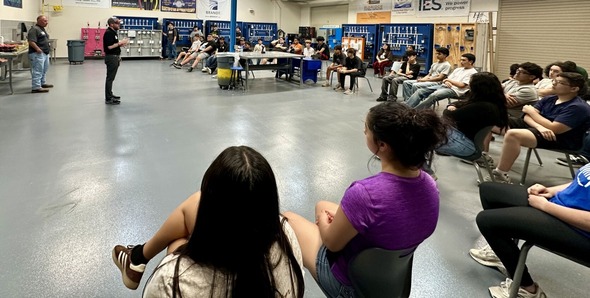 Chief Larry Reichle and Deputy Josh Hall have been traveling across the state visiting numerous trade schools. Most recently, they visited with electrical program students at Houston Community College and at North East ISD in San Antonio. They met with students and teachers, discussing Texas laws and rules for electricians as well as the career paths available in the electrical industry. If you would like to request that Larry and Josh visit your school, please email [email protected].
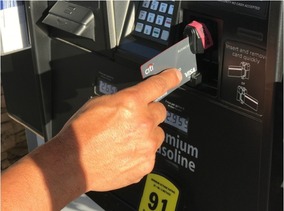
The 89th Texas Legislature passed new laws that will affect motor fuel stations.
SB 2371 and SB 1499
SB 2371 and SB 1499 provide clear guidelines and new responsibilities for state agencies and Texas businesses to uniformly combat skimmers, fuel theft, and criminals.
The Texas Financial Crimes Intelligence Center (FCIC) was given expanded authority to assist in crimes involving fuel theft, skimmers, virtual currency, and ATM fraud involving any merchant’s electronic terminal in Texas. Electronic terminals include point of sale, virtual currency kiosk, ATM, or other terminals that initiate an electronic funds transfer.
SB 2371 enhances merchant, service technician, and service company engagement to report skimmers found on any electronic terminal. When a station, technician or other employee finds a skimmer, they must report it to the FCIC at https://fcic.texas.gov/merchants.html. Further instructions are provided on the site.
SB 2371 also created civil penalties and criminal offenses for violating the provisions of this law. For more details visit, https://statutes.capitol.texas.gov/Docs/BC/htm/BC.607A.htm.
|

HB 4690
HB 4690 specifies motor fuel quality standards and limited exceptions to those standards for consumer protection and motor fuel uniformity across the state. With notable exceptions, TDLR is required to have motor fuel quality standards as the most recently adopted ASTM International standards.
Gasoline or gasoline blended with ethanol that is sold during periods of the year when the areas on either side of the 99o 00’ west longitude line have different volatility classes are allowed to be sold in either area as long as the fuel complies with the most current ASTM D4814 specifications. This situation currently only occurs in March, April, November, and December because of the transition between winter and summer gasoline formulations. In practice this exception will allow fuel stations near the 99o 00 west longitude line to source gasoline during these months from suppliers on either side of this longitude.
Another notable exception to ASTM International fuel standards only involves the sale of gasoline that does not contain ethanol, sometimes called ethanol-free gasoline or E0 gasoline. If a gasoline that does not contain ethanol meets or exceeds the vapor pressure and distillation class AAA, AA, or A specifications of ASTM International D4814 then the Drivability Index (DI) specification is satisfied. This alleviates the need for gasoline that does not contain ethanol to meet the DI specifications during the times of the year when gasoline volatility class AAA, AA, and A are required to be sold.
|
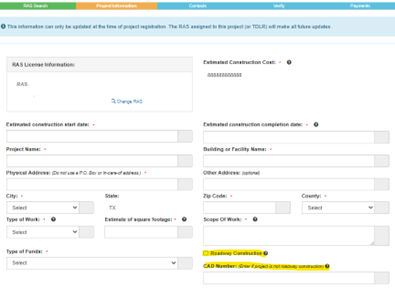
Updates to the to the Texas Architectural Barriers online System (TABS) registration process went into effect in September 2025. The changes will help ensure that project records are accurate.
TABS now requires the project County Appraisal District (CAD) number be entered into project information at the time of registration unless the scope of work is limited to public rights-of-way. This CAD number must be the real or commercial property account, not the business or personal account of the tenant.
In addition to the account number, a pdf of the real or commercial property CAD account must be uploaded prior to payment and issuance of a TDLR project number. This CAD PDF document is a copy of the real or commercial property records reflecting the property address, legal description, or map location associated with the property reflecting the owner contact information and CAD. The owner contact information reflected on the copy of the uploaded CAD record provided must match the owner contact information provided for the owner contact information at registration.
|
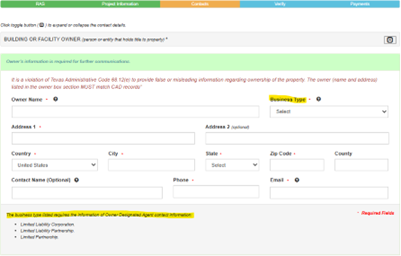
The TABS registration process now also incorporates information about the type of owner of the property.
A new required field asking for “Business Type” must be filed in at the time of registration. If the field indicates that the property owner is a Limited Liability Corporations (LLC), Limited Liability Partnership (LLP), or Limited Partnership (LP), TABS will require that the parent or umbrella entity responsible for the owning entity be entered in the Owner’s Designated Agent Contact information section. A completed (LLO) form must be on file.
This information also informs the RAS and TDLR if a Limited Liability Ownership (LLO) form is required after the project is registered. The LLO form requires that an article of formation document be valid, so at registration, TABS also requires a copy of the owner’s Article of Formation/Certificate of Formation or a copy of the Texas Secretary of State (SOS) record that indicates the owning entity agents or valid signors of TDLR documents. All other owner types of owning entities still have the option to designate agents with the Owner Agent Designation form.
These new requirements follow the documentation requirements of other permitting agencies and do not require additional information that is not provided in public records.
|

EAB Staff updates:
Over the summer we enjoyed hosting the program intern Vanphi Nguyen, who has since moved on to TDLR’s Education and Examination Division as a full-time employee.
Ginna Harris, who was with the EAB program for more than 15 years and was the state lease coordinator, has moved to the TDLR Combative Sports Program. Shaun Twyman replaces her as the state lease coordinator and should be contacted if a RAS needs permission to perform work for state lease projects. You can reach Shaun at [email protected].
|

Senate Bill 1255, passed during the 89th Texas Legislature, regular session, and signed into law, repeals an exemption that allowed unlicensed workers to conduct mold assessment activities if they were supervised by a TDLR-licensed individual.
The new law went into effect on September 1, 2025.
Now, all persons who conduct mold assessments must be licensed or registered with TDLR. There are no exemptions to the licensing or registrations of individuals.
|
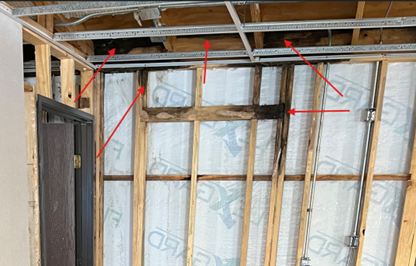
Is All Mold Visible? In a Word, No.
Mold is found throughout nature; however, concentrations found inside structures that have been compromised can be elevated to levels that affect most all persons in some form.
Common symptoms of mold exposure can lead to coughing, sneezing, congestion, eye irritation, more severe reactions can cause serious illness, and the worsening of asthma symptoms.
TDLR conducts inspections on operators to ensure the assessments and remediation efforts are conducted by trained and qualified individuals to keep not only the occupants of the facility safe and healthy, but the public and those who are doing the remediation work as well.
Are only visible mold projects reported to the department? No, not all mold is visible. Surfaces can be affected by mold when there are no visible signs. Mold can happen when no visible indication is available.
If the state is not notified of a mold remediation project, how do we know if a project is happening?
- Individuals call or email TDLR about suspected projects that are happening.
- Individuals can file a complaint about potential remediation projects.
- In the Rules, §78.72(c) - Code of Ethics, all credentialed persons have a duty to report ethical misrepresentations or violations to the department.
- TDLR can also just drive by a location and if there are indications of mold remediation happening, TDLR can stop and ask.
|
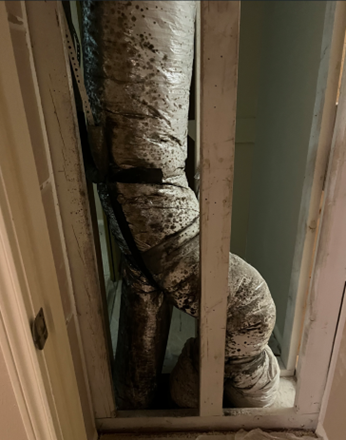
Suspect Mold? Have a Mold Assessment Done
If you suspect mold in your home, facility, business, dwelling, you may need to have a mold assessment conducted.
Some tips when thinking you may have a mold growth problem:
- Always ask if the Assessment Consultant or Mold Remediation Contractor is licensed with TDLR and ask to see their license.
- If proceeding with mold remediation, ask to see the state notification. If there is no state notification, ask why.
- If you have a general question or suspect a project required a state notification, contact TDLR at [email protected]; Telephone: (512) 463-6599;Toll-Free (in Texas): (800) 803-9202
|
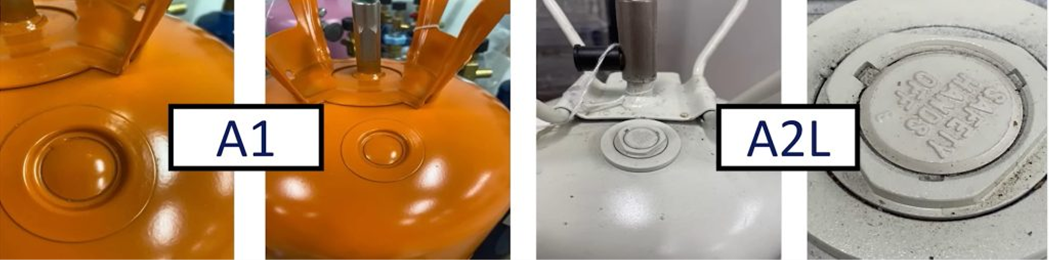 A2L refrigerant cylinders are going to have a different type of safety feature on them; instead of a rupture disc, they will have a relief valve. Unlike the rupture disc, the valve will only allow for the release of enough refrigerant to relieve the pressure. This will prevent the entire contents from being released on overpressure inside an enclosed AC service van causing a hazardous situation for the occupants. When working on A2L equipment, reaching a flammable concentration is the most critical concern.
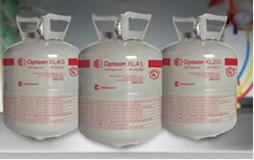
All A2L refrigerant cylinders will have a red band or the entire top painted red to indicate the presence of a mildly flammable refrigerant. A2L refrigerant cylinders have left-handed threads to help prevent cross contamination between A1 and A2L refrigerants.
|

TDLR regulates elevators, escalators and related equipment, as well as contractors and inspectors who work with them to ensure the safety of passengers. We regularly review program laws and rules, as well as industry procedures and processes, to provide useful information to enhance safety.
Over the past several months, TDLR staff have conducted mandatory online trainings for all elevator inspectors in Texas. The training covers the administrative procedures, rules and regulations that impact the daily operations in the elevator industry while focusing on the safety aspects of the job. It also provides valuable insight into elevator code requirements and standardized inspection guidelines that are required to be utilized in the elevator industry. To date, 90.75% of elevator inspectors have successfully completed the training, and our goal is for 100% of inspectors to complete it by the end of January.
We continue to work with the TDLR General Counsel’s office to update rules and laws to provide building owners, inspectors and contractors with a better understanding of their responsibilities when it comes to maintaining and inspecting equipment, submitting plans reviews, and the process of reporting incidents and accidents to the department.
We are addressing repeat violations more quickly by requiring that all violations are cited on an inspection report:
- (A) corrected within 60 calendar days of the date of inspection or
- (B) have them under contract to be corrected and all work completed not later than the next inspection date; or
- (C) have an approved waiver or delay.
In 2025, notifications of possible unsafe elevators and escalators from inspectors, elevator contractors, and owners or owner’s agents increased exponentially. Those concerns are being addressed quickly to prevent possible incidents and accidents from happening. The overall goal is to reduce possible incidents and accidents that may occur with elevator and escalator locations across Texas.
|

Two bills that affect Code Enforcement Officers passed in the recent legislative session and went into effect on September 1, 2025:
Senate Bill 1376 amends Section 1952 of the Texas Occupations Code. The bill allows an applicant to register as a Code Enforcement Officer in Training (CIT) and to engage in code enforcement (like zoning, building safety and other code enforcement duties) without the supervision of a licensed Code Enforcement Officer if the employer of the CIT does not also employ a registered Code Enforcement Officer.
House Bill 4765 also amends the Texas Occupations Code Section 1952. to clarify language in the statute that is ambiguous and could be interpreted to include corporations. The bill also clarifies reciprocity by allowing out-of-state applicants to apply for licensure who have training that is substantially equivalent to training provided in Texas. The bill is intended to allow faster code enforcement and career entry in rural areas.
We have updated the Code Enforcement Officer in Training application forms to accommodate these changes.
|

The Boiler Safety Program has adopted the NB-380 Training Program developed by the National Board of Boiler and Pressure Vessel Inspectors (NBBI), as outlined in the National Board Inspection Code (NBIC). The program is designed to expand TDLR’s ability to recruit and train new boiler inspectors, even those without prior inspection experience, by providing a structured and comprehensive learning pathway.
Under the NB-380 framework, each new trainee is paired with a qualified and experienced Trainer who provides one-on-one mentorship throughout the training period. This approach ensures that trainees gain both theoretical knowledge and practical, hands-on experience. Training activities include supervised inspections of various types of boilers and pressure vessels, familiarization with TDLR’s specific policies and procedures, in-depth study of the Texas Boiler Law and Rules, and completion of the National Board’s workbook exercises to document progress and reinforce learning.
The integration of this program supports TDLR’s Boiler Safety program goals to uphold public safety by ensuring that all inspectors meet high professional and technical standards. It also promotes workforce development within the Boiler Safety Program by creating a sustainable pipeline of qualified inspectors, strengthening statewide consistency in inspections, and aligning Texas’s training standards with nationally recognized best practices established by the National Board.
|

Exemption of Certain Types of Boilers
During the legislative session, Section 755.022(a) of the Texas Health and Safety Code was amended to exempt certain steam generators used in medical equipment and autoclaves from state boiler regulations.
Effective September 1, 2025, electric miniature power boilers that meet all the following criteria and are components of a medical device regulated by the U.S. Food and Drug Administration (FDA) at health care facilities are no longer subject to regulation under Chapter 755:
Exemption Criteria:
- Size limitations:
- Inside shell diameter does not exceed 16 inches
- 20 square feet of heating surface
- 5 cubic feet of gross volume, excluding the casing and insulation
- Pressure limitation:
- Allowable working pressure does not exceed 100 pounds per square inch gauge (psig)
|
|
Do you need a verification of your license? You can do that online! Find the link on the right-hand side of your profession's program webpage.
Reminder: Renewing online using a credit card is fast and secure. Online renewals are automated and processed within a week of receipt, while mailed-in renewals can take significantly longer.
Applicants for new licenses should check the TDLR website to see whether their license type allows for original applications to be submitted online. If so, applying online and submitting documents electronically will help speed up the licensing process.
|
|
 |

1. Can a high school student gain hours in school while holding an Apprentice Electrician license?
2. How do motor fuel merchants and service technicians report skimmers found on motor fuel devices?
- Report the skimmer found to TDLR at https://www.tdlr.texas.gov/skimmers
- Call the local law enforcement non-emergency phone number
- Service Technician notifies the merchant of a skimmer
- All of the above
3. What document is required to be uploaded to complete the project registration in TABS, when the project is not a public right-of-way project?
4. You walk into a house and smell a musty, earthy odor. You spot dark spots creeping along the bathroom ceiling. What’s your best first move?
- Light a candle and hope it goes away
- Spray it with air freshener — problem solved!
- Investigate for moisture or leaks and call a licensed mold professional
- Move out and never look back
5. What temperature in Fahrenheit does water boil at in a vacuum pressure of 500 microns (759.50 mm Hg absolute)?
- 212℉
- 100℉
- -12℉
- -50℉
6. If the braking system on a conventional elevator fails, is the elevator more likely to fall?
- Yes
- No
- I’m not sure
- I don’t know
7. Can a supervisor other than a licensed code enforcement officer sign-off experience for a code enforcement officer in training?
8. How does the NB-380 training method benefit the Boiler safety program?
|

Please file a complaint with TDLR alleging unlicensed practice if you have evidence that a person or business with a revoked license is continuing to advertise or perform services that require a license in Texas.
HOW TO FILE A COMPLAINT
You can file a complaint online for most TDLR programs.
Although TDLR accepts anonymous complaints, you must provide your name and contact information when you submit the complaint if you want to receive information about the status or progress of your complaint.
Please note that if your complaint does not allege a violation of the law or rules or does not include enough information for TDLR to investigate the allegations, TDLR will not open a complaint.
Read more about TDLR's complaint investigation and resolution process.
|
 To find disciplinary actions taken on complaints filed with TDLR, visit the TDLR Administrative Orders Search page.
You can search by name, license number, location, or by program. All disciplinary actions posted on the TDLR website are final actions taken by TDLR. No actions taken by previous licensing boards or agencies are included.
For information on why specific violations of the law or rules might fall into a certain penalty range, please see TDLR's Enforcement Plan.
What about license denials?
License denials and revocations are included. If an application denial is based on criminal history, you can find information on why that criminal history was relevant in the program’s Criminal Conviction Guidelines.
| Alvarez, Gabriel |
Electricians |
ELC - Apprentice |
| Fullerton, Benjamin P. |
Electricians |
ELC - Apprentice |
| Garcia, Ernesto A. |
ACR |
ACR - Registered AC Technician |
| Gaskins, Dominic R. |
Electricians |
ELC - Journeyman |
| Granado, Jacob N. |
Electricians |
ELC - Apprentice |
| Herrera, Sergio |
Electricians |
ELC - Apprentice |
| Hubbard, Patrick S. |
Electricians |
ELC - Apprentice |
| Lopez, Robert |
ACR |
ACR - Registered AC Technician |
| Mota, Victor M. |
Electricians |
ELC - Apprentice |
| Null, Lance E. |
Electricians |
ELC - Journeyman |
| Reyna, Robert |
Electricians |
ELC - Journeyman |
| Tristan, Victor |
Electricians |
ELC - Apprentice |
| Vasquez, Raul A. |
Electricians |
ELC - Apprentice |
| Wallace, Errick D. |
ACR |
ACR - Registered AC Technician |
| Young, William Thomas II |
ACR |
ACR - Air Conditioning Contractor |
| Zambrano, Ruben |
ACR |
ACR - Registered AC Technician |

TDLR employs people in a wide variety of professional, administrative and technical positions and provides a total compensation package that enables us to attract, motivate, and retain highly skilled and talented employees.
Our employees also enjoy agency and state benefits and the opportunity to contribute toward TDLR's vision of being the leader in public service by creating innovative, low cost and regulatory best practices, and cultivating employees who provide exceptional customer service.
TDLR is a proud member of the We Hire Vets employer recognition program, which identifies Texas employers whose workforce consists of at least 10% military veterans.
Check out the positions we have available. Didn't see anything that's right for you? You can sign up to receive emailed notifications when we add job openings.
|
- NOTE NEW LOCATION: The Texas Commission of Licensing and Regulation is scheduled to meet in person Tuesday, January 27, 2026 at 8:30 a.m. at the George H.W. Bush Building, 1801 Congress Avenue, Fourth Floor.
- The Electrical Safety and Licensing Advisory Board is scheduled to meet online Thursday, January 29, 2026, at 10 a.m.
- The Air Conditioning and Refrigeration Contractors Advisory Board is scheduled to meet online Tuesday, February 10, 2026, at 10 a.m.
- The Mold Assessment and Remediation Advisory Board is scheduled to meet online Wednesday, February 18, 2026, at 10 a.m.
|
|
 |
1. Yes, hands on lab hours can count as experience/OJT towards a Journeyman license unless the school has opted for the CTE program. If they have opted for the CTE program, then those hours can go towards the Residential Wireman license.
2. All of the above
3. A PDF copy of the County Appraisal District (CAD) showing owner of the property.
4. C: Investigate for moisture or leaks and call a licensed mold professional
5. C: -12℉. An achieved and held vacuum pressure of 500 microns ensures a moisture free refrigeration system which is very important no matter what refrigerant or refrigerant oil is being used.
6. No: Depending on the load in the elevator and the floor location of the elevator, the elevator may go up instead of falling. The counterweights of the elevator weigh approximately 42.5% more than a fully loaded elevator. If the elevator were to fall, the elevator mechanical safeties can engage stopping the elevator abruptly within 5 to 10 feet of travel or less.
7. Yes. If there is not a licensed Code Enforcement Officer on staff to supervise and sign, then another staff member may supervise and sign the trainee’s experience documentation.
8. It benefits the program by creating a sustainable pipeline of qualified inspectors.
|