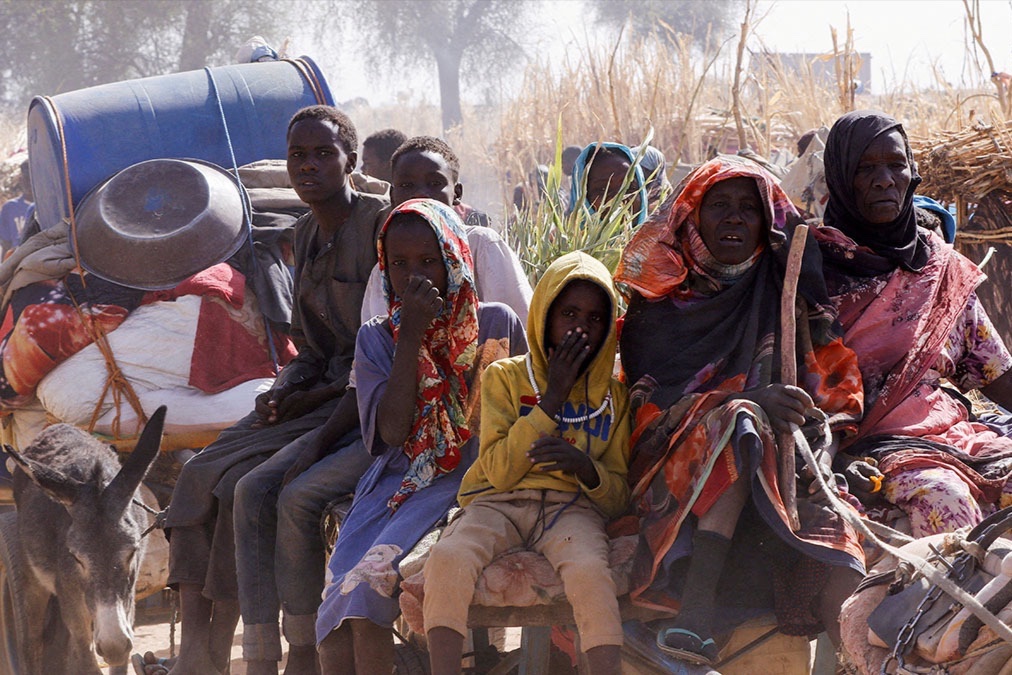
Visa processing freeze. The U.S. State Department said it would suspend the issuing of immigrant visas to nationals of seventy-five mostly non-European countries on January 21 to ensure immigrants do not “take welfare from the American people at unacceptable rates” in an announcement yesterday. The list includes several major non-NATO U.S. allies and marks the Trump administration’s most recent immigration restriction since expanding a travel ban last month.
Greenland meeting results. Denmark, Greenland, and the United States still have a “fundamental disagreement” over the future of the Arctic island following White House talks yesterday, Denmark’s foreign minister said. The parties will create a working group to continue trying to resolve their differences, he added. In a show of support for Denmark, NATO allies such as France, Germany, Norway, and Sweden are sending small numbers of military personnel to Greenland this week for joint exercises.
Iran denies execution plan. Iran’s judiciary denied today that antigovernment protester Erfan Soltani has been sentenced to death. The case had garnered international attention. A Norway-based human rights group reported that an execution order shared with Soltani’s family has been postponed. Trump said yesterday that “the killing in Iran is stopping,” though he didn’t clarify what this could mean in the context of his threats to strike the country. The U.S.-based Human Rights Activists News Agency said yesterday it had verified more than 2,600 deaths in the protests so far, but cautioned that an ongoing communications blackout made evidence harder to check.
Carney in China. Carney and Chinese Premier Li Qiang both hailed warming ties between their countries as Carney began a visit to China—the first in eight years by a Canadian leader. When asked if Canada still considers China a “disruptive” power as previously stated, Canadian Foreign Minister Anita Anand said it was “a new foreign policy and a new geopolitical environment,” adding that Canada was seeking to diversify its trade. Among other agreements, Canada is seeking the reduction of canola tariffs, while China hopes for a reduction in car tariffs.
Limited tariff on chip imports. The White House announced yesterday a 25 percent tariff on certain types of semiconductor imports, with exemptions for chips used in the domestic artificial intelligence (AI) industry. The tariff will affect chips that are imported to the United States and then re-exported to third countries such as China.
U.S.-Venezuela talks. Trump told reporters yesterday that he is “getting along very well” with Venezuela following a phone call with acting President Delcy Rodríguez. Despite those warming words about Rodríguez, the former vice president to captured Venezuelan strongman Nicolás Maduro, Trump is scheduled to have lunch today with Venezuelan opposition leader María Corina Machado. The United States has already brokered its first sale of Venezuelan oil, a Department of Energy spokesperson confirmed to the New York Times yesterday.
Japan-Philippines security deals. Japan pledged $6 million in new security assistance for the Philippines yesterday as the two countries agreed to boost the exchange of military supplies at a Manila ceremony. It is the latest sign of their deepening military cooperation, after a joint military basing agreement took effect last September. Japan’s foreign minister said the countries also reaffirmed the importance of trilateral cooperation with the United States.
Courting 1.5 degrees. Last year was the third-hottest on record and global temperatures for the past three years have averaged 1.5℃ (2.7℉) above preindustrial levels, the European Union climate service Copernicus announced yesterday. The 2015 Paris Agreement committed countries to trying to limit warming to 1.5℃, as measured in decades. Current trends suggest that limit could be reached by 2030, more than ten years earlier than predicted when the Paris Agreement was signed, Copernicus said.