As Democracy Docket readers know, the U.S. Department of Justice (DOJ) is waging a broad attack on states’ private voter data. Now, it’s kicking off 2026 by opening a new front in the battle: demanding Minnesota turn over its records related to same-day voter registrations.
The North Star State is currently front and center in American politics. On Wednesday, ICE agents shot and killed a woman in Minneapolis, sparking outrage across the country. And since last month, the GOP has been excoriating the state and its leadership over a multibillion-dollar welfare fraud scandal.
In that context, voting news can sometimes slip through the cracks. But it shouldn’t! The DOJ’s attack on same-day registrations — like other GOP blows against voting — threatens to undermine access to this fundamental democratic right.
“The Department of Justice is particularly concerned with votes and registrations accepted on the basis of ‘vouching’ from other registered voters or residential facility employees… as well as other same day registration procedures,” Assistant Attorney General for Civil Rights Harmeet Dhillon wrote in a letter to Minnesota officials.
Under Minnesota’s “vouching” system, voters still need to show a driver’s license, state ID card, or provide the last four digits of their social security number to verify their identity, but another registered voter in the same precinct can “vouch for” — i.e. confirm — where they currently live.
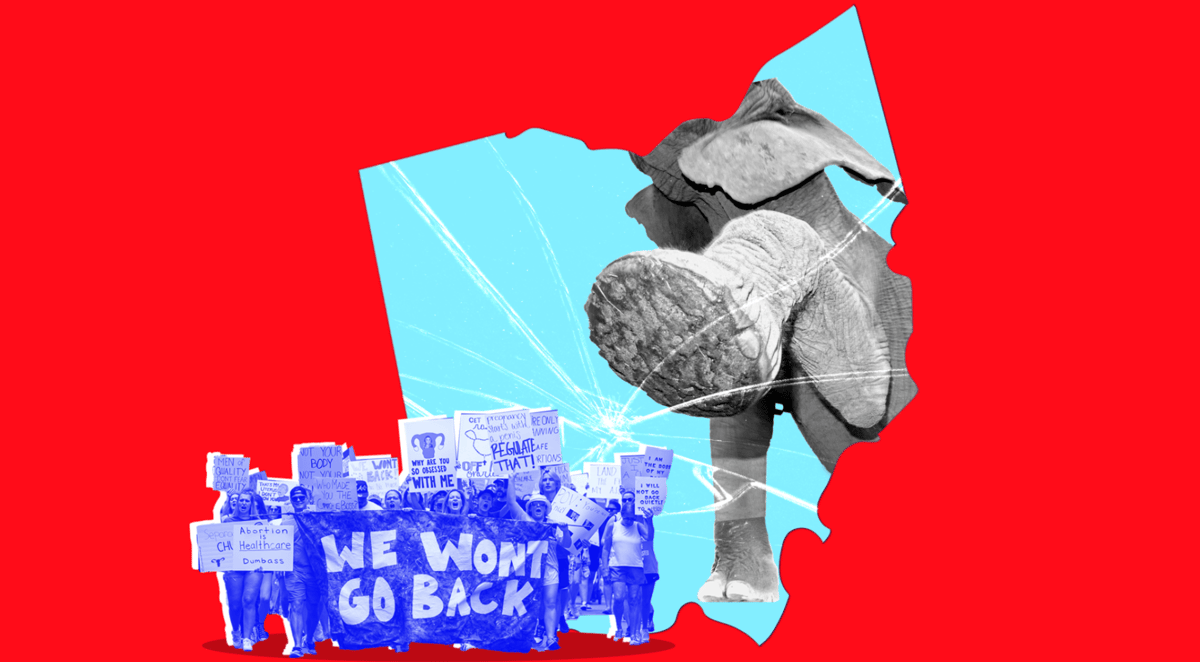
OPINIONOhio Republicans are defying voters to pursue a backdoor abortion ban
Ohio voters have already (decisively) told lawmakers they want abortion rights. But the state Attorney General and Republican lawmakers are still looking for ways to block them. Their latest effort could include restrictions for telemedicine abortion and for clinics’ Medicaid funding.
Marc warns that the Trump Department of Justice is aggressively seeking access to Americans’ most sensitive voter data—including Social Security numbers, party affiliation, voting history, and signatures—by suing more than 20 states. He explains why this unprecedented data grab is central to a broader strategy of voter suppression, election subversion, and litigation designed to undermine free and fair elections in 2026 and beyond.
Drawing on decades of experience and current court battles, he breaks down how voter files work, how they can be weaponized, and why DOJ control of this data could fundamentally reshape elections, from voter challenges to targeted suppression laws and post-election challenges. Watch on YouTube here.
While this isn’t an official voting sticker newsletter (yet?), it has come to our attention that January is voting sticker art competition season around the country. So if you want to help choose your local voting sticker for 2026, it’s worth checking whether there’s a competition going on near you (or perhaps even gently informing your local election officials that you’d like to have one).
Election officials have kicked off voting sticker art contests in West Virginia, Erie County (Pennsylvania), Sarasota County (Florida), Cache County (Utah), Wilkes County (North Carolina), San Miguel County (Colorado), Deschutes County (Oregon) and La Porte (Texas). In other places, voting is already underway to choose between sticker finalists: Washington County (Maryland), St. Charles County (Missouri), Jefferson County (Colorado) and North Dakota.
|