|
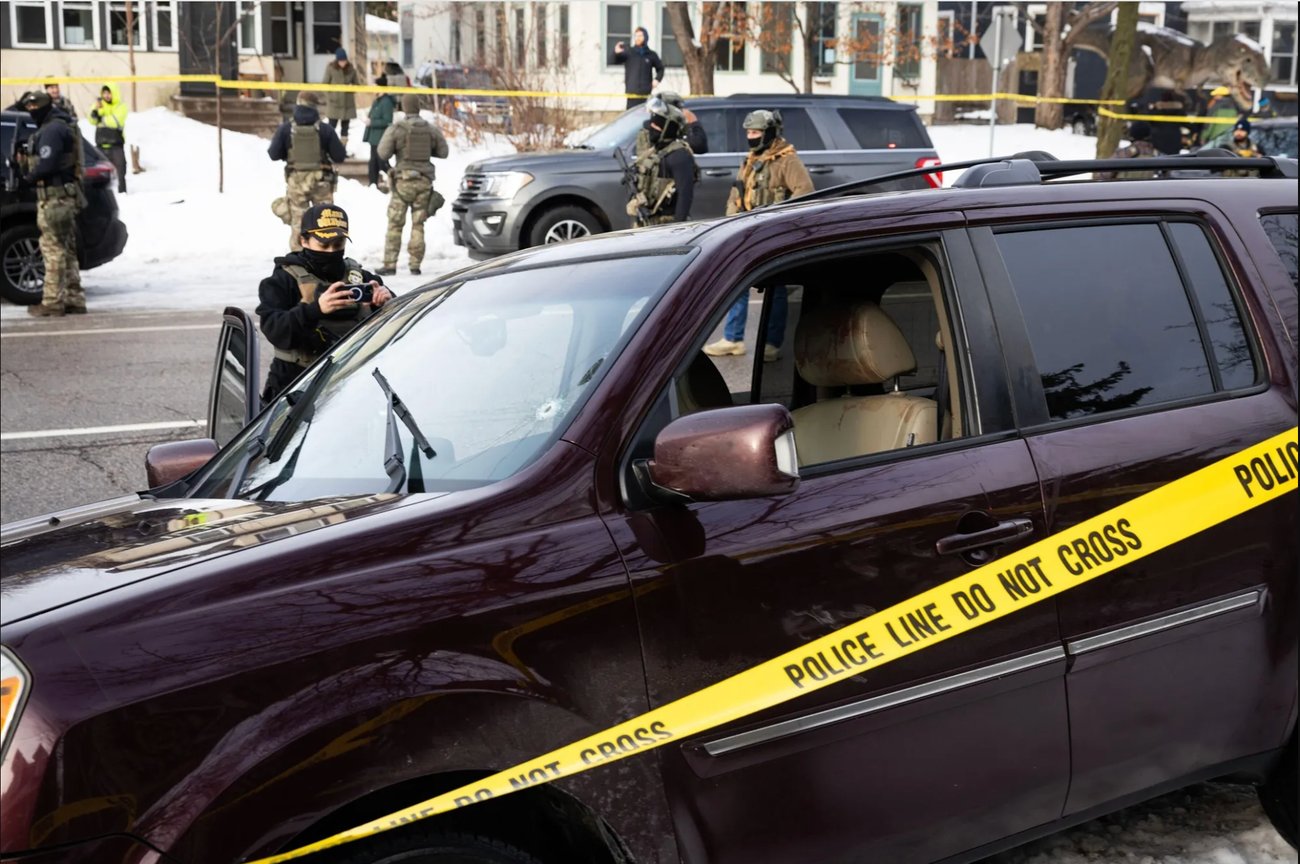
On Wednesday afternoon, ICE agents carrying out an operation in south Minneapolis were briefly obstructed by a car blocking traffic. ICE agents approached the female driver, yelling, “Get out of the fucking car,” and one of them attempted to open the driver’s-side door. After the driver backed up to turn around and move, another agent drew his gun and unloaded three shots into the car. The car barreled into a light pole about 100 feet down the road, and the driver was quickly pronounced dead.
This is confirmed by eyewitness accounts and videos from multiple angles. The Department of Homeland Security (DHS), while confirming the broad details, claims that the ICE agent acted in self-defense to avoid being run over by the vehicle.
These are the kinds of disputes that the courts are equipped to handle. Because if an agent shot directly into a car and killed the driver without some credible fear of personal harm, it would be called murder. And federal agents can indeed be prosecuted for murder.
States can prosecute anyone for violations of state law, regardless of their rank or authority. Murder is a felony in the state of Minnesota, as it is in every other state. Within the last several years, we saw Minnesota successfully prosecute a murder, committed by a law enforcement officer, that was documented on tape and broadcast to the world.
The Supremacy Clause does give federal officials some protections from state laws, but they “only appl[y] when federal officials are reasonably acting within the bounds of their lawful federal duties,” according to a position paper issued by the University of Wisconsin Law School. Shooting an unarmed person who is in the process of fleeing a scene would be unlawful, and while DHS would certainly contest that in court, that’s a wholly proper venue for the debate.
The history of state prosecutions of federal officials goes back to the War of 1812, when some New England states used state statutes to prosecute federal customs officers who seized goods that were under a trade embargo. Often, they are used to resist a federal law that states don’t like, such as the Fugitive Slave Act.
But numerous states have indicted, charged, and arrested federal law enforcement officers for conduct that exceeded their official duties. In 1898, Virginia charged a federal tax collector posse with shooting and killing horses and cattle during a shootout. The federal posse claimed they were ambushed while attempting to collect taxes. |