

John,
Scientists are sounding the alarm about a devastating decline in insect populations around the country.
Many are calling it an "insect apocalypse."1
You can see the signs all around you. In the summertime, there aren't nearly as many fireflies. On long road trips, we hardly have to clean our windshields because there are so few dead bugs.2 Nearly a quarter of native bumblebee species are at risk of going extinct, and butterflies have declined by as much as 95%.3,4
It's not too late to halt and reverse the decline in insect populations -- but we must crack down on the most harmful pesticides that are pushing bees, butterflies and other insect species to extinction.
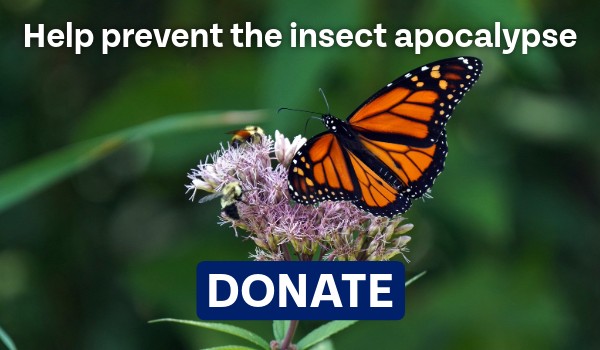
There's a combination of factors causing the precipitous decline in insect populations, including habitat loss and climate change.
But one of the biggest -- and most preventable -- causes is the overuse of pesticides, including a particularly potent strain of butterfly- and bee-killing pesticides called neonicotinoids, or neonics for short.
Neonics were first introduced in the 1990s, and since then they've exploded to become the most widely used type of insecticide in the world. We're pouring so many neonics and other pesticides into the environment that we've effectively turned American farms and fields into toxic death traps for insects.5
Bees, butterflies and other tiny pollinators need our help. Will you donate to help save bees and butterflies?
Unless this growing insect-extinction crisis can be halted, scientists warn that it could threaten the global food supply, because so many of the crops we rely on for food are pollinated by bees, butterflies and other insects.6
That's why we're aiming to raise $150,000 by midnight on Dec. 31 to help power our campaigns to crack down on the most harmful pesticides driving the insect apocalypse.
Your donation will help support our mutli-pronged efforts to save the bees, butterflies and other endangered insect species.
To help save the bees, we're urging Home Depot -- the world's largest home improvement retailer -- to stop selling bee-killing neonics. We're also calling on local, state and national policymakers to restrict the worst uses of bee-killing pesticides, and to plant more habitat for pollinators.
Thank you,
Ellen Montgomery
1. Joanna Thompson, "A looming 'insect apocalypse' could endanger global food supplies. Can we stop it before it's too late?," Live Science, November 21, 2025.
2. Gretchen Vogel, "Where have all the insects gone?," Science, May 10, 2017.
3. Jan Peterson, "Bumble Bee Atlas: A Nationwide Buzz," U.S. Fish & Wildlife Service, May 2, 2023.
4. Sarah Metz, "Butterfly populations declining rapidly in U.S. with 22% disappearing in 2 decades, study finds," CBS News, March 6, 2025.
5. Stephen Leahy, "Insect 'apocalypse' in U.S. driven by 50x increase in toxic pesticides," National Geographic, August 6, 2019.
6. Joanna Thompson, "A looming 'insect apocalypse' could endanger global food supplies. Can we stop it before it's too late?," Live Science, November 21, 2025.
Your donation will be used to support all of our campaigns to protect the environment, from saving the bees and protecting public lands, to standing up for clean water and fighting climate change. None of our work would be possible without supporters like you. Environment Colorado may transfer up to $50 per dues-paying member per year into the Environment Colorado Small Donor Committee.
Environment Colorado, Inc.
1543 Wazee St., Suite 400, Denver, CO 80202, (303) 573-3871
Member questions or requests call 1-800-401-6511.
Facebook | Twitter

If you want us to stop sending you email then follow this link -- Unsubscribe.