As we reach the final days of a year that has tested the very limits of the humanitarian spirit, it is natural to feel the weight of the world. There is no denying that the global humanitarian landscape is under immense pressure.
We see this reality daily in the raw testimonies reaching us from Darfur, or in the struggle for survival in Ukraine and Gaza as families face another winter with the power out. Our outlook for the coming year suggests that our work, and your support, will be even more critical for the survival of the world's most vulnerable.
Yet, in the midst of heavy headlines, there is a story that doesn't always make the front page: the story of what you helped make possible.
The close of 2025 brings with it a complex mixture of exhaustion and resolve. As we reflect on the past year, we are choosing to focus on the resilience we have witnessed —like the incredible steps toward independence taken by patients at our physical rehabilitation centers. Behind every statistic is a person who received clean water, a family reunited, or a patient who walked again.
These moments are the "quiet miracles" of neutral humanitarian action. They happen because you chose to stay engaged—a powerful reminder that even in the most polarized times, "neutrality" isn't just a word: it’s a doctor in a war zone, a message delivered to a loved one, and a prisoner receiving a visit of dignity.
As we move into the holiday season, we want to say a profound thank you. Your engagement has translated into real, life-saving impact. Your support has been our backbone, allowing us to remain on the front line for humanity heading into 2026.
The road ahead looks difficult, but we enter the new year with a renewed sense of purpose, knowing we have a community like you behind us. Thank you for making our mission possible.
We wish you a restful holiday season and a peaceful New Year.
ICRC AND YOU IN 2025: Staying on the front line for humanity
This year was shaped not only by crises, but by the people living through them. By parents protecting their children. By communities adapting. By lives reshaped overnight. Throughout it all, we stayed close to those most in need, guided by a simple belief: that humanity endures, and it is always worth protecting.
In 2025, armed conflict continued to devastate lives across the world—often far from public view. Yet even in the most difficult contexts, people endured, adapted and supported one another.
Throughout the year, the ICRC stayed alongside communities affected by war, delivering health care, reconnecting families, visiting people held in detention, restoring essential services and reducing risks from weapon contamination.
Guided by neutrality, impartiality and independence, our teams worked quietly but consistently, where needs were greatest and trust was hardest to build.
Our work does not end conflicts, but it does make a difference: care reaches the wounded, families regain contact, dignity is protected and hope is sustained. As the year draws to a close, we remain committed to being present, wherever people affected by conflict need protection, assistance and a reminder that they are not forgotten.
Issa Idriss Hassan, 43, trains on parallel bars at the ICRC-supported Physical Rehabilitation Center at Wau Teaching Hospital in Western Bahr El Ghazal. | Alex Majoli- Magnum for ICRC
Decades of conflict in Sudan and South Sudan have left thousands of people living with limb loss, often with little access to the support they need to rebuild their lives. In South Sudan, where prosthetic and orthotic services remain scarce, restoring mobility can mean the difference between dependence and independence.
This photo gallery, captured by Alex Majoli, a Magnum photojournalist, follows people taking those first steps again - patients supported by the ICRC’s physical rehabilitation centres in Juba, Wau and Rumbek.
In 2025 alone, more than 3,700 people received physical rehabilitation support, the highest number in a decade, including prosthetic limbs, wheelchairs and walking aids.
The images tell a quiet but powerful story: of determination, dignity and the life-changing impact of regaining movement—one step at a time.
ON THE GROUND: When winter deepens the cost of war
From the armed conflict between Russia and Ukraine to Gaza, winter is turning everyday survival into a struggle. Power cuts, damaged water systems and limited heating are leaving families exposed to cold, flooding and disease, often with hospitals and clinics forced to rely on generators and scarce supplies.
Communities caught up in the conflict between Russia and Ukraine adapt to rationed electricity and repeated strikes on infrastructure. In Gaza, widespread destruction has pushed families into tents, where winter rains and poor sanitation worsen already dire conditions. Across both contexts, civilians are paying the price when essential services fail.
The ICRC is supporting access to water, health care and heating where possible, helping communities endure the cold months ahead. When war meets winter, staying warm, safe and connected can mean the difference between coping and catastrophe.
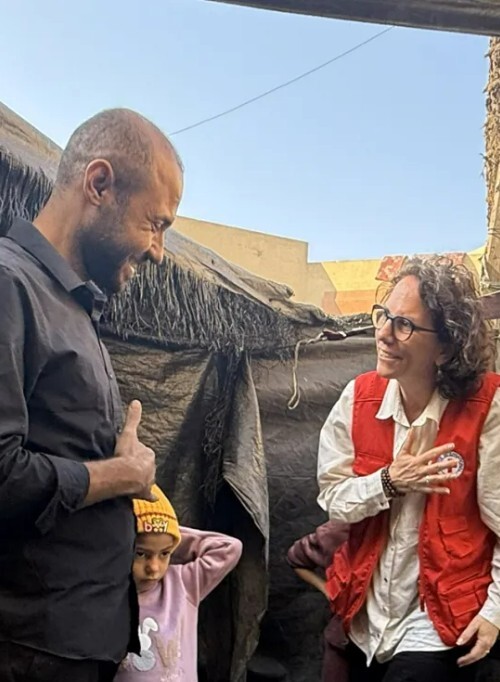
Yasmine Praz Dessimoz, ICRC Director of Operations, at the Al-Karmel displacement camp (Gaza city), northern Gaza Strip. ICRC, November 24, 2025.
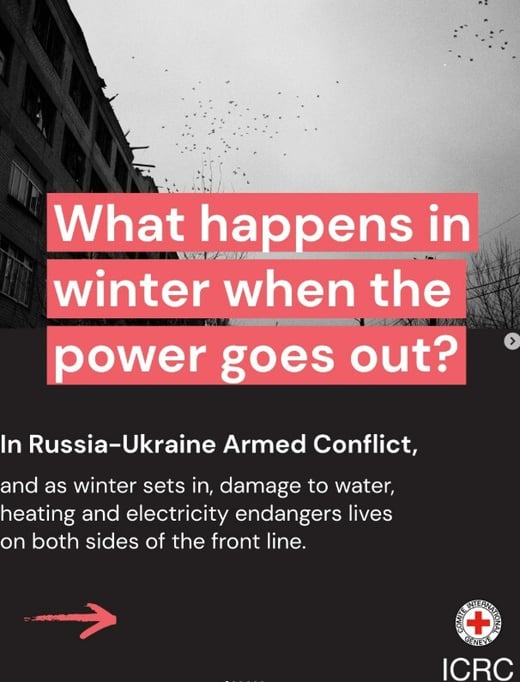
On both sides of the front line, millions of people rely on the provision of essential resources such as water, heating and electricity to survive. As winter sets in, damage to those services endangers lives.
Men, women, and children who have fled their hometowns seek refuge in Tawila – a once small town in North Darfur that has swelled to host 650,000 displaced people.
In North Darfur, the town of Tawila has become a place of refuge for hundreds of thousands of people forced to flee violence.
In this personal account, John Naughton, ICRC head of sub-delegation in Darfur, reflects on what he witnessed there: families arriving after perilous journeys, overstretched clinics kept running through determination and skill, and communities finding ways to endure.
Amid profound hardship, this personal reflection also highlights resilience: children still finding joy in play, families staying connected, and humanitarian action helping restore small but vital lifelines. Through these encounters, Naughton reminds us that even in the darkest contexts, dignity persists, and protecting civilians must remain a shared priority.
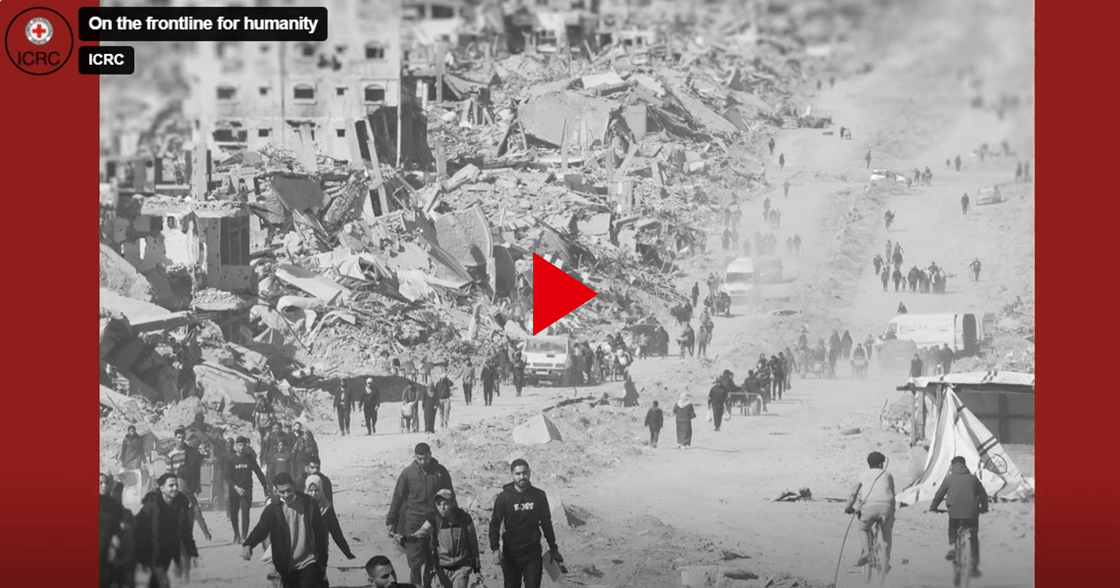
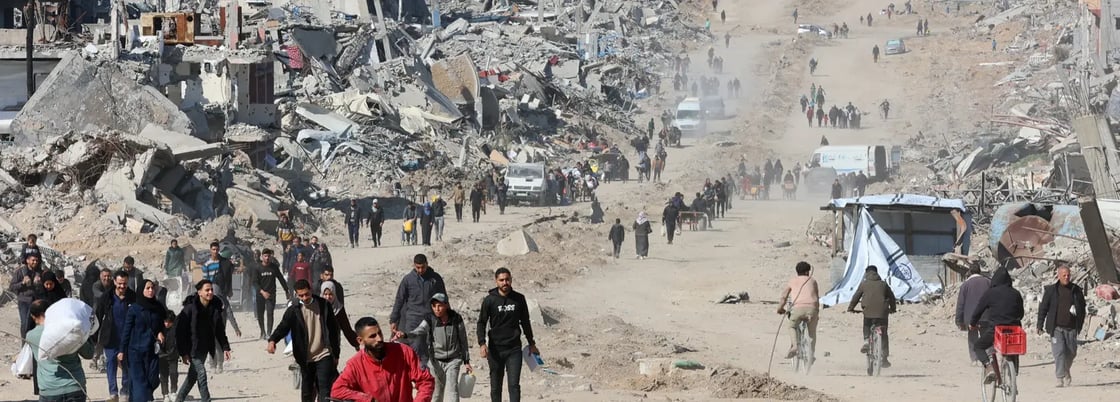
Displaced civilians in Gaza navigate a road flanked by the ruins of destroyed neighborhoods, illustrating the staggering scale of urban destruction and the human cost of protracted conflict.
Armed conflict is shaping our time. Wars are spreading, lasting longer and becoming more destructive, while the rules meant to protect civilians are increasingly ignored. The result is rising human suffering, and a future that will affect us all.
The Humanitarian Outlook 2026, accompanying the ICRC’s global appeals, draws on our work in more than 100 conflicts to identify four converging trends pushing the world toward deeper instability: dehumanization, pressure on principled humanitarian action, a “victory at any cost” mindset, and growing needs amid shrinking resources.
The message is clear: as needs rise, support for neutral, impartial humanitarian action is under strain, at the very moment it is most needed. The outlook calls on States to uphold international humanitarian law, protect civilians and humanitarian workers, and choose restraint over escalation.