How Iran's Sanctions-Evasions and Willing Support Retinue Keep It Alive
by Majid Rafizadeh • December 27, 2025 at 5:00 am
The regime has learned that sanctions are only as effective as their implementation. Over time, the regime has institutionalized sanctions evasion, embedding it into state policy and delegating it to the Islamic Revolutionary Guard Corps (IRGC) and affiliated economic networks. This has turned evasion from an improvised response into a permanent survival machine.
Iran's continued oil exports depend on countries that are prepared to ignore sanctions, interpret them loosely, or exploit enforcement gaps. The central role in this system is played by China, which purchases large volumes of discounted Iranian oil, assuring China of a steady flow of oil and Iran of a steady flow of cash. So long as demand exists, Iran will try to find ways to supply it.
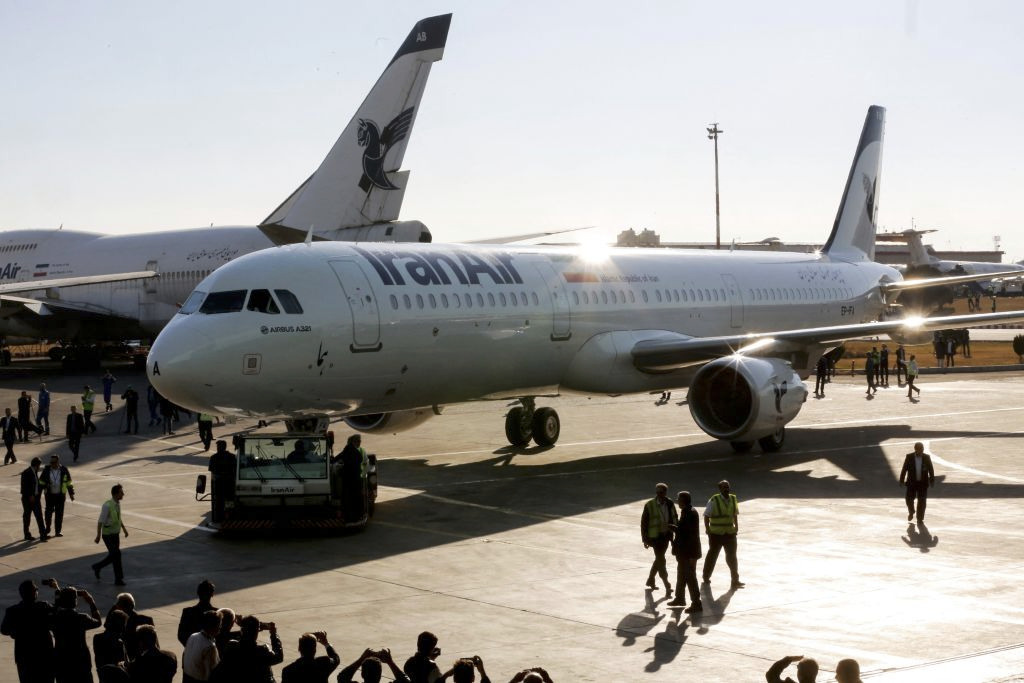
Grounding Iranian airlines would sever a key logistical lifeline for sanctions evasion and regional influence. This requires sanctioning not only Iranian carriers but also foreign companies and governments that provide aircraft parts, maintenance, insurance, fuel, and airport services. Without these inputs, Iran's aviation network cannot function.
Equally important is imposing consequences on countries and companies that enable Iran's oil exports. Sanctions must extend beyond Iranian entities to include buyers, refiners, shippers, insurers, and financial institutions that knowingly facilitate these transactions. Enforcement must be multinational, leaving no safe jurisdiction for intermediaries. If oil-sanctions evasion becomes costly and risky for buyers and service-providers, Iran's primary revenue source will shrink dramatically.
As long as the Iranian regime can evade sanctions, it will continue to strengthen and project power. Sanctions that are porous cannot seriously weaken the regime. To truly constrain Iran, the focus must shift to stopping the mechanisms that allow it to freely operate — its aviation network, oil exports, front companies, and all the regime partners that obligingly enable it.
No matter how many sanctions are imposed on the Islamic Republic of Iran, its regime continues to survive, adapt and expand its influence. This endurance is not the result of economic strength or internal legitimacy, but of a carefully constructed system designed to evade restrictions, exploit loopholes, and rely on foreign actors willing to ignore or undermine international enforcement.
As long as the Iranian regime can breathe through these openings, sanctions alone will not weaken it; instead, the regime will continue to fund repression at home, empower militant proxies abroad, and project dominance across the region.