|
 |
Foreign Policy Beyond Rhetoric
Intercollegiate Review | Conservatism's sharpest voices, curated weekly. ISI's weekly newsletter brings you the best in serious conservative thought.
|

| |||||||||||||||


The Marco Rubio Moment
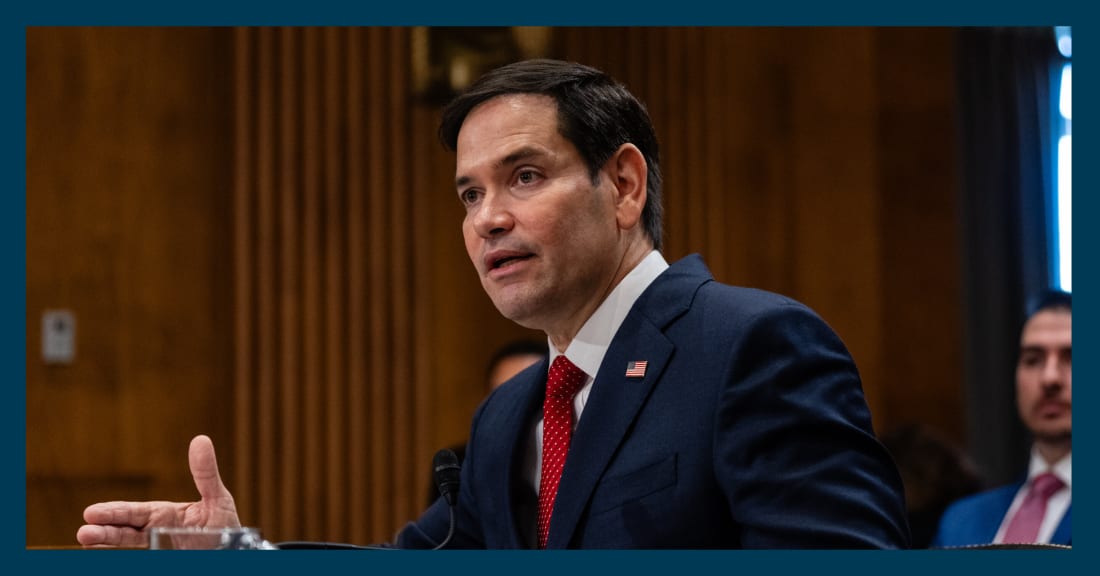 |
Last week, President Trump ordered a naval blockade of all sanctioned oil tankers traveling in and out of Venezuela. This move marks the latest escalation in a months-long pressure campaign against the socialist regime of Venezuelan dictator Nicolás Maduro.
In his opinion column for The New York Times, Ross Douthat highlights the key figure driving this campaign: Secretary of State Marco Rubio. Douthat argues that many of the second Trump administration’s foreign policy decisions reflect Rubio’s hawkish brand more than the foreign policy realism that Trump has historically advocated. While Trump’s rhetoric has remained largely consistent since his campaigns, the administration’s actions reveal Rubio’s growing influence in foreign affairs.
Douthat believes that Venezuela will be the biggest test yet of Rubio’s foreign policy vision. He notes that the administration’s strategies in Ukraine and Iran have been largely successful so far. But this apparent attempt at Latin American regime change carries substantial risks with uncertain rewards. Only time will tell whether the Venezuela campaign ends up being one of the Trump administration’s greatest triumphs or one of its greatest failures.
Read the rest of Douthat’s thoughts on the “Marco Rubio moment” here.
|
Opening the Debate on DEI
 |
Last week, the Intercollegiate Review featured Jacob Savage’s viral Compact essay, “The Lost Generation.” Savage details the cultural attacks on millennial white men in America, particularly through the rise of DEI. He explains the blatant discrimination happening in elite institutions such as journalism, academia, and film, where so-called “diversity” destroyed the dreams of many young American men.
On his Substack, Christopher Rufo offers his own response to Savage’s essay. He praises it as “spectacular” for its data and anecdotes that display the plight of white American males in a DEI-dominated environment. Rufo notes that the piece surfaces issues he and others had reported on during the height of the DEI movement, and he cites other thinkers, including Vice President J.D. Vance, who have acknowledged Savage’s work.
Rufo does raise one critique. He argues that Savage places too much blame on older white men who helped advance DEI policies. In Rufo’s view, various identity groups also pushed their workplaces to discriminate against white male millennials, and these “agents” deserve scrutiny as well. Still, he credits “The Lost Generation” for opening the door to a broader public debate about DEI’s impact.
Read Rufo’s piece here (using the “Claim My Free Article” link for access).
Compendium
Every article we feature here is available to read for free. Articles from paywalled publications are available through gift links.
Adrian Vermeule on a new approach to immigration through the lens of classical Roman law in The New Digest.
Emma Waters on the rise of international commercial surrogacy in the United States in First Things.
Ronald Pestritto on the second Trump administration reclaiming democratic accountability in The American Mind.
Adam Lehodey on New York City’s broken housing market in City Journal.
Aaron Renn on the dangers of the two-tiered justice system in American Compass.
Vincent Phillip Muñoz on a Straussian interpretation of the founding at America’s 250th anniversary in Claremont Review of Books.
Matthew Gasda on the revival of traditional theater in Cultured Mag.
 |
Upcoming ISI Events
If you enjoy what you’re reading here, we invite you to engage with ISI at one of our upcoming in-person events.
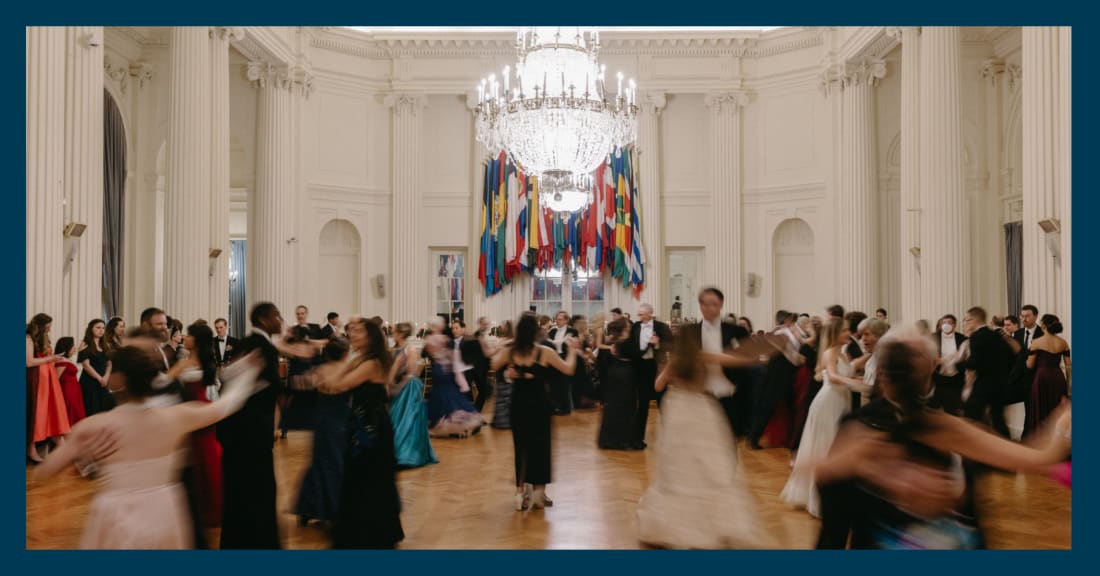
43rd Annual Evening of Viennese Waltzing | February 7 | Washington, DC
Join the Intercollegiate Studies Institute on Saturday, February 7, at The Organization of American States for the 43rd Annual Evening of Viennese Waltzing! This annual event brings together over 200 couples for a luxurious recreation of the sumptuous balls of turn-of-the-century Vienna.America 500 Gala for Western Civilization | April 30 | Washington, DC
The America 500 Gala for Western Civilization is the flagship event of ISI’s America 500 Campaign that celebrates America’s 250th anniversary. Join us at the Andrew W. Mellon Auditorium on Thursday, April 30, 2026, for an elegant evening with inspiring speakers.Conservative Book of the Year Award Ceremony and Luncheon | May 1 | Washington, DC
ISI’s annual Conservative Book of the Year Award Ceremony honors a distinguished nonfiction work that has contributed to the advancement of conservative thought. Join us on May 1 for a luncheon buffet, award ceremony, and panel discussion in Washington, DC.
Visit our events page on our website to see all upcoming events.
Thanks for reading Intercollegiate Studies Institute! Subscribe for free to receive new posts.

This week, from ISI’s Digital Media:

In the latest episode of Modern Age with Dan McCarthy, Dan reflects on the need for fiscal restraint and discipline. He examines President Trump’s plan to lower interest rates and appoint a Federal Reserve chair who would pursue easier credit. While lower rates can give the economy a short-term boost, they also carry serious risks, including inflation, reckless investment, and long-term instability.
Subscribe to Modern Age with Dan McCarthy here.
This week, from the Collegiate Network:
ISI’s Collegiate Network supports over 80 student-run publications across the country, empowering students to run independent college newspapers, magazines, and journals that report on important issues ignored by the mainstream media.
Madison's Slop Architecture Crisis via The Wisconsin Standard
The piece argues that Madison, WI, has squandered a rare opportunity as a fast-growing city by allowing an influx of bland, soulless apartment buildings, dubbed “slop architecture.”
BREAKING: Stanford Medicine Confirms COVID-19 Can Cause Myocarditis via The Stanford Review
After years of mandating COVID-19 vaccines, Stanford has finally acknowledged vaccine-linked myocarditis, showing the university prioritizes ideological conformity and public perception over free speech and medical ethics.
Mandatory Service Could Save Our Democracy via The Lemur
An argument that the United States should adopt a universal military or civilian service program to rebuild civic trust and foster a shared sense of purpose across national divides.
American Ingenuity—Now Made in China via The Jacksonian
Insight into the homophilic bias among international faculty in American STEM graduate programs, which systematically marginalizes domestic students and undermines national scientific excellence.
Church, State, and the Soul via The Brownson Record
This piece argues that political life cannot be morally neutral, claiming that God judges governments and rulers for their commitment to virtue, care for the poor, and fidelity to Himself.
Visit our Student Journalism section to read more from the Collegiate Network.
Poetry Against Disorder
 |
When was the last time you read poetry? Modern American life doesn’t leave much room for it. Our days are crowded with work, family obligations, and an endless stream of deeply unpoetic words across our screens or into our ears.
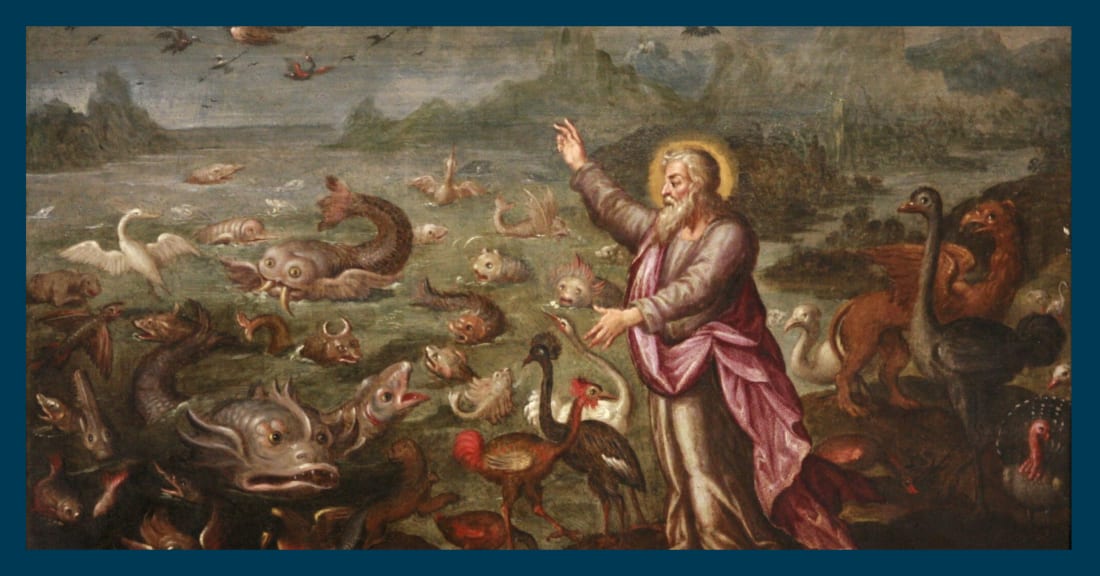
In this week’s Modern Age article, Mark Bauerlein argues that poetry still serves a vital, centering role in each of our lives. His case comes through a review of James Matthew Wilson’s recent poetry collection, Saint Thomas and the Forbidden Birds. Bauerlein contrasts Wilson’s craftsmanship with that of other contemporary poets who dominate the mainstream. While others ignore rhyme schemes and grammatical norms, Wilson relies on traditional forms and the beauty they carry.
For Bauerlein, Wilson’s themes and techniques reinforce one another. Wilson’s meditations on God’s presence in nature and on biblical truths point toward the eternal, and his formal structure mirrors that orientation. As Bauerlein puts it, Wilson’s words offer “meaning, a coherent morality, and a transcendent orientation.” As a result, Bauerlein argues, they lead our eyes back to the “fundamental things” that matter most.
Read more about Wilson’s poetry in Bauerlein’s article here on the Modern Age website.
Modern Age is ISI’s flagship publication. Visit modernagejournal.com and subscribe to receive a free daily newsletter.
“Poetry is the spontaneous overflow of powerful feelings: it takes its origin from emotion recollected in tranquility.”
–William Wordsworth, Preface to Lyrical Ballads
Celebrate America’s semiquincentennial with ISI and help shape the next 250 years of our country. Your support of the America 500 Education Fund will help ISI reach, teach, and launch the next generation of conservative leaders. Visit isi.org/america500 to learn more.
| ||||||||||

