|
 |
Get all access now and save 30% when you upgrade to become a paid subscriber today. Your subscription upgrade is a direct investment in defending democracy, helping Lincoln Square build a pro-democracy media machine to fight disinformation and inform voters with the facts.—We’ll also gift you $20 in Lincoln Bucks to use in our pro-democracy merchandise store for the holidays.



 |
Let’s take some time today to talk about ideas and institutions.
All men are created equal is an idea. Government of the people, by the people, and for the people, is an idea.
Great replacement theory is an idea. So is the unitary executive.
We are living in a moment when great ideas clash. On one side are notions of democracy, freedom, and equality. On the other are notions of autocracy, social order, and obedience. On the outcome of this battle everything depends.
Jefferson said that governments are instituted among men to secure our natural and unalienable rights. But for most of history governments existed to centralize wealth and power, and to allow a few to rule the many.
Donald Trump stands on one side of history. The American people stand on the other.
We cannot have both equality and autocracy, freedom and obedience. We cannot have a government that secures our rights and one that centralizes wealth. We cannot have the rule of law, and a corrupt ruling family.
How we choose to resolve the current crisis of ideas will determine the lives of our children and their children. It will shape the destiny of billions.
Many of America’s richest and most powerful have made their choice. Law firms like Kirkland and Ellis and Paul Weiss have pledged to support their support. Universities like Columbia and Northwestern have promised to obey. Corporations like META and Apple have brought gifts. Media companies like CBS and the Washington Post have surrendered their independence.
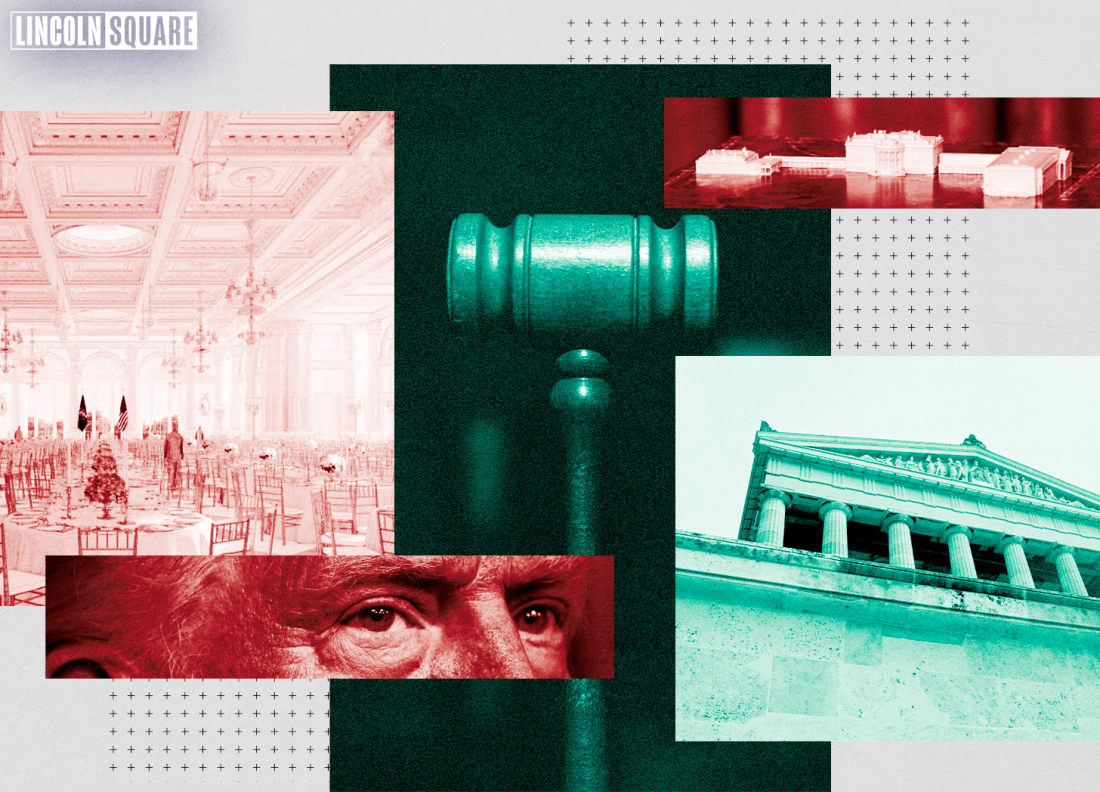
There is an institution in government that is filled with ordinary people. People chosen by lottery to serve for a period of time. People like you and me. People who go to work every day. When you pick Americans at random, you don’t get the fancy crowd- the ones invited to gilded ballrooms, the ones with special patronage, the ones with favored contracts.
What you can get is something called a grand jury. That’s the institution in our government that brings criminal indictments. And this is important. The police investigate a crime and arrest a suspect. The prosecutor then brings charges and tries the case. But part of bringing charges is going to a grand jury because only the grand jury can indict.
It’s an institution founded nearly 1,000 years ago when King Henry II of England agreed to require a group of ordinary men to initiate all criminal prosecutions. At the time, this had the effect of moving criminal prosecutions from the Church and the barons to the crown.
Five hundred years later, another king wanted to indict an Earl for treasonous talk. But something remarkable happened. The grand jury refused to indict. At that moment, the institution of the grand jury took on the role of protecting the people from capricious prosecution.
Another hundred years passed. Then, on our continent, as the relationship between colonial Americans and the British crown grew more and more restive, grand juries became important tool for resistance. King George and his government were not happy with the American press and charged many printers with libel. Increasingly, grand juries refused to bring those indictments. For example, the Crown went after both the Boston Gazette and New York Weekly Journal publisher John Peter Zenger, but could not get regular people to indict either.
Most famously, the King tried to bring indictments against the colonial leaders who organized and led protests against the Stamp Act. They described these leaders as dangerous men who incited riots, damaged property, threatened officials, interfered with government officials carrying out their duties, and that their behavior was seditious. If that sound familiar, you either know your history very well, or you heard the very same accusations from the Trump administration. Well, in 1765, the grand jury in Boston refused to indict.
The protection these grand juries offered colonists against royalist power was so fully understood and appreciated that there was really no debate on the inclusion of grand juries in the fifth amendment. Our new nation wanted its citizens protected from arbitrary power.
Each state adopted the idea as well. Over time, some states have moved away from the idea, opting instead to bring charges through a preliminary hearing before a judge.
There are a lot of reasons states have opted for other means of bringing criminal indictments. Among them is the notion that grand juries don’t really offer protections any more. After all, defense attorneys are not present. The prosecutor presents all the evidence without any challenge. By 1980, grand juries were so compliant that Sol Wachtler, at the time, Chief Judge of the New Your Circuit Court of Appeals, said any District Attorney could get a grand jury to indict a ham sandwich.
Despite that concern, because of the Fifth Amendment, the federal government must submit its accusations to a grand jury to get an indictment.

Now I started by saying ideas matter. Institutions matter. So let’s see how today’s clash of ideas is playing out in the institution of the grand jury.
In Trump’s first term he went after FBI deputy Director Andrew McCabe. McCabe had been tasked with looking at Trump’s ties to Russia. Trump hated him for it fired him 26 hours before his scheduled retirement to deprive him of his pension. Trump’s DOJ sought to indict him. But McCabe turned not to be a ham sandwich. The grand jury said no. McCabe then sued the government. Ultimately, he was awarded back pay and his pension was restored.
In Trump’s second term, with Pam Bondi at Justice and Kash Patel at the FBI, the full force of federal law enforcement has been co-opted to attack Trump’s adversaries. Trump even sent Bondi a target list, and she has subsequently worked her way through it.
Leticia James is on that list. She led the successful prosecution of Donald Trump for multiple financial crimes, including fraud.
This month two separate grand juries refused to indict Letitia James.
It isn’t just high-profile targets like McCabe and James. Congress gave the Trump administration the funds to create the largest domestic police force in American history. That force, made up of ICE and CPB officials went to work in Washington, D.C., in Chicago, in Los Angeles, in Charolotte, and in New Orleans. The Trump administration accuses any who resist the actions of this force with the same language the King used to describe those who resisted the Stamp Act in the 1760s.
Seven times this past September, at least seven times, D.C. based grand juries refused to bring indictments against those caught up in the ICE/ CPB crackdown in that city. One was a case where a protestor threw a sandwich at a border patrol agent. The prosector for that case was former FOX personality Jeanine Pirro. When she failed to get a criminal indictment she charged the protestor with a misdemeanor- by passing the requirement of getting a grand jury to indict. After a trial, the jury acquitted the protestor.
Here in Chicago, DOJ went after at least 13 people yet had to drop all those charges.
In America today, a thousand-year-old institution is weighing ideas: is the president all powerful, should society be ordered as he desires, must we be obedient? It is the same set of ideas grand juries weighed during the colonial era. And just as then, they are sending a very clear message of resistance.
These anonymous citizens are refusing to be cowed by an abusive power. Each of them is a hero. Each put his hand on the scale of history so that the ideas that gave birth to America can survive.
Meanwhile far too many among the rich and powerful are eager to pay bribes, to sign deals, and to attend gilded balls. These are choices. Choices not just for ourselves but for posterity.
Edwin Eisendrath hosts "It’s the Democracy, Stupid" on Lincoln Square and on WCPT820 AM/ Heartland Signal. He's the former CEO of the Chicago Sun-Times, a long-time management consultant, a former Chicago Alderman, HUD Regional Administrator and teacher in Chicago's public schools. You can follow him on BlueSky at eisendrath.net and Substack at “It’s the Democracy, Stupid.” Read the original column here.
Give the Gift of a Lincoln Square Subscription to Your Favorite Democracy Defender — Now 30% Off!
 |
You’re currently a free subscriber to Lincoln Square Media. For full access to our content, our Lincoln Loyal community, and to help us amplify the facts about the assault on our rights and freedoms, please consider upgrading your subscription today with this limited-time offer. Lock in this special holiday rate today. Offer Ends 12/31
Not ready to subscribe? Make a one-time donation of $10 or more to support our work amplifying the facts on social media, targeted to voters in red states and districts that we can help flip. Every $10 reaches 1000 Americans. The Truth needs a voice. Your donation will help us amplify it.
Want to help amplify this post? Please leave a comment and tell us what you think.
| ||||||||||

