FCC Fights First Amendment and 'Democracy Itself'
Janine Jackson
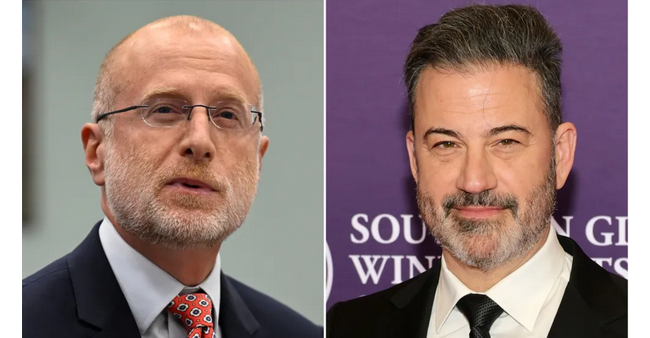
Variety (12/17/25): FCC chair Brendan Carr "suggested that he was simply holding broadcasters to a legally required 'public interest standard' when he...threatened ABC and its affiliates if they did not 'take action' on [talk host Jimmy] Kimmel."
FAIR readers know well how the content of news is connected to its structure. Even as we see reporters doing community-serving, powerful-afflicting work, the key questions, when push comes to editorial shove, are: Who owns it? Who pays the bills?
Right-wingers have long known that. And they've known the importance of pummeling regulators into giving them whatever they want. Former RNC chair Rich Bond called it “working the refs.”
Under Trumpist Brendan Carr, the FCC is, as is well known, threatening stations that deliver content they disapprove (FAIR.org, 2/26/25), very much in violation of the First Amendment. Asked in a Senate hearing (Variety, 12/17/25) if it's "appropriate to use your position to threaten companies that broadcast political satire,” Carr responded that "any licensee that operates on the public airwaves has a responsibility to comply with the public interest standard."
But Trump's FCC is also seeking to further loosen ownership limits and allow powerful media conglomerates to usurp more of the airwaves (CJR, 10/20/25; FAIR.org, 10/8/25). A filing from the group Free Press calls out the expected “devastating consequences on the public’s welfare and ultimately democracy itself.”
The filing’s author, Free Press senior advisor Derek Turner (12/18/25), explained:
Broadcast TV chains and their lobbyists claim that consolidation is in the public interest, arguing that mergers and acquisitions result in an increase in local news—and that local reporting declines in the absence of consolidation. This is nonsensical, and it runs counter to all available evidence.
Television broadcasters continue to do well, and brag to Wall Street that they have cornered the distinct market niche that local-TV stations serve. But those financial fortunes don’t spur greater investment in journalism. These giant companies work to slash costs after mergers—striving to maximize their profits to generate greater returns for shareholders.
Allowing allegedly local broadcast firms to acquire even more stations—in markets where they already have stations, and in new cities—will put control over news in still fewer, more corporate hands. And it will decrease the numbers of local journalists reporting on communities they actually live in.
And, not for nothing, it will increase these big conglomerates’ ability to extract monopoly rents from advertisers and pay-TV distributors.
Which is why we say: Support independent outlets with a different bottom line.
|