|
December 2025
 New law, grassroots work are keeping garbage off lake ice
This winter will be the third since a new Minnesota state law prohibited leaving waste behind on frozen lakes, or even letting it touch the ice. The law can be enforced with a $100 fine, and officials say it’s working.
“From 2022 to 2024, the resorts, the businesses, the ice road businesses, said there’s a drastic difference in what they’re seeing. They know the program’s working. They’re all on board and joining,” said Zach Gutknecht, a project manager for the Northwest Watershed Division of the Minnesota Pollution Control Agency (MPCA).
Groups are working on a local scale at more than 50 lakes across the state, taking different approaches most appropriate for their regions.
"It’s grassroots efforts working on a statewide level,” Gutknecht said.
The MPCA has supported the efforts, which included outreach and education, with grant money from the Clean Water Fund. Grants are available through BWSR and many SWCDs, made possible by a 2025 legislative appropriation specifically for Keep It Clean efforts.
Mike Hirst, a resource conservationist with the Lake of the Woods Soil and Water Conservation District, said during the 2024-2025 ice fishing season, conservation officers issued 311 tickets, with 81 citations and 230 warnings statewide.
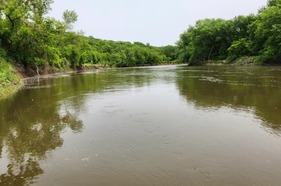
 WRAPS update charts a path forward in Chippewa River Watershed
The MPCA’s 2025 update to the Chippewa River Watershed Restoration and Protection Strategy (WRAPS) highlights progress toward cleaner water and presents a science-based roadmap for continued action in one of Minnesota’s most diverse and agriculturally active watersheds.
Spanning more than 1.3 million acres in western Minnesota, the watershed supports farming, wildlife, and recreation. But like many landscapes in transition, it faces growing challenges. Heavier rainfall, faster runoff, and declining water storage capacity are making the system more unstable.
The 2025 WRAPS update builds on research conducted between 2019 and 2020 as part of Minnesota’s ongoing 10-year watershed monitoring cycle, funded by the Clean Water Fund. The new data confirm that phosphorus levels continue to decrease, water clarity continues to improve in many lakes, and insect life in streams, a key indicator of health, continues to bounce back.
Significant reduction in sediment at the watershed’s outlet offers the most promise, meaning clearer water flowing downstream. Improvements in manure management, septic system upgrades (aided by local loan programs), and better stormwater control have all contributed to these gains.
The project team invites community members to review the findings and offer input. A public comment period is open Dec. 8-Jan. 7. People can share their thoughts through the MPCA website.
 Two new reports from MPCA provide snapshot of wetland health
The MPCA published two reports in 2025 about the status and trends of wetlands in Minnesota: Minnesota wetland condition assessment 2011-2021 and Depressional wetland quality assessment 2007-2023.
Wetlands are critical resources, acting as a filter for pollutants and helping with flood prevention by acting as a natural storm drain for Minnesota’s ecosystem. Results from these two reports point to overall maintained wetland health, though wetlands in the northern part of the state tend to be healthier than those in the south. Neither assessment detected significant changes in wetland quality between survey cycles, signaling that a no-net loss of vegetation and biological diversity was broadly maintained over time.
 We Are Water MN 2026 tour to hit five select cities
The Minnesota Pollution Control Agency (MPCA) and the Minnesota Humanities Center are proud to announce that We Are Water MN is back for its eighth statewide tour of Minnesota. We Are Water MN is a partnership-building and community engagement program that deepens connections between Minnesotans and the water we rely on through a traveling exhibit and public events.
Visitors to the We Are Water MN exhibit learn about water issues statewide and in their community. They also reflect on local stories and the meaning and experiences of water in Minnesota with space to add their own stories. Learning and sharing in this way strengthens Minnesotans’ relationships with water and increases participation in water stewardship activities unique to their community.
Each year, five host sites are selected to display the exhibit and engage community members with its content and one another over an eight-week period. The 2026 tour will include the following locations:
Byron
Feb. 25-April 20, 2026: Oxbow Park and Zollman Zoo
St. Paul
April 23-June 14, 2026: Capitol Region Watershed District
Park Rapids
June 18-Aug. 10, 2026: Itasca State Park
Little Falls
Aug. 13-Oct. 5, 2026: Great River Arts
Blaine
Oct. 8-Nov. 30, 2026: Anoka County Northtown Library
We Are Water MN is particularly excited about the opportunity to collaborate with this diverse list of organizations. The opportunity to host the program at a zoo, a watershed district, a state park, an arts organization, and a library is sure to bring a wealth of opportunities for diverse programming and perspectives around water.
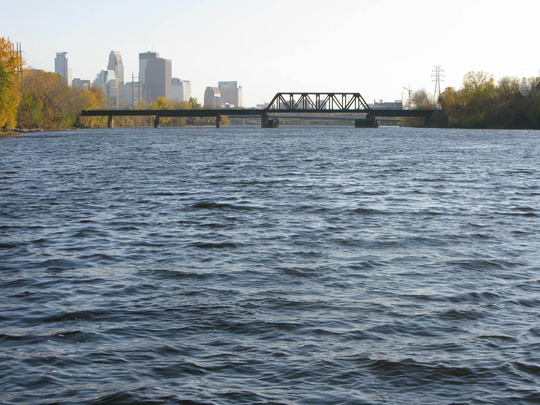 Mississippi River
Research on the Mississippi River marks a centennial milestone
In 2026, We Are Water MN will add a focus on the Mississippi River to commemorate the 100th anniversary of the first water quality survey of the river in 1926. That survey found a dead ecosystem and initiated a century of efforts to restore it. Now, the river hosts an award-winning fishery and is home to thriving populations of bald eagles and river otters.
We are Water MN is a project of the MPCA and the Minnesota Humanities Center in partnership with the Minnesota Historical Society; the Board of Water and Soil Resources; the Minnesota Departments of Agriculture, Health, and Natural Resources; and University of Minnesota Extension.
We are Water MN is funded by the Clean Water, Land, & Legacy Fund that was created with the vote of the people of Minnesota on Nov. 4, 2008.
 TMDLs make water science better
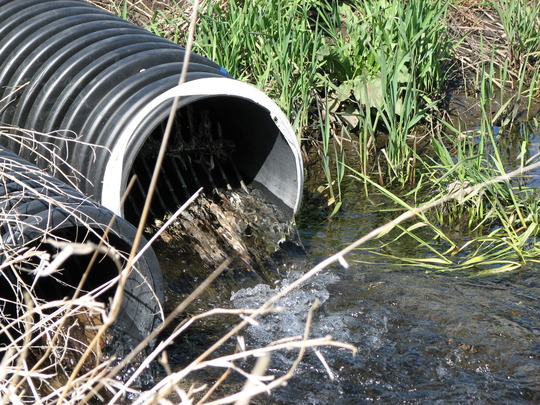
TMDL stands for "total maximum daily load," which refers to the maximum amount of pollution a lake, river, or stream can contain and still meet water quality standards. The MPCA is refining TMDL reports to offer clearer, more focused guidance on where pollutants come from, helping local partners target their efforts to protect water quality.
Recent news releases
Bovey man fined more than $20,000 for stormwater and wetland violations
Derek Vekich of Bovey filled in a wetland with more than 9,000 square feet of unpermitted fill near Trout Lake in Itasca County, according to investigators with the Minnesota Pollution Control Agency.
MPCA takes legal action against Freeway Landfill and Freeway Dump to protect drinking water for nearby cities
After multiple attempts to work with the owners of Freeway Landfill and Freeway Dump, the Minnesota Pollution Control Agency (MPCA) initiated a declaratory judgment action against the owners of the facility to protect the drinking water supply of residents of Burnsville and Savage.
|