Also: High-Skilled Immigration & the Insurance Crisis
Expert analysis made easy. Breaking down the news with data, charts, and maps.
Edited by Brady Africk and Lexi Baker
Happy Thursday! In today’s newsletter, we examine the return on investment of a college education, high-skilled immigration, and a possible climate-driven insurance crisis.
Don’t forget—subscribe and send DataPoints to a friend!
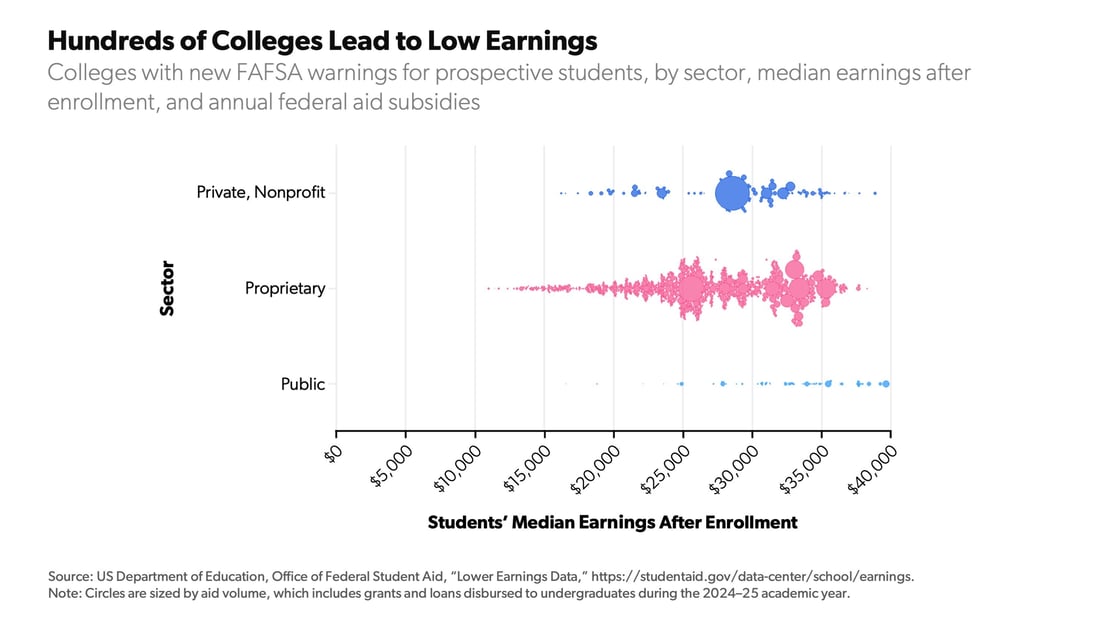
Topline: A new initiative from the US Department of Education will allow undergraduates to preview the returns on investment of their college education before even setting foot on campus. AEI’s Preston Cooper points out that roughly 1,000 institutions—mostly private—will trigger warnings that their graduates earn low wages when students apply for federal aid.
How It Works: After filing a Free Application for Federal Student Aid (FAFSA), a student will receive a warning in the application system if the institution typically graduates students who earn no more than comparable high school graduates.
By the Numbers: Institutions with earnings low enough to trigger the warnings enroll roughly 2 percent of undergraduates. They received nearly $4 billion in Pell Grants and undergraduate student loan aid in the 2024–25 school year—about 5 percent of all federal student aid to undergraduates.
"All this makes the new warnings an admirable addition to the Trump administration’s broader higher education accountability agenda. Nudges away from risky options may be just what some students need to make the right college choices. Prospective students will soon receive a welcome reminder that consumption of some forms of education impairs your ability to earn a decent wage. Please enroll responsibly.”
Topline: Only 9 percent of Republicans support decreasing high-skilled immigration, according to a new survey published by the Manhattan Institute. AEI’s James Pethokoukis argues that scaling back talent inflows would not only weaken America’s competitive edge in advanced industries but also run counter to a politically winning strategy.
Filling the Gap: For decades, America has relied on immigration from India, China, South Korea, Japan, and the Philippines to meet the demand for technical roles, especially in emerging technology. From 1990 to 2019, immigrants from those five countries drove 38 percent of the increase in US software developers, 25 percent of the increase in scientists and engineers, and 21 percent of the increase in physicians.
Shifting Priorities: Even amid efforts to restrict immigration—including proposals like the $100,000 H-1B visa fee—47 percent of Republicans say high-skilled legal immigration should be maintained, and 35 percent say it should be increased.
"Security risks are real. But the answer is sharper vetting, not shrinking the talent reservoir. Closing off Chinese talent—central to US scientific and AI leadership—would undercut every strategic goal Washington claims to prioritize. The American formula still works: Stay open, stay confident, and remain the place where ambitious talent chooses to build the future.”
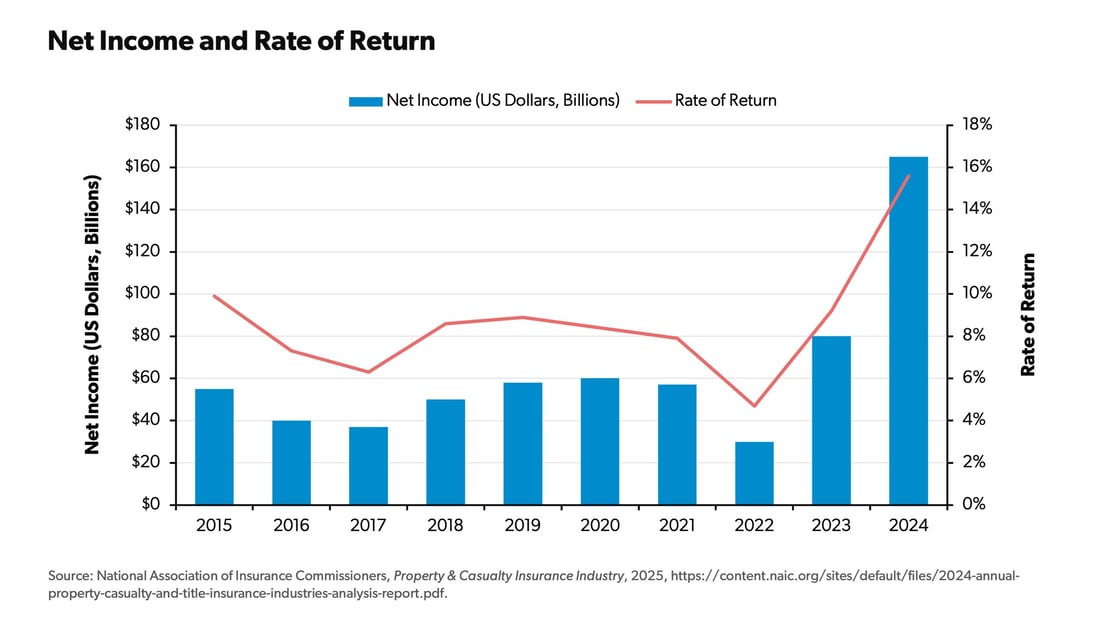
Topline: Despite warnings of an impending insurance crisis driven by climate-related catastrophes, 2025 will be extremely profitable for the property and casualty industry. AEI’s Roger Pielke Jr. notes that these profits are inconsistent with the alarm that climate advocates have sounded.
Big Profits: Even with the costliest wildfires on record in 2025, the property and casualty industry posted its strongest midyear underwriting gain in nearly two decades. The third quarter of 2025 was the most profitable in at least 25 years.
An Emerging Trend: This year's profitability continues a trend of strong performances in 2023 and 2024, according to data from the National Association of Insurance Commissioners (NAIC). NAIC attributes this to rate increases, abating inflation, and nearly doubled net income.
"However, it is not just climate advocates promoting the notion that climate change is fundamentally threatening the insurance industry. A climate-risk industrial complex has emerged in this space and a lot of money is being made by a lot of people. The virtuous veneer of climate advocacy serves to discourage scrutiny and accountability.”

.jpeg?width=1120&upscale=true&name=02%20Pethokoukis%20(1).jpeg)