|


In today’s newsletter:
Kristian’s debates on wealth taxes
Why spontaneous order can solve complex problems better than Government can
Why are so many young people leaving Britain?
& more!
This week, I spoke at two panel debates on the issue of wealth inequality and policy responses to it. One was organised by King’s College London’s Politics Society, where IEA Economics Fellow Dr Andrew Lilico and I argued against the former Business Secretary Sir Vince Cable and Prof Josh Ryan-Collins from University College London. The other one was organised by the LSE Hayek Society, where I argued against author and YouTuber Gary Stevenson.
It was interesting to see how different proponents of the wealth tax see completely different things in it, and have completely different ideas of what such a tax is supposed to achieve. The wealth tax has become all things to all people, and if we ever get one, most of them will end up disappointed.
Sir Vince Cable argued that high levels of private wealth can be a bad thing, because they allow the super-rich to manipulate political discourse. He singled out Elon Musk, who previously supported Donald Trump’s campaign, and Sir Paul Marshall, the co-owner and financial backer of GB News.
There are major problems with this style of thinking, but let’s ignore those, and just take the argument on its own terms rather than mine. Would a wealth tax really reduce the political engagement of the super-rich?
Suppose you are a politically opinionated multi-millionaire with £100,000 to spare. You are wondering whether you should use that money to acquire more assets, or whether you should use it to support a political project. A wealth tax would surely nudge you towards the latter option, because while your asset wealth is now being taxed, political campaigning is not: it is a form of consumption, and wealth taxes make present consumption more attractive relative to future consumption. So a wealth tax might promote the very thing Sir Vince wants it to prevent.
Prof Ryan-Collins, meanwhile, sees the taxation of wealth as a way to steer economic activity into more desirable directions. More specifically, he believes that we currently invest too much in property, and too little in other things.
I don’t believe in economic ‘steering’, and in the state determining what counts as a ‘desirable’ activity and what does not – but again, let’s ignore that, and judge the argument on his terms, not mine.
Actually existing wealth taxes have often done the precise opposite of what Prof Ryan-Collins wants to see: they have offered exemptions or favourable treatment for primary residences, so they may end up pumping more money into the housing market, not less.
Other than that: by presenting taxes on wealth as a tool to steer economic activity, Prof Ryan-Collins implicitly accepts that people respond to tax incentives. If they did not, there could be no steering.
This is the opposite of what proponents of wealth taxes usually claim. Once you accept that taxes can steer investment, you also have to accept that they can deter it.
The debate with Gary Stevenson, although notionally on a similar topic, was completely different in both style and substance. Sir Vince and Prof Ryan-Collins see wealth inequality as a problem, but not as a catastrophe. For Stevenson, on the other hand, the issue is existential: he sees it as the biggest social and economic problem of our time, and a self-accelerating one at that. In his mental model of the world, the top of the wealth distribution is a vortex which sucks all the wealth out of society, and which will keep doing so until actively stopped.
One small problem with this is that wealth inequality in Britain is not especially high. It is not high by historic standards, it is not high by international standards, and it is not increasing. So Stevenson’s big story breaks down even at the most basic factual level.
But he does have a gripping story to tell, and people want to believe him.
What I tried to do on both occasions, hopefully with some success, is to promote a counternarrative, alongside a mere critique of wealth taxes. Because ultimately, the main problem with the wealth tax is no that it’s a bad idea – it’s that it crowds out far better ones.
Kristian Niemietz
Editorial Director
The best way to never miss out on IEA work, get access to exclusive content, and support our research and educational programmes is to become a paid IEA Insider.
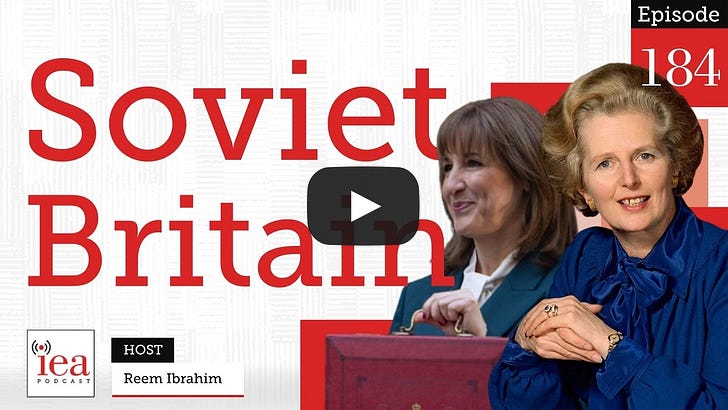
IEA Podcast: Head of Media Reem Ibrahim is joined by Managing Editor Daniel Freeman and Editorial Director Kristian Niemietz to review the budget and its fallout — IEA YouTube
Spontaneous Order
 |
Spontaneous orders – from language to markets – emerge without central coordination and handle complexity better than government planning
Empirical studies show that spontaneous order outperforms coercive regulation in economic growth, natural resource management, and public service provision
New report challenges government intervention in climate change, public health, transport, and economic policy, arguing that complex problems require maximum freedom to solve
A new briefing paper from the Institute of Economic Affairs argues that spontaneous order – the emergence of complex systems without central coordination – provides strong grounds for resisting Government action, especially when proposed to correct market failures or promote efficiency.
Elaine Sternberg, author of Spontaneous Order: Analysis and Implications, said:
“The possibility of spontaneous order should highlight large arenas where government action is unnecessary and may well be actively counterproductive. Significantly, these are areas - like climate change, public health and welfare, and economic growth - where government is most likely to claim that extreme complexity requires coercive regulation. Recognising the potential and advantages of spontaneous order should encourage scepticism about, and opposition to, such popular public proposals.”
News and Views
In memory of Edgar Wallner
It is with great sadness that I share the news that our long-standing supporter and friend of the IEA, Edgar Wallner, has passed away. We learned of his death from his daughter, Lucy, who wrote to say that her wonderful father had died the previous morning and that he had taken enormous pleasure from his association with the Institute.
Edgar was a charming and thoughtful presence at many IEA lunches and speaker events over the years. Those who met him will remember his warmth, good humour and genuine interest in ideas. Beyond the IEA, he had a distinguished career in business, notably leading Orthofix through a period of major growth and innovation, and he was widely admired for his integrity, humanity and principled leadership.
We are deeply grateful for Edgar’s loyal support of the IEA, his championing of free markets ideas, and for the encouragement he gave us over so many years. We extend our heartfelt condolences to his wife of 65 years - Judith and his children Penny, Michael, Lucy and Rebecca.
Linda Edwards
Chairman, Board of Trustees, Institute of Economic Affairs
Letter: Analysis that Brexit was a disaster fails the smell test, Economics Fellow Julian Jessop, Financial Times
Callum Price: Some of the best bits of this ‘muddling on’ Budget are what wasn’t in it, Director of Communications Callum Price, ConservativeHome
Last week’s budget was lamentable for many reasons.
Hiking the tax burden to the highest level ever, further increasing welfare spending on the backs of the working people that were supposed to be protected, refusing to make any attempt to tackle the looming problem of the state’s longer-term liabilities, failing to make any pro-growth changes to the tax system. The list is not short.
This mass exodus of young people is a damning indictment of modern Britain, Public Policy Fellow Matthew Lesh, The Telegraph
A once-mighty superpower has slipped from its peak. Its economy faltering and its leaders losing the confidence of the people. As censorship tightens and hope for change fades, growing numbers of citizens have made a reluctant choice: to leave their homeland in search of a better future.
Full Interview: Gold Standard To Bitcoin - How Money Changed Forever | Dominic Frisby, Head of Media Reem Ibrahim interviews Dominic Frisby, IEA YouTube

Wealth inequality is not a problem in Britain, Editorial Director Kristian Niemietz, CapX
Wealth is not fixed, but political energy very much is, and it is in short supply. At the moment, too much of it is wasted on dead-end projects such as ‘Gary’s Economics’.
“Abolish the triple lock…”, Head of Media Reem Ibrahim appeared on TalkTV
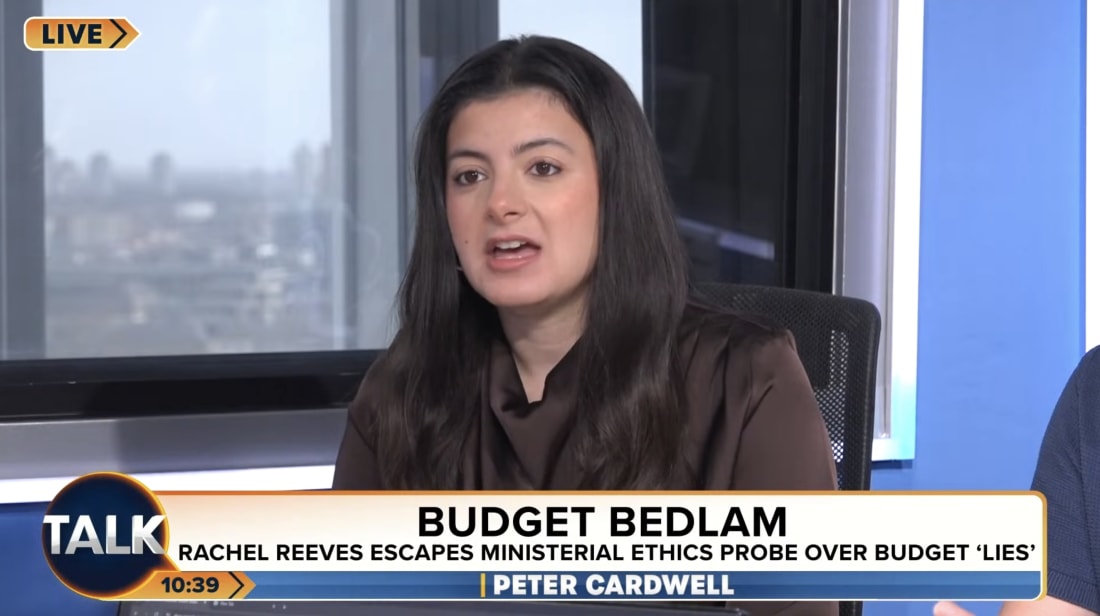 |
Full segment can be watched here.
The dark history of the minimum wage, Research Associate Mani Basharzad, CapX
I do not believe economics moves in perfect circles, nor do I think it progresses in a straight and predictable line. Instead, economic knowledge resembles a corkscrew: sometimes moving forward, sometimes looping backward, but gradually rising, inch by inch, as we correct mistakes and refine what we know.
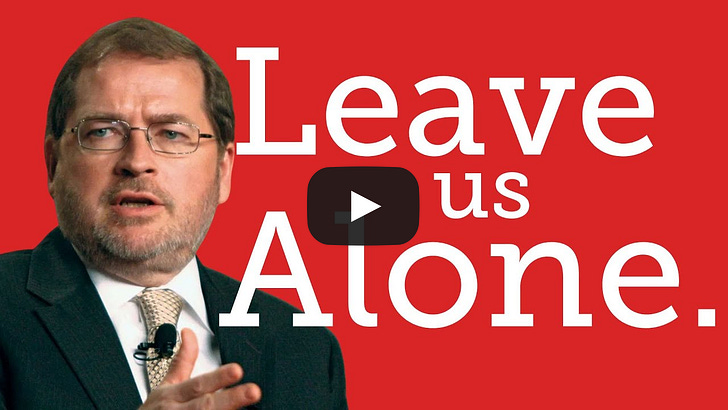
Future of the American Right | Grover Norquist | IEA Interview, Former Executive Director interviews Grover Norquist, IEA YouTube

 | A guest post by
|
You’re currently a free subscriber to Insider. For the full experience, upgrade your subscription.
Paid subscribers support the IEA's charitable mission and receive special invites to exclusive events, including the thought-provoking IEA Book Club.
We are offering all new subscribers a special offer. For a limited time only, you will receive 15% off and a complimentary copy of Dr Stephen Davies’ latest book, Apocalypse Next: The Economics of Global Catastrophic Risks.
| ||||||||||

