|
The Heresy of a God Who Hates Empathy
Why the struggle for the moral narrative in public life matters
|


| |||||||||||||||


When Charles Dickens published A Christmas Carol in 1944, he was a controversial figure in American life. While visiting the US on a speaking tour in 1942, he had written to a friend back in England, “my secret opinion of this country; its follies, vices, grievous disappointments. . . I believe the heaviest blow ever dealt at Liberty’s Head, will be dealt by this nation in its ultimate failure of its example to the Earth.” He did not keep these sentiments guarded in private letters, but published American Notes for General Circulation after returning home from his tour. In it, he made clear that he was most disturbed by the violence of America’s chattel slavery system - a violence that all Americans participated in - and the ways that violence was justified by Christian faith.
Dickens was troubled by the heresy of slaveholder religion and the way it twisted the soul of the America he visited in the 1840s.
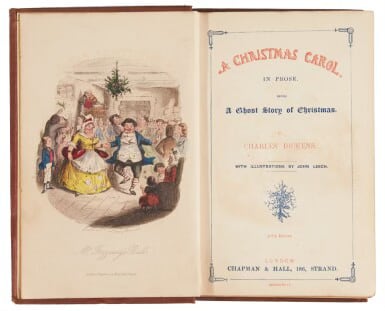 |
He was not alone. By the mid 1840s, the abolitionist movement was a decade old. While it had not yet won mass support, even in the North, abolitionism’s network’s were growing through independent media like William Lloyd Garrison’s The Liberator and the National Anti-Slavery Standard, where Lydia Marie Child published the first American review of The Christmas Carol:
The newspapers announce it merely as ‘a ghost story’, and scarcely utter a word in its praise. If it had been published before the author wounded our national vanity so deeply, it would have met quite a different reception; for in fact it is a most genial production, one of the sunniest bubbles that ever floated on the stream of light literature.
Recognizing A Christmas Carol’s capacity to “‘abate prejudices, unlock the human heart, and make the kindly sympathies flow freely,” Child understood why the story of Tiny Tim and Ebeneezer Scrooge would become a classic. It had the power to breathe life into the moral value of empathy that slaveholder religion had done so much to stifle. Dickens had found a way to tell the Christmas story that challenged the heresy of American Christianity in the 1840s.
In the Christian tradition, heresy is a distortion of the traditional teaching of the church. We recognize heresy as a dangerous thing, particularly because it is always presented as another side of the truth rather than a lie that is against the truth. When the truth is distorted to justify evil, that’s heresy. It allows people to feel righteous about doing something that is wrong.
Heresy is especially dangerous when powerful political figures and their backers decide it is useful to their purposes. In America today, we see political interests aligned with the techno-feudalists of Silicon Valley and the MAGA movement, promoting the heresy that empathy is a sin. What you feel when you see Tiny Tim and his family starving while Scrooge is haunted by his own selfish gain - that feeling, this heresy says, is a temptation that globalists are exploiting to ruin Western culture. This heresy preaches that you must learn to resist the feeling of empathy. It wants to turn the Christmas story on its head and make Scrooge into a saint.
In recent books like Toxic Empathy and The Sin of Empathy, Christian writers who want to cash in on this distorted moral narrative have been laying out carefully-reasoned arguments, much like their forebears who wrote the tomes to justify the slave system that so offended Dickens. These books are not compelling, nor have they sold incredibly well. PRRI’s latest American Values Survey found that 80% of US adults still say empathy is a moral value that underpins a healthy society. But a closer look at the data makes clear that nearly four in ten respondents who believe that America was founded as a “Christian nation” say empathy is a dangerous emotion that undermines the ability to set up a society guided by God’s truth. In the spaces where this distorted moral narrative dominates, the heresy is sounding more and more like truth.
What we are seeing with this attack on empathy is as egregious as Pharaoh and his paid religionists resisting Moses’ ancient call to “Let my people go.” The trouble with every heresy is that it doesn’t need to be compelling to do its lethal work. As it did with Ebeneezer Scrooge, this heresy about empathy can steal our humanity through thousands of daily decisions to turn away from our human family in need. It doesn’t take any big decision to become a Scrooge. Heresy normalizes the broad path that Scripture says leads to destruction - not with any fanfare, but as any highway directs its travelers toward a destination.
As teachers in the church, we learn to challenge heresy as a means of offering people an off-ramp. Defending the truth in the on-going struggle for the moral narrative in public life is essential work in the care of souls. Yes, the ghosts of Christmases past, present, and future haunt people in their sleepless hours. Heresies are offered as a sleeping pill to ease the troubled spirit and silence the pangs of conscience. But we must keep the ancient truths and make them live anew as a way of not only challenging people to stay awake, but also reminding them that there is a way toward the beloved community where we each become our true selves through an empathy that leads us to care for one another.
This is why we sing a Christmas carol. It’s why we stand with those who are suffering at Moral Mondays. It’s why we challenge heresy and defend the truth in this moral moment.
#####
We hope you’ll make plans to join us for the first live conversation of our Advent in a Time of Authoritarianism this Friday, December 5, at noon ET. We’ll be talking with PRRI’s Robert P. Jones about what this year’s American Values Survey reveals and what real hope looks like in the face of that reality.

You’re currently a free subscriber to Our Moral Moment, which is and always will be a free publication. Paid subscribers support this publication and the moral movement. All proceeds from Our Moral Moment are donated to organizations that are building a moral fusion movement for a Third Reconstruction of America.
| ||||||||||

