|
Critical State: Hegseth’s History of Ignoring Rules of Engagement
If you read just one thing this week … read about Defense Secretary Pete Hegseth's latest scandal.
|
| |||||||||||||||


 |
As a nonprofit newsroom, Inkstick Media depends on donations and reader support to do its work. Between now and the end of the year, Inkstick is participating in the NewsMatch fundraising campaign, which means any and all donations will count as double without costing you any extra. Will you support Inkstick today?
Hegseth in the Spotlight
At The Guardian, Jason Wilson has reported that US Defense Secretary Pete Hegseth made an alarming admission in his memoir, The War on Warriors. While serving in Iraq, Hegseth wrote, he told soldiers to disregard legal advice on the rules of engagement.
Wilson explains that a military judge advocate general had instructed Hegseth’s platoon not to fire unless an enemy aimed a rocket-propelled grenade directly at them. Hegseth recounts rejecting that guidance, telling his troops, “I will not allow that nonsense to filter into your brains.”
The article notes that this revelation has reignited concerns about Hegseth’s apparent disregard for international law and military ethics. Critics argue that his stance undermines the Defense Department’s “Law of War Manual,” which requires strict adherence to legal standards in combat.
The article emphasizes that these comments have resurfaced as Hegseth assumed leadership of the Pentagon, raising questions about how his past defiance of rules might shape future US military policy.
The controversy highlights broader anxieties about accountability, civilian oversight, and the potential consequences of placing a figure with such views at the helm of the Defense Department.
Hegseth’s past disregard for rules of engagement in Iraq directly relates to current debates over US military action near Venezuela, where Hegseth, in his current role as defense secretary, has been accused of authorizing strikes that may have violated international law.
If You Read One More Thing: A Local Fight Against Christian Nationalism
At the Texas Observer, Edward Brown reports on a local fight brewing in North Texas, with a grassroots coalition pushing back against Christian nationalists in Tarrant County.
Every third Sunday, a group of progressives gathers at a co-working space in Fort Worth, Texas, for what has become “a hub for collective action to combat the influence of right-wing extremism,” Brown writes.
These gatherings come amid a right-wing effort to do precinct-level redistricting that could solidify the GOP’s control over the county and “consolidate power.”
Activists have remained defiant in the face of this redistricting drive. Chris Tackett, founder of a group to fight right-wing extremism, told Brown: “There are enough voters out there who can absolutely turn an election and blow up what they are trying to do.”
NATO Allies Lag in Arms Purchases for Ukraine
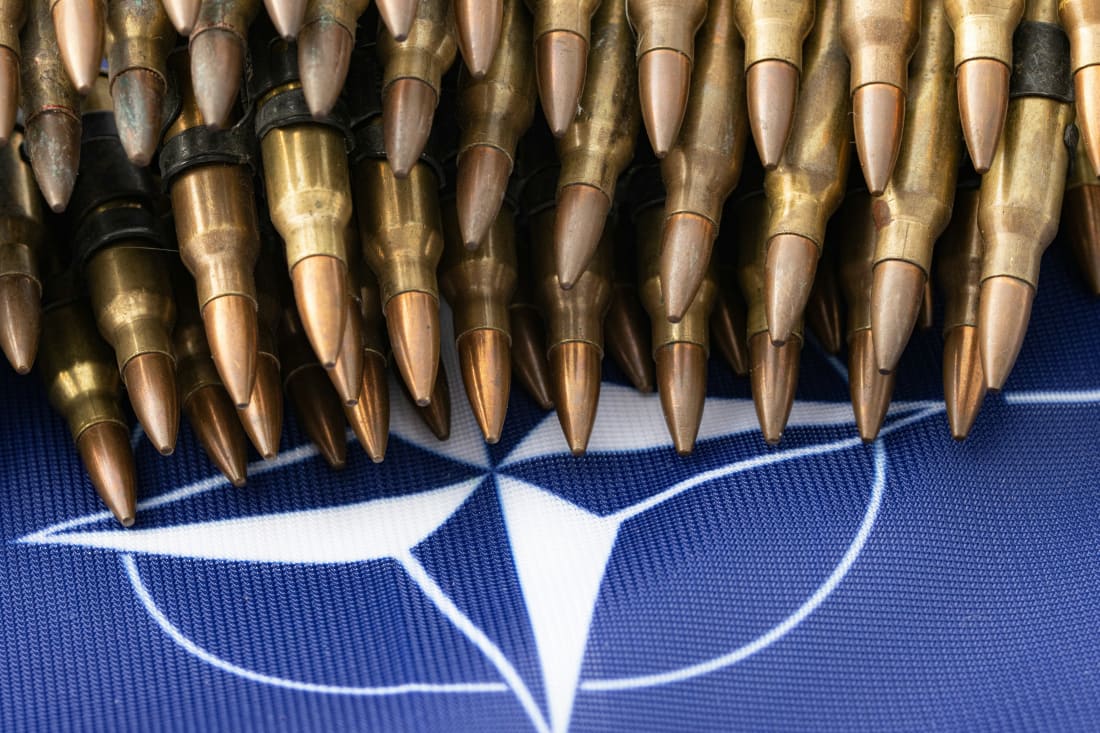 |
At Politico, Victor Jack and Hanne Cokelaere report that NATO allies face mounting pressure to contribute more evenly to the Prioritized Ukraine Requirements List (PURL), a scheme created in July 2025 to sustain US weapons deliveries to Ukraine.
The report says that “11 out of 32 NATO allies formally contributed to five separate packages worth a total of $2.5 billion,” while others lag behind.
The article highlights frustration within the alliance, with one diplomat saying, “Our patience is wearing a bit thin.”
Australia and New Zealand are expected to join upcoming packages, while countries like Italy have yet to commit.
Kyiv has praised the program, stressing that at least $12 billion in future contributions would strengthen its negotiating position during ongoing peace talks with Russia.
Deep Dive: Japan and Australia Under Pressure in US-China Competition
A recent major audit of US alliances underscores how Washington’s partners in the Indo‑Pacific have adapted to the intensifying rivalry with Beijing. The report, “Legacy or Liability? Auditing US Alliances for Competition with China,” describes Japan as “the United States’ most important Indo‑Pacific ally” and Australia as “a capable partner across a range of issues,” each playing distinct roles in the contest with China.
The report opens with a blunt description of Japan as indispensable: “Japan is the United States’ most important Indo-Pacific ally, a core player in the semiconductors sector, a technological giant, the world’s fourth-largest economy whose military capabilities are expanding, host to critical US bases in the region, and a key partner to the Global South.”
Tokyo’s defense transformation, the way the report puts it, comes as a direct response to Beijing’s assertiveness. The report notes that Japan has “embarked on a major transformation of its security policy that involves increasing defense spending to 2% of GDP, investing in key capabilities such as cyber, and developing a long-range counterstrike capability that will allow it to strike targets in China and North Korea.”
Nonetheless, public opinion reveals a potential fragility behind US-Japan ties. After US tariffs came into effect earlier in 2025, “77% of Japanese respondents did not believe the United States would come to Japan’s defense in a crisis.” This skepticism underscores the risk that economic disputes could erode trust even as military cooperation deepens.
Japan’s semiconductor dominance is another pillar, and the report details how Japanese firms produced “88% of coaters/developers, 57% of wafer-cleaning systems, 53% of silicon wafers, and potentially up to 90% of photoresists.” Such capabilities make Japan vital to US efforts to diversify supply chains away from China.
Still, Tokyo has balanced deterrence with diplomacy. Its 2022 National Security Strategy labeled China the “greatest strategic challenge,” but leaders continued to seek a “constructive and stable” relationship with Beijing. This dual track reflects both economic interdependence and strategic caution.
Meanwhile, Australia’s role is less resource‑rich than Japan’s but strategically significant. The report states: “The US-Australia alliance has received growing attention from experts as Australia’s once warm relations with China have run aground.”
Canberra’s importance largely stems from minerals and military basing. The report emphasizes that Australia “possesses large scale deposits across many of the critical minerals and rare earths essential for US strategic applications. It is the world’s largest miner of lithium and rutile titanium and the fourth-largest miner of rare earth elements for magnets.” This positions Australia as a linchpin in US efforts to reduce dependence on Chinese refining.
The 2021 launch of AUKUS marked a turning point, the report explains. Through the pact, “the United States will share advanced nuclear-propulsion and sonar technologies to co-develop nuclear-powered submarines.” By 2027, US and UK submarines are scheduled for rotational deployment from Perth, with Australia set to receive Virginia‑class submarines in the 2030s.
Australia’s bases, the authors write, are “unsinkable aircraft carriers” projecting US power into the Pacific. Tindal Air Base was upgraded for B‑52 bombers, while Pine Gap has continued to provide “high-value intelligence” as part of the Five Eyes network.
Public opinion, however, remains divided. A 2023 poll found “42% of respondents said they supported Australia getting militarily involved if China invaded Taiwan… while 56 percent said they were opposed.” This strategic ambiguity mirrors Washington’s own stance, leaving Canberra’s role in a Taiwan contingency uncertain.
Both allies have faced dilemmas of trust and entanglement. Japan’s doubts about US reliability and Australia’s declining public confidence in Washington reveal vulnerabilities. The report warns that tariffs and domestic politics could “slow the cooperative momentum that has built up around China in recent years.”
At the same time, both countries were indispensable in supply chain resilience. Japan’s semiconductor leadership and Australia’s mineral wealth remain critical to US friendshoring strategies. Together, they offer alternatives to China’s dominance in advanced technology and resource processing.
The audit concludes that alliances are America’s greatest advantage but not automatic. Japan and Australia illustrate both promise and peril: robust capabilities, deep integration, but fragile public trust and economic dependencies. As the report puts it, “Given the volatility of Sino-Japanese relations, Japan has strong incentives to diversify and secure its semiconductors and critical-minerals supply chains by collaborating with the United States,” while Australia “remains largely aligned with the United States on China and foreign policy in general” despite domestic doubts.
In the contest with China, the report makes clear, Washington’s future depends not only on its own strength but on the resilience of allies whose cooperation could tip the balance of power in the Indo‑Pacific.
Show Us the Receipts
In a new essay at Inkstick, Sukhada Tatke writes about the unraveling of Scotland’s long‑held reputation as a nation immune to racism amid rising anti‑immigrant protests and far‑right activity. Tatke describes demonstrations in Falkirk targeting asylum seekers housed in hotels, revealing how xenophobia and nativism had entered mainstream politics. Scotland once prided itself on civic nationalism and inclusivity, but recent events have exposed deep fractures, with race‑related hate crimes increasing and anti‑immigration parties gaining traction. Danny Phillips, a Scottish trade union worker, said “[w]hat we are seeing today is part of the wider story of whiteness, of defense of ‘civilization,’ like in many parts of the world, including the US.”
In her latest report, Inkstick fellow Hannah Bowlus describes how Vandenberg Air Force Base became a focal point for peace activists challenging US military expansion and nuclear weapons testing. Activists have long gathered outside the base, turning it into a “one‑stop shop” for organizing protests, vigils, and campaigns against militarization. The site’s visibility and symbolic role in America’s nuclear arsenal drew diverse groups, from local residents to national organizations, who coordinated efforts to pressure policymakers. MacGregor Eddy said that “[p]eople have forgotten what ICBMs stand for … a ‘rehearsal for our world ending.’”
At The World, Valerie Hamilton reports that Germany, facing a severe shortage of skilled labor, has turned to young foreign apprentices to fill its workforce gaps. The piece describes how traditional apprenticeship programs, once dominated by German youth, have increasingly relied on recruits from countries such as Ecuador, Azerbaijan, Ukraine, and Vietnam. Hamilton notes that “in the 2025–2026 academic year, one in three first-year apprenticeships went unfilled,” leaving a deficit of 130,000 future workers. Businesses have responded by casting a wider net abroad, offering migrants and refugees the chance to train and earn wages, while sustaining Germany’s long-standing model of vocational education.
NewsMatch Season: Support Independent Journalism
Between now and Dec. 31, you can help Inkstick expand its reporting, better compensate its contributors, and continue digging into the stories you won’t find at corporate media outlets. By donating through our annual NewsMatch campaign, your contribution will count double for us. If you send $50 today, Inkstick will get $100.
Nonprofit newsrooms are entirely dependent on donations and reader support to continue doing their work. At Inkstick, your money will go directly toward our reporting. Click here to learn more about how you can help us keep exposing the war profiteers, would-be authoritarians, and defense companies who would rather see an independent press silenced.
Critical State is written by Inkstick Media in collaboration with The World.
The World is a weekday public radio show and podcast on global issues, news, and insights from PRX and GBH.
With an online magazine and podcast featuring a diversity of expert voices, Inkstick Media is “foreign policy for the rest of us.”
Critical State is made possible in part by the Carnegie Corporation of New York.
You're currently a free subscriber to Inkstick’s Substack. For the full experience, upgrade your subscription.
| ||||||||||

