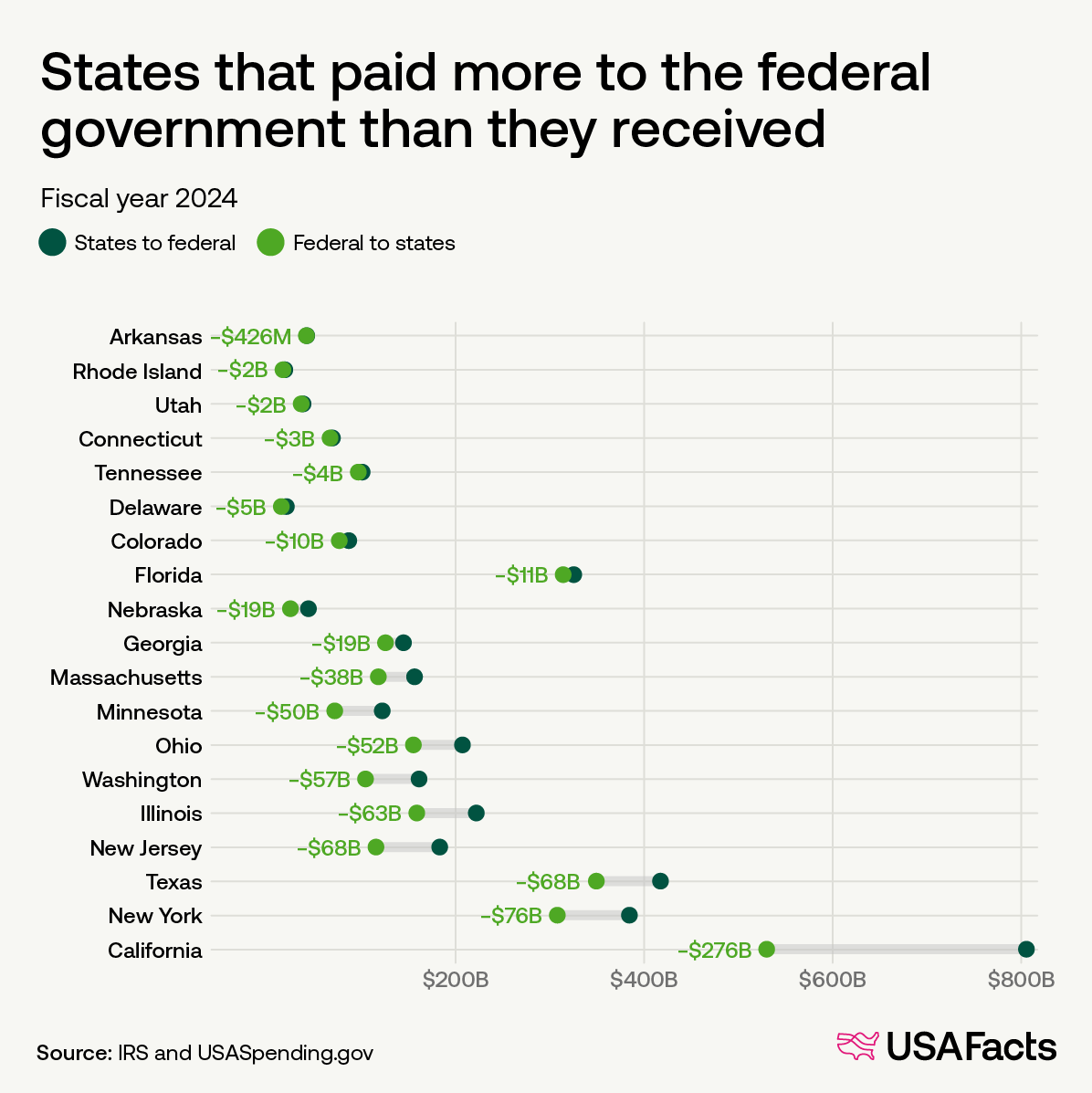
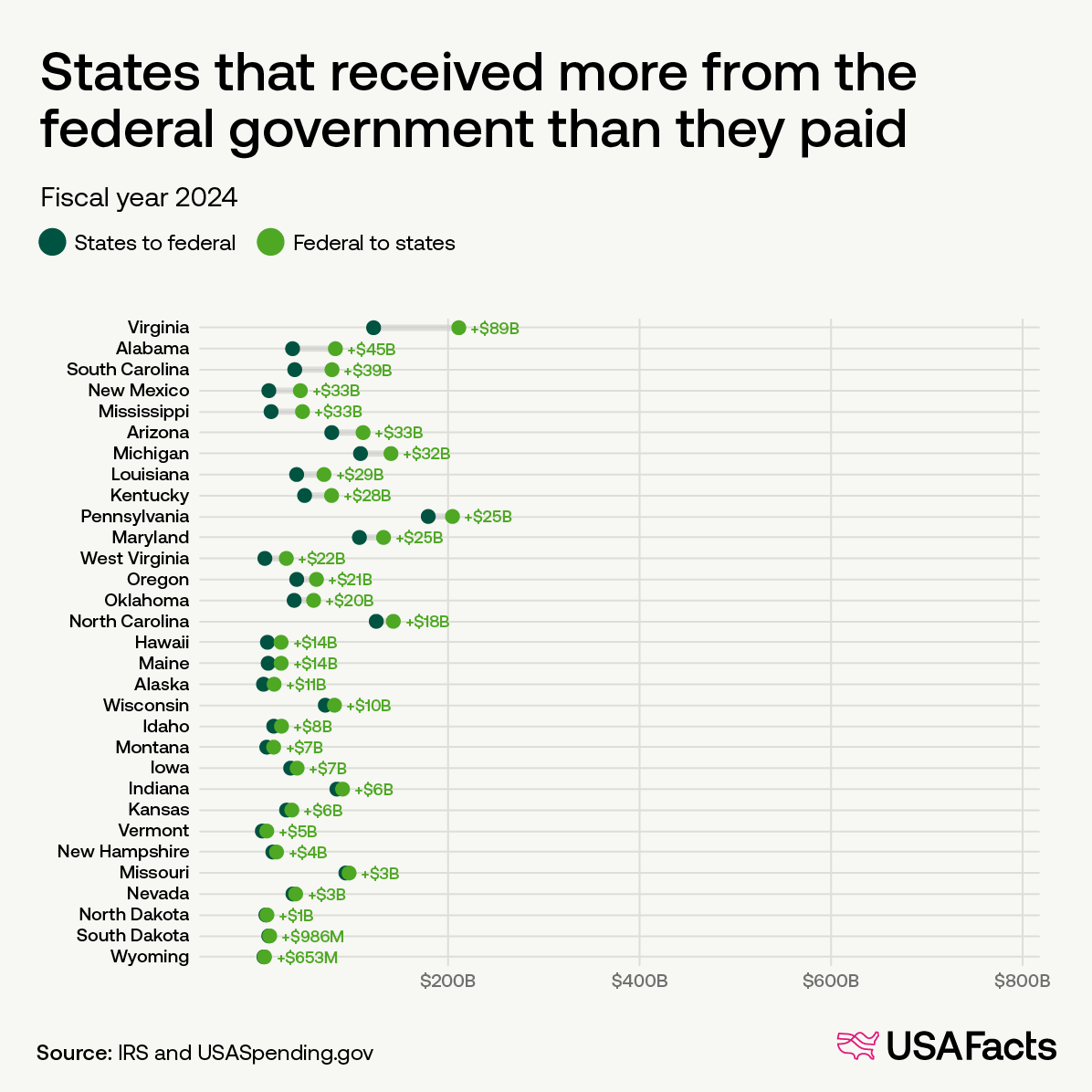
In fiscal year 2024, the federal government collected around $5.07 trillion in taxes from states. Or rather, taxes levied on residents and businesses within them. The government redistributed about $4.87 trillion back to states through Social Security, Medicaid, Medicare, SNAP benefits, education grants, and other programs. |
|
But if you've been reading this newsletter for a while, you know that everything varies by state. The amounts states get from the federal government are no exception. In fact, some states get back less than they contribute.
- Thirty-eight percent of what the government collected in FY 2024 was from the nation’s four most populous states: California (15.9% of the total), Texas (8.2%), New York (7.6%), and Florida (6.4%).
|
|
- On average, states contributed $15,000 per resident. But some less-populated states contributed more than their size would suggest. Massachusetts sent the most per person: $21,933. Nebraska followed with $21,922, then Minnesota with $21,106. Washington, DC, sent $64,427, nearly triple the amount of the highest-paying state.
- Controlling for population, Alaska and its residents received the most money per person: $24,796. Approximately one-quarter of this funding came from agreements between tribes in the state and the Indian Health Service. Virginia received the second-highest amount ($23,975 per person), and New Mexico was third ($21,481).
- Washington, DC, received more money than any state, at $89,680 per person. About 30% of this was due to contracts and grants for Amtrak and military branches operating in the district.
|
|
- Nineteen states sent more to the federal government in total than they received. The largest differences on a per-person basis were in Nebraska ($9,531), Minnesota ($8,702), and Washington State ($7,139).
|
|
Government assists for lower-income students |
|
When it comes to government support for education, a student’s family’s income often determines eligibility. The federal government funds a range of education programs, including preschool and college tuition aid, through direct financial support and tax credits. This new video featuring USAFacts Founder Steve Ballmer examines pre-K and higher education programs. |
|
- Pell Grants are the government’s largest grant program. In the 2024–25 school year, awards ranged from $740 to $7,395, depending on income, household size, and other factors. In total, 6.4 million students received $35 billion in Pell Grants in the 2023–24 school year.
- The One Big Beautiful Bill Act, passed this summer, expanded Pell eligibility to students in short-term workforce training programs. It also made students with full-ride scholarships from other sources ineligible.
- The American Opportunity Tax Credit offers up to $2,500 per student in the first four years of post-high school education. In 2024, it provided $2.5 billion in refunds. Up to $1,000 per filer is refundable annually, even if the filer doesn't owe taxes.
- Federal Work-Study provides part-time jobs to students with financial need, and the government funds up to 75% of their wages. Many jobs are on campus, but at least 7% of federal funding for work-study must go to off-campus jobs at public interest organizations. In the 2022–23 school year, Federal Work-Study gave an average of $1,655 per student.
- Early Head Start and Head Start are free programs for pregnant women and children younger than five. In 2024, a family of four had to earn $31,200 or less — close to the federal poverty line — to qualify based strictly on income. That year, over 715,000 children were enrolled in some version of Head Start. Total federal spending on the program was $12.3 billion.
|
|
Think you know the data? Take our poll! |
|
| What's the average annual income of doctors in the United States? | | | | | | | | | | | | |
|
Two National Guard members were shot in Washington, DC, last week. One of the members has since died. Read more about the National Guard and its history of deployments in the US.
The National Park Service recently announced that a 2026 annual pass for non-US residents would cost $250. Prices will remain at $80 for US citizens and permanent residents. Here’s how national parks affect local economies.
|
|
|
|
|