
Dec. 2, 2025
Permission to republish original opeds and cartoons granted.
Israel-Hamas Peace Appears To Be Holding With Wartime Fatalities Down Almost 94 Percent Since October 10 Ceasefire As Eyes Turn Toward Ukraine
|
|
|
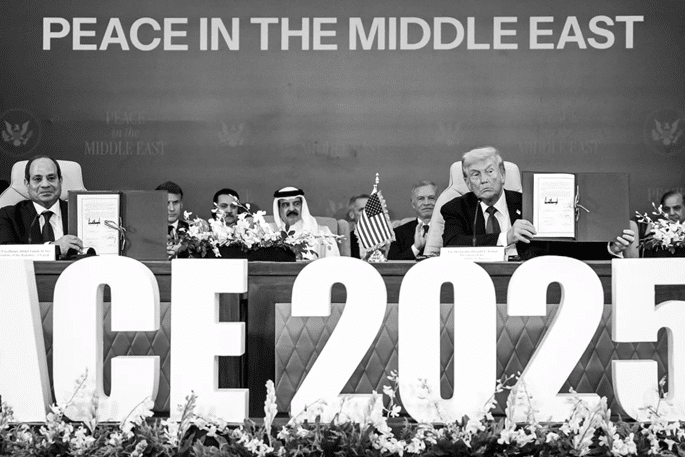
Wartime fatalities in Gaza have decreased almost 94 percent since the end of the war on October 10, when Israel and what remains of Hamas signed a ceasefire, according to data compiled by the Gaza Ministry of Health. The agency stated that 70,100 people have died attributable to the war that began on Oct. 7, 2023 when Hamas invaded Israel, of which 350 were after the peace agreement in sporadic fighting. That tragically works out to around 69,750 dead prior to the ceasefire at an average rate of 2,906 per month over 24 months, fortunately down to 175 a month since October 10 as Israel honored the ceasefire and ceased almost all of its offensive operations in Gaza. It was a fairly one-sided conflict, with about 2,100 dead including those killed on October 7, 2023. So, President Donald Trump’s peace in the Middle East appears to be holding for the most part, with the major fighting pretty much done. Again, there is still some sporadic fighting leading to more fatalities, but certainly not on the scale that was seen prior to the ceasefire as Israel has ceased most offensive operations. Which makes sense, that when there is nothing left to fight over, you stop fighting. Depending on how you look at it, that could make ending the fighting in Ukraine all the more difficult, with Russia set on keeping the territories it has conquered since the war there began in 2014 and again in 2022, and Ukraine determined to retake those lands. Could there be a partition?
|
Israel-Hamas Peace Appears To Be Holding With Wartime Fatalities Down Almost 94 Percent Since October 10 Ceasefire As Eyes Turn Toward Ukraine
By Robert Romano
Wartime fatalities in Gaza have decreased almost 94 percent since the end of the war on October 10, when Israel and what remains of Hamas signed a ceasefire, according to data compiled by the Gaza Ministry of Health.
The agency stated that 70,100 people have died attributable to the war that began on Oct. 7, 2023 when Hamas invaded Israel, of which 350 were after the peace agreement in sporadic fighting. That tragically works out to around 69,750 dead prior to the ceasefire at an average rate of 2,906 per month over 24 months, fortunately down to 175 a month since October 10 as Israel honored the ceasefire and ceased almost all of its offensive operations in Gaza. It was a fairly one-sided conflict, with about 2,100 dead including those killed on October 7, 2023.
So, President Donald Trump’s peace in the Middle East appears to be holding for the most part, with the major fighting pretty much done. Again, there is still some sporadic fighting leading to more fatalities, but certainly not on the scale that was seen prior to the ceasefire as Israel has ceased most offensive operations.
Since the war ended, President Trump has hosted both the new President of Syria, Ahmed al-Sharaa, and the Crown Prince of Saudi Arabia, Mohammed bin Salman, at the White House to build on the success that seemed almost impossible to achieve just a year ago.
The President’s ultimate goal is to expand the Abraham Accords — recognition of Israel and initiation of diplomatic relations between Israel and United Arab Emirates, Bahrain, Sudan, and Morocco — a process that sadly was sidelined in the war.
But, maybe it just had to be that way to get this point. As a result of the war, the U.S. and Israel destroyed Iran’s nuclear capabilities, which has reduced the threat level in the broader region significantly and ultimately worked in the interests of the Arab states, for whom Iran is the principal adversary in the region. Hamas is all but completely destroyed, and now is to be disbanded under the peace plan, and so too has Hezbollah in Lebanon — both proxies of Iran — been severely degraded. These were all stated war aims by Israel, and so achieving them made peace possible.
Which makes all the sense in the world, that when there is nothing left to fight over, you stop fighting. Depending on how you look at it, that could make ending the fighting in Ukraine all the more difficult, with Russia set on keeping the territories it has conquered since the war there began in 2014 and again in 2022, and Ukraine determined to retake those lands. Could there be a partition?
That is certainly how the conflicts on the Korean peninsula and also in Vietnam ended at the peace table, although in the case of Vietnam, with nobody around to enforce the agreement, North Vietnam violated the peace agreement in 1975 and conquered South Vietnam in spite of the piece of paper. In both cases, neither South Korea nor South Vietnam wanted to be a party to the final agreement, but in both cases, with the U.S. doing the bulk of the fighting on the ground and in the air and by sea, had considerably more leverage to negotiate an end to the hostilities. But we said the war was ending, and so for our parts both of them.
We wanted to stop fighting, and so armistice especially from our end was possible. Those are the only conditions for peace that matter. Russia and Ukraine have to want the fighting to stop. The President can refuse arms or send more, basically. Provide intelligence or not. Talk to both sides or not. Use trade sanctions or not. That’s some leverage but also not as much as if American soldiers were doing the fighting and our blood were at stake.
President Trump has correctly noted he cannot order both sides to end the war, but surely, there is a framework to just do that one thing: Stop fighting.
Call it a ceasefire or whatever. The only condition needed is Russia stops its military advance, just like Israel did. Just stop right where they are. Within two months, we could see a 94 percent decrease in fatalities there, too, but then have a means of negotiating forward a peaceful resolution to the conflict, just as the Abraham Accords are still on the table. There’s always something more to talk about, like resuming diplomacy and commerce.
To get Hamas to the table also required regional partners Egypt, Qatar and Turkey putting pressure, and so surely, too, another key could be Ukraine’s European partners have a role to play in ensuring both sides have an interest in reaching a settlement.
Ultimately, both sides, being unable to fully obtain their military ends, will sit down to broker a settlement one way or another. It’s only a matter of time, but as the war wears on, that is one resource could be running out. President Trump will be turning 80 years old next year, and the deal he is putting on the table might be the last, best deal both sides are going to get while he is still president. When it comes to brokering peace, there might be no tomorrow.
Robert Romano is the Executive Director of Americans for Limited Government Foundation.
To view online: https://dailytorch.com/2025/12/israel-hamas-peace-appears-to-be-holding-with-wartime-fatalities-down-almost-94-percent-since-october-10-ceasefire-as-eyes-turn-toward-ukraine/