|

I Was Told, “Go Back Where You Came From.” Here’s What I Did Instead. |
Dear John,
As we near the end of Giving Tuesday, we’re continuing to reflect on the experiences that have shaped our commitment to this work. I want to share my personal story, because it explains why I believe so strongly in LEAP’s mission to advocate for a just and compassionate approach to public safety.
I grew up in a close-knit community in the United States Virgin Islands, the proud child of immigrant parents, who, like many from the Caribbean, came seeking opportunity. My childhood was shaped by a vibrant immigrant community, but also by the painful reality of discrimination and nationalism. While race was not the primary fault line, the belief that immigrants would take jobs or resources from local Virgin Islanders fueled hostility. I witnessed my parents being demeaned because of their immigrant status, and although I was born in the Virgin Islands, I too was met with name-calling and told to “go back where you come from.” |
Despite these challenges and the economic hardships we faced, I was fortunate to have a supportive upbringing surrounded by extended family, some related by blood, others by the strength of community. After high school, I attended Florida Agricultural and Mechanical University, where I earned both bachelor’s and master’s degrees before dedicating my life to public service.
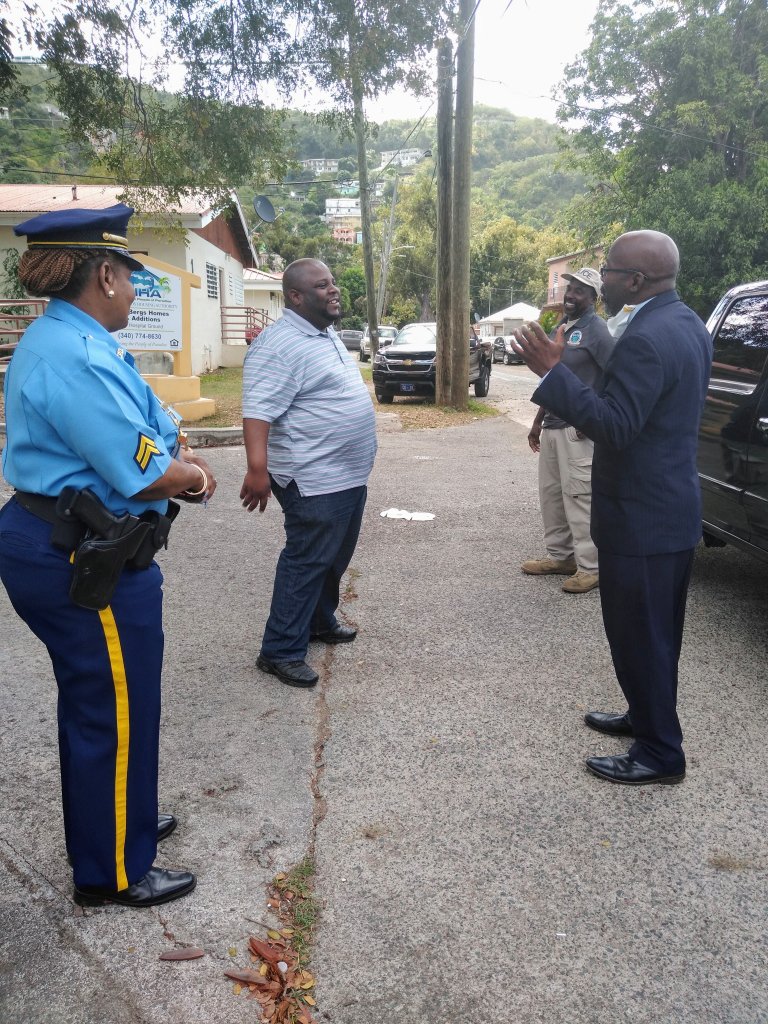
For more than three decades, I served as a law enforcement professional—working as a federal agent, manager, executive, and ultimately the police commissioner of the U.S. Virgin Islands. Throughout my career, I committed myself not only to enforcing the law, but to ensuring the fair administration of justice. I have always believed that respect, equity, and accountability must guide how we serve our communities. |
|
|

As I advanced in leadership, I became increasingly aware of how policies and laws caused disproportionate harm to Black and brown communities. One of the most glaring examples was the federal sentencing disparity between crack and powder cocaine. Crack cocaine, more prevalent in low-income Black neighborhoods, carried penalties that were 100 times harsher than powder cocaine, which was more commonly associated with white users. Possession of just 5 grams of crack cocaine frequently resulted in a 5-year federal sentence, while a similar sentence for powder cocaine required 500 grams. The impact was devastating:
|
This disparity—and the countless personal stories behind the statistics—deepened my conviction that public safety and justice must be pursued without bias.
These experiences fuel my passion for reform and align with the mission of the LEAP. I believe in procedural justice that prioritizes fairness, transparency, community engagement, and dignity for all people. Policing is meant to be a service-oriented profession, yet the legacy of over-policing and mass incarceration in Black and brown communities has fractured trust and undermined the legitimacy of the justice system.
I support LEAP because its vision reflects the policing values I have always fought for: justice that protects without discrimination, safety that includes everyone, and policies grounded in humanity rather than fear. Rebuilding trust requires courage, accountability, and partnership—and I am committed to advancing that work.
Commissioner Trevor Velinor (Ret.) |

|


Sent by Law Enforcement Action Partnership Inc Unsubscribe from this list
|