
John,
Each year, eagles gather in the crowns of western hemlocks and bears wade through shallow rapids to witness something extraordinary -- the return of the salmon to the Tongass National Forest.
This homecoming is part of the complex cycle of life that has sustained the Tongass for thousands of years. But it could soon be disrupted as this ancient forest is fragmented by new roads and devastated by logging.
The Forest Service is planning to allow logging in more than 45 million acres of wild forest across the U.S., including more than half of the Tongass.1
We're gearing up to defend these forests, but we need your help.
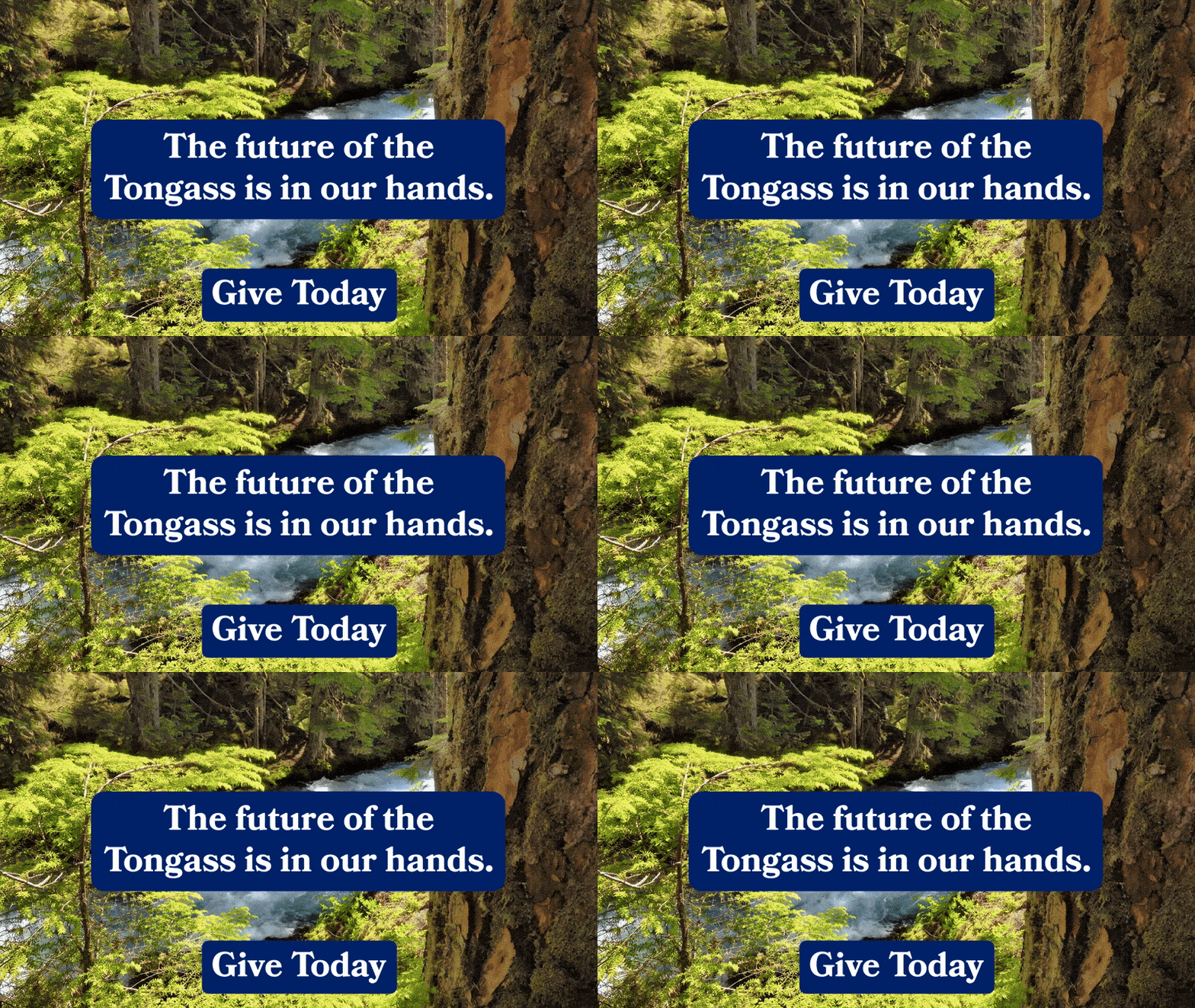
For thousands of years, towering trees have shaded rivers and streams where salmon hatch and grow until they're strong enough to leave for the ocean.
After several years at sea, the fish return to the very same streams where they were born and spawn the next generation. Once they've mated, the adults will die, their bodies enriching the soil so the surrounding trees can grow taller.2
If the roadless areas of the Tongass are opened to logging, salmon at sea today could return to discover their forest nursery reduced to stumps.
In September, Environment Colorado, our coalition partners, and allies delivered more than 600,000 public comments to the U.S. Forest Service calling for the protection of the 45 million acres of national forests at risk -- including the 9.3 million acres in the Tongass.3
We have a long road ahead of us, and we're up against stiff opposition, but our national network has been defending the Tongass for more than 25 years. We helped secure the roadless protections for these wild trees in 2001. We aren't about to stop now.4
Give before midnight and have your gift matched -- that's twice the resources to help save even more trees.
Road-building and logging in the wild areas of the Tongass jeopardizes so much more than the trees and salmon.
This cycle sustains an entire ecosystem. Bears, wolves, whales and the largest concentration of bald eagles in the world all rely on annual salmon runs. Migratory songbirds seek refuge in the treetops while berry bushes and ferns sprout from nurse logs on the forest floor.5
Humans have been part of this cycle too. The Tongass is the home to several Alaska Native tribes and to this day, the forest's rivers produce approximately 22% of Alaska's commercial salmon catch.6
The Tongass is integral to Alaska's cultural and natural character -- we can't let logging destroy the wild, roadless parts of this forest.
We need to ensure that logging companies don't overexploit the forest, so there will still be clean healthy streams where the salmon can spawn, and towering old-growth trees filtering our water and filling us with awe and appreciation for generations to come.
No matter where you live, now's your opportunity to be part of the Tongass' cycle of survival.
Donate today to help defend millions of acres of forests, including the Tongass.
On behalf of our wild forests, thank you,
Ellen Montgomery
1. Ellen Montgomery, "STATEMENT: Forest Service begins to unravel protections for wild forests," Environment America, August 27, 2025.
2. Mitchell Ukropina, "America's Salmon Forest," Environment America, October 15, 2021.
3. Mitchell Ukropina, "America's Salmon Forest," Environment America, October 15, 2021.
4. Ellen Montgomery, "What is the roadless rule and what does it mean for the Tongass?," Environment America, January 25, 2023.
5. Mitchell Ukropina, "America's Salmon Forest," Environment America, October 15, 2021.
6. "Water, Air and Soil," US Department of Agriculture, last accessed November 12, 2025.
Your donation will be used to support all of our campaigns to protect the environment, from saving the bees and protecting public lands, to standing up for clean water and fighting climate change. None of our work would be possible without supporters like you. Environment Colorado may transfer up to $50 per dues-paying member per year into the Environment Colorado Small Donor Committee.
Environment Colorado, Inc.
1543 Wazee St., Suite 400, Denver, CO 80202, (303) 573-3871
Member questions or requests call 1-800-401-6511.
Facebook | Twitter

If you want us to stop sending you email then follow this link -- Unsubscribe.