|
FOR IMMEDIATE RELEASE: Dec. 1, 2025
Contact: Mackenzie Manicki, DNR Invasive Plant Specialist
[email protected] or 608-206-4561
Invasive Species Council Announces
Nomination Period For 22nd Annual
Invasive Species Action Awards
Individuals And Groups Honored For
Work On Managing Invasive Species
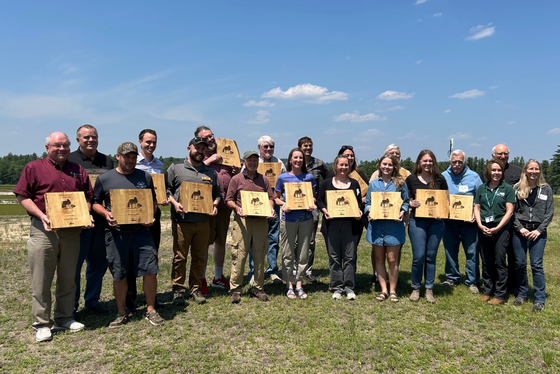 Recipients of the 2025 Invasive Species Action Awards stand with their plaques during the recognition ceremony held at the Wisconsin Cranberry Research Station on June 4. / Photo Credit: Wisconsin DNR
MADISON, Wis. – The Wisconsin Department of Natural Resources (DNR) today announced that the Wisconsin Invasive Species Council is accepting nominations for the 22nd annual Invasive Species Action Awards now through Feb. 15, 2026.
Award recipients are Wisconsin residents and organizations who have made significant contributions to prevent, control or eradicate invasive species that harm Wisconsin's native wildlife, wetlands, forests, prairies, lakes and rivers. Nominees can be individuals, groups or organizations who have demonstrated exemplary efforts to address issues surrounding terrestrial and aquatic invasive species.
The Wisconsin Invasive Species Council, an advisory council to the DNR, presents Invasive Species Action Awards for volunteer and professional categories. A panel of judges selected by the Council will review the nomination materials and select the award winners. All nominators and winners will be notified in April, followed by an award recognition ceremony in June to celebrate Invasive Species Action Month.
To submit a nomination, download and fill out the form available on the Wisconsin Invasive Species Council's webpage. The deadline for submissions is midnight on Feb. 15, 2026.
Invasive species are non-native plants and animals that cause ecological or economic harm, and some can affect human health. Once an invasive species establishes in an area, it can be difficult to control.
Wisconsinites are encouraged to protect native plants and wildlife from invasive species by avoiding moving them or the materials that might harbor them to new places. To learn more about preventing their spread, visit the DNR invasive species prevention webpage.
|