|
 |
Thank you for being a free subscriber to So, Does It Matter? Please support what we do. And also get 100% of our content (right now you get about 60% of it!).
California’s Governor’s Race: A Whole Bunch Of Candidates to Succeed Newsom, But No Obvious Frontrunners…
Who’s in, who’s circling, and why the math looks the way it does.
|
| |||||||||||||||


 |
⏱️ 5.5 min read
(This full column is available to all subscribers and guests. But below the firewall, I have a substantial amount of additional analysis on this race, for our paid subscribers. Now is a great time to upgrade!)
Where the Field Stands Right Now
California’s 2026 gubernatorial race has taken shape early—at least to insiders. The Democratic field is vast and fluid, and, from this conservative observer’s point of view, it is filled with unremarkable candidates. The major Democratic contenders, in alphabetical order, include former U.S. Health and Human Services Secretary and former California Attorney General Xavier Becerra; former U.S. Representative Katie Porter; businessman and former presidential candidate Tom Steyer; U.S. Representative Eric Swalwell; State Superintendent of Public Instruction Tony Thurmond; former Los Angeles Mayor Antonio Villaraigosa; and former State Controller Betty Yee. It is a broad field with no obvious frontrunner in stature, fundraising, or polling. Attorney General Rob Bonta has been flirting with a run for governor. But… he’s now caught up in “Bontagate” -where he’s like a cool half-million into criminal defense attorneys for a matter where he allegedly is just a witness. Uh huh.
On the Republican side, the picture is simpler: Steve Hilton, the former Fox News host now running as a reform-focused outsider, and Riverside County Sheriff Chad Bianco. Hilton offers a deep, thought-out set of policy proposals and national connections. At the same time, Bianco brings real-world governing experience and presumably a strong base among law-and-order voters who key off of his ballot title. With only two major GOP contenders and nearly a dozen Democrats, the race is already taking on a highly asymmetrical shape.
This imbalance—many Democrats and only two credible Republicans—forces the conversation toward California’s unusual primary system, which rewards consolidation and punishes overcrowding.
The Top-Two Primary: A System Built for Mischief
Any honest analysis of the race begins with voter registration. Roughly 45 percent of Californians are registered Democrats, about 25 percent are Republicans, and approximately 22 percent are No Party Preference. These numbers alone—taken in isolation—would make it extremely unlikely that two Republicans advance to the general election.
But elections never occur in isolation. The Democratic field is fragmented across many candidates who occupy similar ideological lanes. Instead of one Democrat consolidating the 45 percent of registered Democrats—along with the significant share of No Party Preference voters who typically lean Democratic—we could see eight or nine Democrats dividing that combined pool in unpredictable ways. That opens one kind of possibility while closing others.
Meanwhile, on the Republican side, as of now, it seems likely that GOP voters will split between two credible candidates. In a vacuum, that might suggest a narrow path for both Hilton and Bianco to slip into the top two. But California elections do not occur in a vacuum. The state’s public-sector unions, private-sector unions, and aligned independent-expenditure committees have extraordinary financial leverage. They will act aggressively if needed to ensure the general election is not between two Republicans. They are not leaving the top-two outcome to chance.
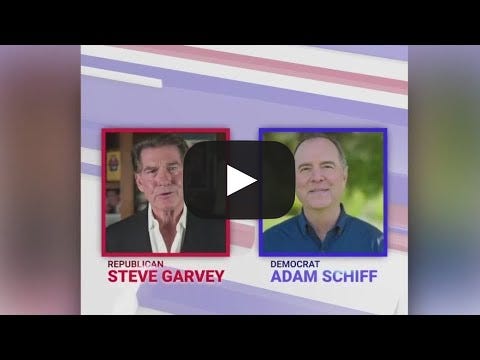
To understand how leading Democrats have used the top-two system to shape their preferred opponents, it helps to recall two recent examples. In the 2024 U.S. Senate race, now-Senator Adam Schiff spent more money boosting Republican Steve Garvey than Garvey’s own campaign spent on itself—running ads designed to elevate him as the Republican Schiff most wanted to face, and successfully depriving Katie Porter a spot in the runoff. And in his re-election campaign, Governor Newsom aired early ads that prominently featured State Senator Brian Dahle, helping choose his own November opponent, a conservative State Senator from the “State of Jefferson” up in northernmost California. The difference this time is that no Schiff or Newsom figure exists—no dominant Democrat with universal name ID and overwhelming financial muscle. There is, however, at least one billionaire in the field (so far), and wealthy candidates’ willingness to deploy strategic spending could reshape the race.
Ace television reporter/analyst Elex Michelson (now with CNN, but was with LA Fox 11 at the time) covered the Schiff ads featuring Garvey…
The Non-Candidates: Harris and Caruso
Two names outside the official field still shape expectations.
Kamala Harris would have entered as the overwhelming favorite. Her national name ID and access to the largest Democratic donor network in America would have instantly reshuffled the race. Her decision not to run left a vacuum that no Democrat has yet filled.
Rick Caruso remains the top potential entrant. If he jumps in, he brings vast personal wealth and a reputation for competence. But his entry would land in an already crowded Democratic lane—and collide with Tom Steyer’s presence. California voters and donors may not have much appetite for two billionaire candidates competing for the same slice of the electorate. A Caruso candidacy would scramble the Democratic side far more than the Republican one. We have seen that when partisan labels are on a ballot, Republicans especially do not like to vote for a Democrat.
The Republican Question: Does Trump Engage?
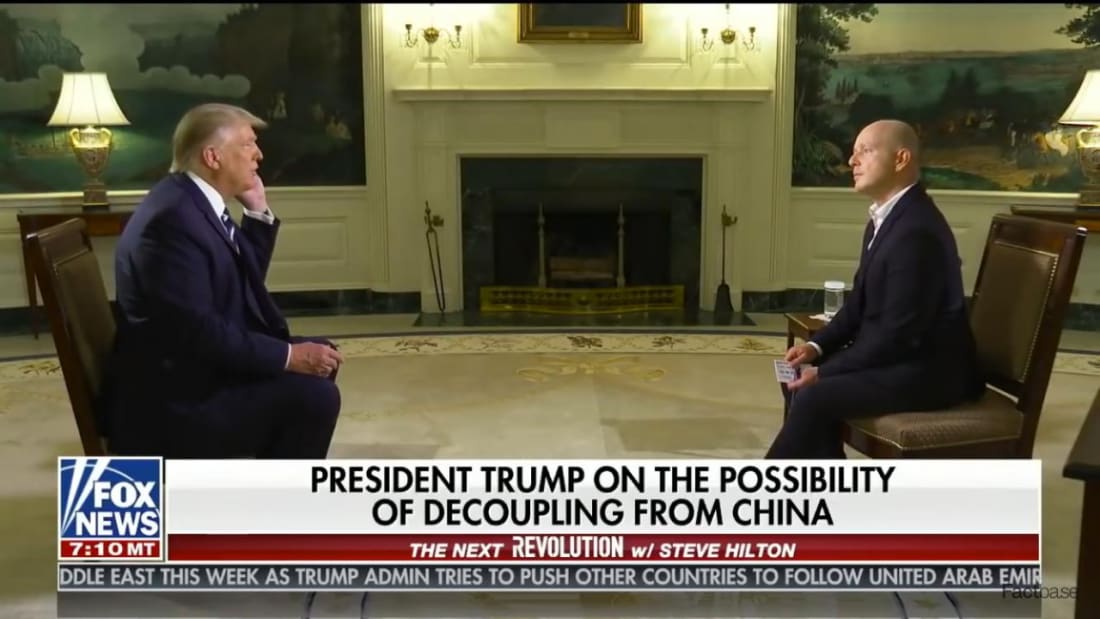
The biggest unknown for Republicans is whether Donald Trump will endorse Steve Hilton.
Hilton and Trump have maintained a friendly relationship since Hilton’s time at Fox News. If Trump endorses him—and if Hilton invests heavily to ensure Republican voters hear about it—he gains an immediate advantage. Perhaps an insurmountable one. Democrats and union-backed committees may even amplify the message if they believe it reduces the risk of a Democrat-versus-Republican general election.
 |
If Trump stays out, the dynamics shift. Bianco’s position as a sheriff in a central county gives him a natural base among public-safety-oriented Republicans. His ballot title alone carries weight in a state where millions of voters rarely research candidates in detail. But both candidates face the same foundational challenge: communicating with millions of GOP voters across the nation’s most expensive media landscape.
And it’s worth remembering: even in deep-blue California, there are more registered Republicans here than in any other state, including Florida and Texas. But educating them requires money—lots of it.
The Newsom Factor: A Mess on the Desk
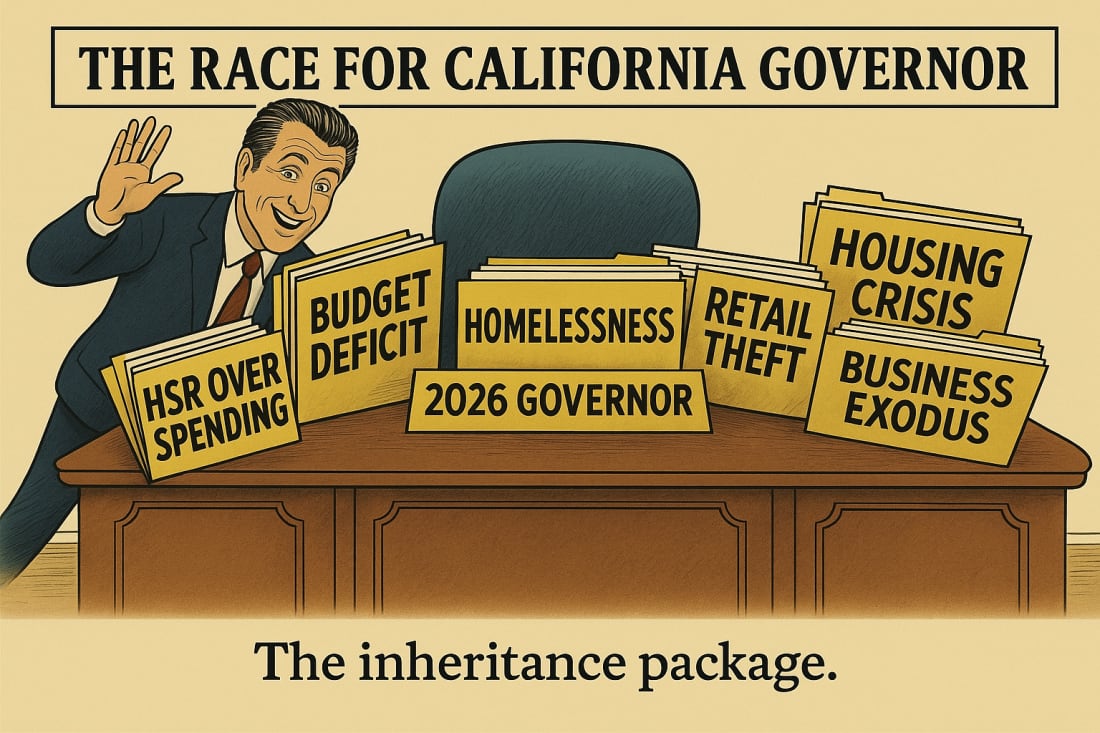
Whoever wins in 2026 will inherit a long list of unresolved problems from the Newsom years. The state budget deficit continues to widen, driven by long-term spending commitments that have never been matched by stable revenue. The unemployment insurance fund is still billions in debt, putting pressure on employers and raising the possibility of future tax hikes.
Homelessness has grown despite record spending, with encampments expanding in many regions and little accountability attached to the programs meant to address them. Housing remains structurally unaffordable, as permitting delays and regulatory hurdles keep supply far below demand. Public safety concerns persist, especially in cities struggling with property crime and retail theft. The business climate has weakened as taxes, fees, and regulations push employers and jobs out of state. Climate-oriented taxes, fees, and regulations create affordability issues.
Of course, in the last few weeks, we now have a public corruption probe in which Governor Newsom’s Chief of Staff is right in the middle, facing a boatload of federal charges.
From fiscal instability to visible disorder to integrity questions inside state leadership, the next governor will inherit challenges that demand more realism and discipline than Sacramento has shown in recent years.
So, Does It Matter?
The 2026 governor’s race matters precisely because it is so unsettled. The Democrats have no dominant figure. The Republican field is small but not yet clarified. The top-two system invites strategic behavior from unions, donors, and campaigns. And potential entrants like Caruso could reshape the race overnight. Remember, the bar is low for someone to stand out in the Democratic field.
Could a Republican win the governorship? It remains a very long shot. The coin could land on its edge, but the more realistic path requires a Democratic nominee who emerges damaged or becomes engulfed in scandal after the June election —badly enough to cause moderates and No Party Preference voters to flee—and for national GOP donors to flood the state with late resources. These conditions are not impossible. They are just — very unlikely.
For now, this race remains a developing story with more unknowns than certainties—and that may remain true for quite some time.
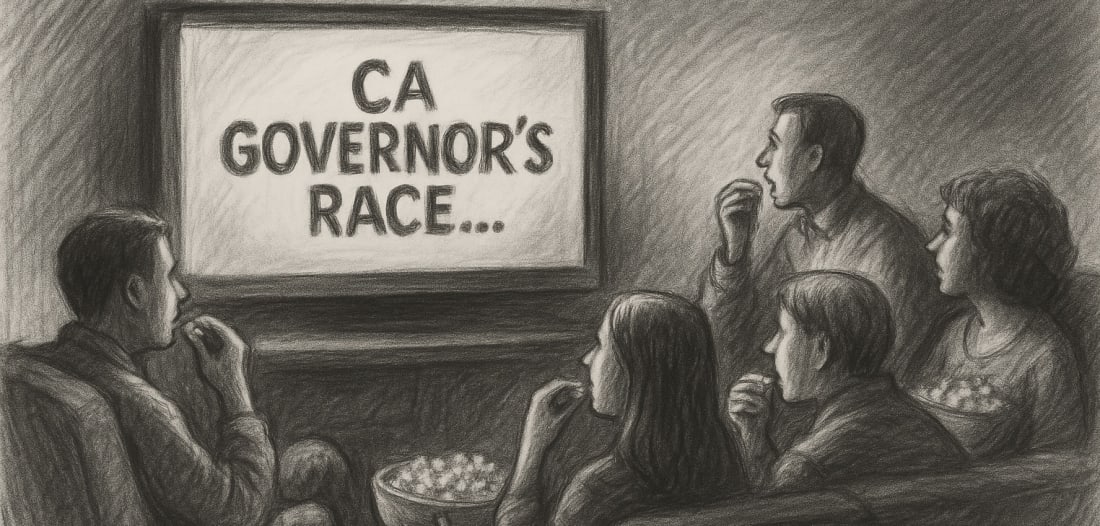
I think of the popular emoji of someone watching something while eating popcorn. That’s where we are right now.
 |
SIGNIFICANTLY MORE “UPPER DIVISION” ANALYSIS IS BELOW THE PAYWALL
In the paid subscriber section, I break down:
Why a field that could reach nine Democratic candidates makes it nearly impossible for anyone to stand out
The key advantage — and key liability — facing billionaire entrants
The political physics that favor certain top-two outcomes
How the GOP’s two-person field cuts both ways
The messaging dynamics and outside spending that will define the entire 2026 race...
Keep reading with a 7-day free trial
Subscribe to So, Does It Matter? California Politics! to keep reading this post and get 7 days of free access to the full post archives.
A subscription gets you:
 | Subscriber-only Afternoon Posts. Analysis on breaking News |
| Saturday’s Popular “What is Jon Reading” Column |
| 100% percent of our site content is yours! |
| ||||||||||

