|
Aug. 28, 2024
Contact: Joanne Foreman, 517-284-5814
Invasive species are on the move, and the Michigan Invasive Species Program is working to understand how and why. This fall, the MISP’s NotMISpecies webinar series shares research on vectors, the pathways by which species are introduced to new areas. Understanding vectors for species like red swamp crayfish and oak wilt can aid in preventing their spread.
The series will also spotlight the collaborative effort between the Upper Peninsula Resource Conservation and Development Council and cooperative invasive species management areas to reduce populations of invasive purple jewelweed (Impatiens glandulifera), also known as Himalayan balsam.
Tracking red swamp crayfish
Researchers are working at the cutting edge of science to understand and control invasive red swamp crayfish populations in Michigan. Join Dr. Jared Homola of the U.S. Geological Survey Wisconsin Cooperative Fishery Research Unit for “Genes on the Move: Understanding Red Swamp Crayfish Spread in Southeastern Michigan” (9 a.m. Thursday, Sept. 12). Learn how genetic tools are revealing biological and environmental factors that could lead to the crayfish's spread, and how understanding these factors is helping efforts to control or potentially eradicate the species in Michigan.
Learning from oak wilt vectors
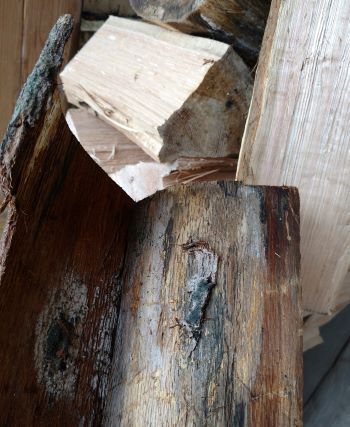
You might have heard the message, “Don’t prune oaks in summer.” That’s because tiny nitidulid beetles are active in this period and can carry the oak wilt fungal pathogen from tree to tree as they feed on sap from fresh tree wounds. Knowing exactly when these beetle vectors are active in the spring and summer can determine the “no pruning” season recommended to protect oaks. In “Getting Down to the Nitty Gritty: Oak Wilt Spread and Vector Behavior Research in Michigan” (9 a.m. Tuesday Oct. 29), Dr. Tara Bal and Katie Bershing from the College of Forest Resources and Environmental Science at Michigan Technological University explain how to identify and prevent oak wilt and share results from their ongoing research into oak wilt vector behavior in northern Michigan.
|
Managing a pretty, bad plant
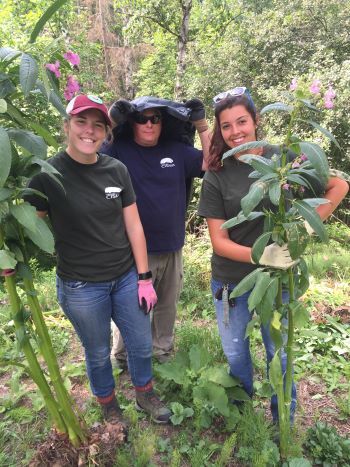
Invasive purple jewelweed (Impatiens glandulifera), also known as Himalayan balsam, isn’t well known across Michigan, but it has been detected in isolated regions of the Upper Peninsula. With showy, orchid-like blooms and high nectar volume, this plant is attractive to both humans and wildlife, so what’s the problem? Find out in “Beauty or Beast? Tackling Invasive Purple Jewelweed in the Upper Peninsula” (9 a.m. Wednesday, Nov. 20). Nick Cassel, Upper Peninsula Resource Conservation and Development Council director, Elise Desjarlais, Lake to Lake CISMA coordinator, and Michael Hindy, Three Shores CISMA coordinator, explain why purple jewelweed is a concern, what's being done to manage it, and what landowners can do to help.
|
The series will take a break in December, leaving ample time to catch up on episodes you might have missed. Find recordings of all the past NotMISpecies webinars or register for new ones at Michigan.gov/EGLE/Outreach/Not-MI-Species-Webinar-Series.
Michigan’s Invasive Species Program, a collaborative effort of the Michigan departments of Natural Resources; Environment, Great Lakes, and Energy; and Agriculture and Rural Development, coordinates and supports invasive species initiatives across the state and provides support through the Michigan Invasive Species Grant Program.
Note to editors: Accompanying photos are available below for download. Caption information follows.
Oak wilt: Oak wilt fungus, a black, moldy growth, found beneath the bark of oak firewood.
Jewelweed: Staff from Three Shores Cooperative Invasive Species Management Area remove invasive purple jewelweed in the Upper Peninsula. Photo courtesy of Three Shores CISMA.
|