|
 |


By IEA Executive Director Tom Clougherty
Welcome to the IEA’s revamped Sunday newsletter, now part of Insider – a new online community built on Substack. Our goal is to make it easier than ever to stay up-to-date with our work, and get more involved.
In today’s media environment, Substack is increasingly where the battle of ideas is playing out, with the sharpest insights and best thinking landing seamlessly in millions of inboxes across the world every day. We want to make sure that the IEA and its scholars are part of that debate – as a principled voice for economic liberalism.
If you just want to keep reading our weekly updates, you will not notice much difference – although hopefully the formatting gremlins from the old system will soon be a thing of the past. But the move to Substack lets us do more.
Now, you can also opt to receive our blogs, podcasts, new publications, and event announcements directly to your inbox (click here to choose which notifications you want). Insider also pulls together various IEA subscriptions and membership programmes in one place, and simplifies them.
For £10 a month (or £100 a year), you can upgrade to a paid membership, and receive exclusive Substack essays, as well as priority invitations to our Book Club and other public events. Founding members – paying £350 annually – will also receive hard copies of IEA books (6-8 each year) and be invited to our famous Christmas party and other special events. Most importantly, you will be supporting the IEA’s vital mission: to advance public understanding of economics and the fundamental institutions of a free society.
Existing IEA supporters have been gifted lifetime paid membership – if that hasn’t worked for some reason, please let me know. For everyone else, we have a time-limited, special offer for new subscribers – upgrade now, and you will get 15% off the normal price, and a free copy of Dr Stephen Davies new book, Apocalypse Next: The Economics of Global Catastrophic Risks.
Normal service will resume in this slot next week. In the meantime, I hope you enjoy exploring IEA Insider. Our first exclusive Substack essay – by Dr Kristian Niemietz on why the economics of British imperialism remains important to this day – will be out this Wednesday.
 |
‘Triple Lock Plus’ proposal would worsen intergenerational unfairness
The pensions triple lock, which all of Britain's major political parties are committed to, means that the state pension will rise with inflation, earnings, or by 2.5% each year – whichever is highest.
This week, the Conservatives pledged to give the income tax personal allowance the same treatment – but only for pensioners. The working age population will face years of arbitrary, stealth tax increases, as their personal allowance and other tax thresholds remain frozen until 2028.
Communications Officer & Linda Whetstone Scholar Reem Ibrahim criticised the proposal in CapX, asking whether it is “fair that young hard-working taxpayers are being forced to foot the bill for ever more generous handouts to pensioners”.
Reem wrote:
The new ‘triple lock plus’ policy is estimated to cost £2.4bn a year by 2029-30. In Sunak’s words, ‘thanks to the Conservatives’ Triple Lock, pensions have risen by £900 this year and now we will cut their taxes by around £100 next year’.
This is an astronomical handout to a large section of society that simply does not need it. A quarter of pensioners are millionaires – yes, millionaires – reaching 3.1m in 2020. And who could be surprised? This is the generation who benefited from an era of strong economic growth, much lower house prices, and as a result, were less likely to be in poverty than younger generations.
Meanwhile, in recent years, many workers saw a real-term decline in their incomes, are facing a stagnant economy and tax increases as a result of frozen brackets. Younger people are also facing immense difficulties getting onto the housing ladder, with the median home now costing over 8 times average earnings.
Reem also criticised the ‘triple lock plus’ in The i. Commenting in The Daily Express, Economics Fellow Julian Jessop warned that “all pensioners will benefit, even the wealthiest”.
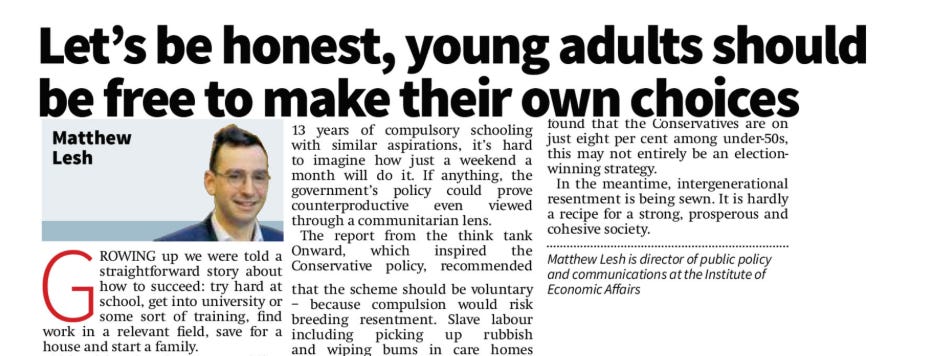 |
Combined with the recent announcement on national service, the ‘quadruple lock’ pledge seems to be part of a cynical effort to pander to Britain's emerging gerontocracy. Director of Public Policy & Communications Matthew Lesh wrote for City AM this week warning that young people risk being denied basic liberties and economic opportunities, an argument he echoed on GB News.
Editorial Director Kristian Niemietz also added his criticism, arguing that the economics of national service just don’t stack up for the IEA Blog.
But the condemnation isn’t universal among our friends in the free market movement. On this week’s IEA Podcast, Reem hosted a debate between Matthew and James Price on the idea of mandatory national service.

News, Views & Upcoming Events
Watch IEA Book Club: AI Regulation: Servant or Master? with Lord Clement-Jones
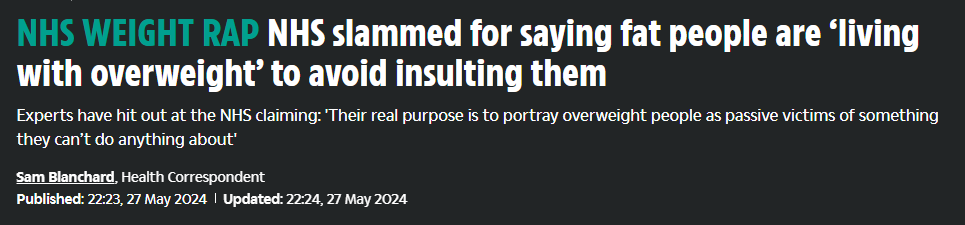
NHS slammed for saying fat people are ‘living with overweight’ to avoid insulting them, Head of Lifestyle Economics Christopher Snowdon comments in The Sun
 |
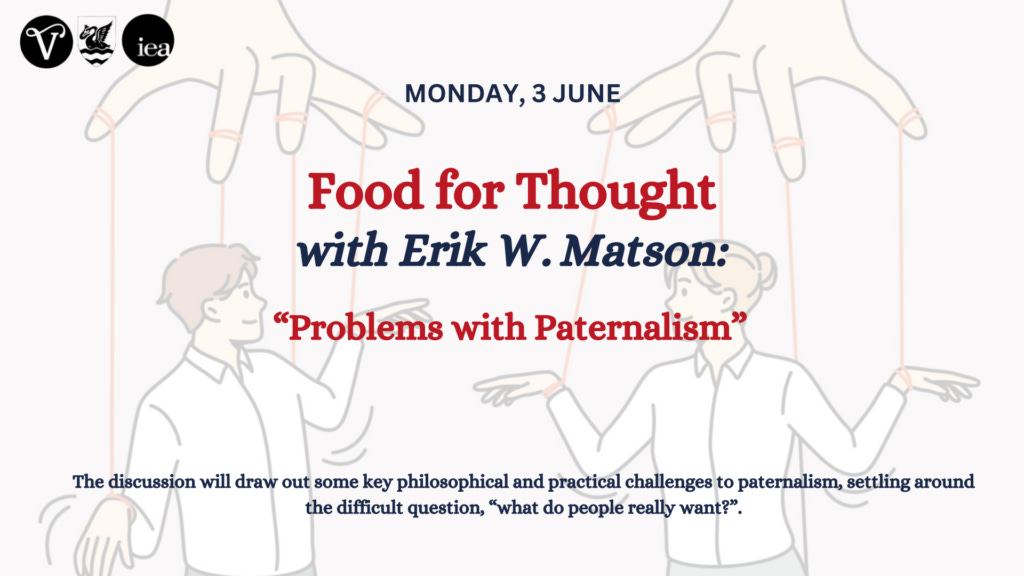 |
As the nanny state expands at a cheetah’s pace, its modern proponents often claim to be to making us better off as ‘judged by our own standards’. But can policymakers ever truly understand what other people ‘really’ want?
Join us at the IEA tomorrow for our next Food for Thought lunch with Mercatus Center Senior Research Fellow Erik W. Matson who will discuss his new IEA book New Paternalism Meets Older Wisdom.
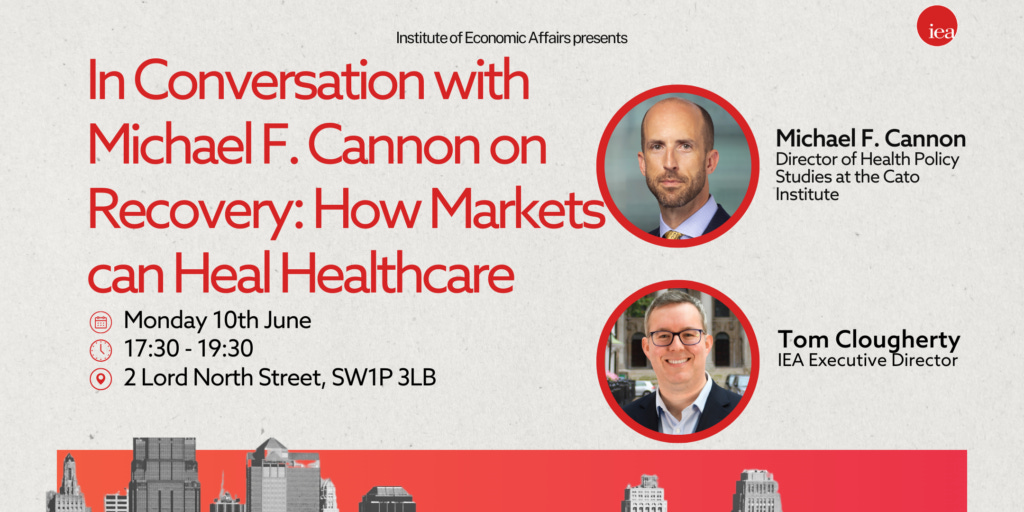 |
Michael F. Cannon, Director of Health Policy Studies at the Cato Institute, will be joining us for the latest of our In Conversation events, an IEA series of discussions with notable figures across public life. This event will take place on Monday, 10th June from 17.30 – 19.30 at the IEA (2 Lord North Street, Westminster, London, SW1P 3LB) and will be chaired by Tom Clougherty.
The IEA at European Atlas Liberty Forum
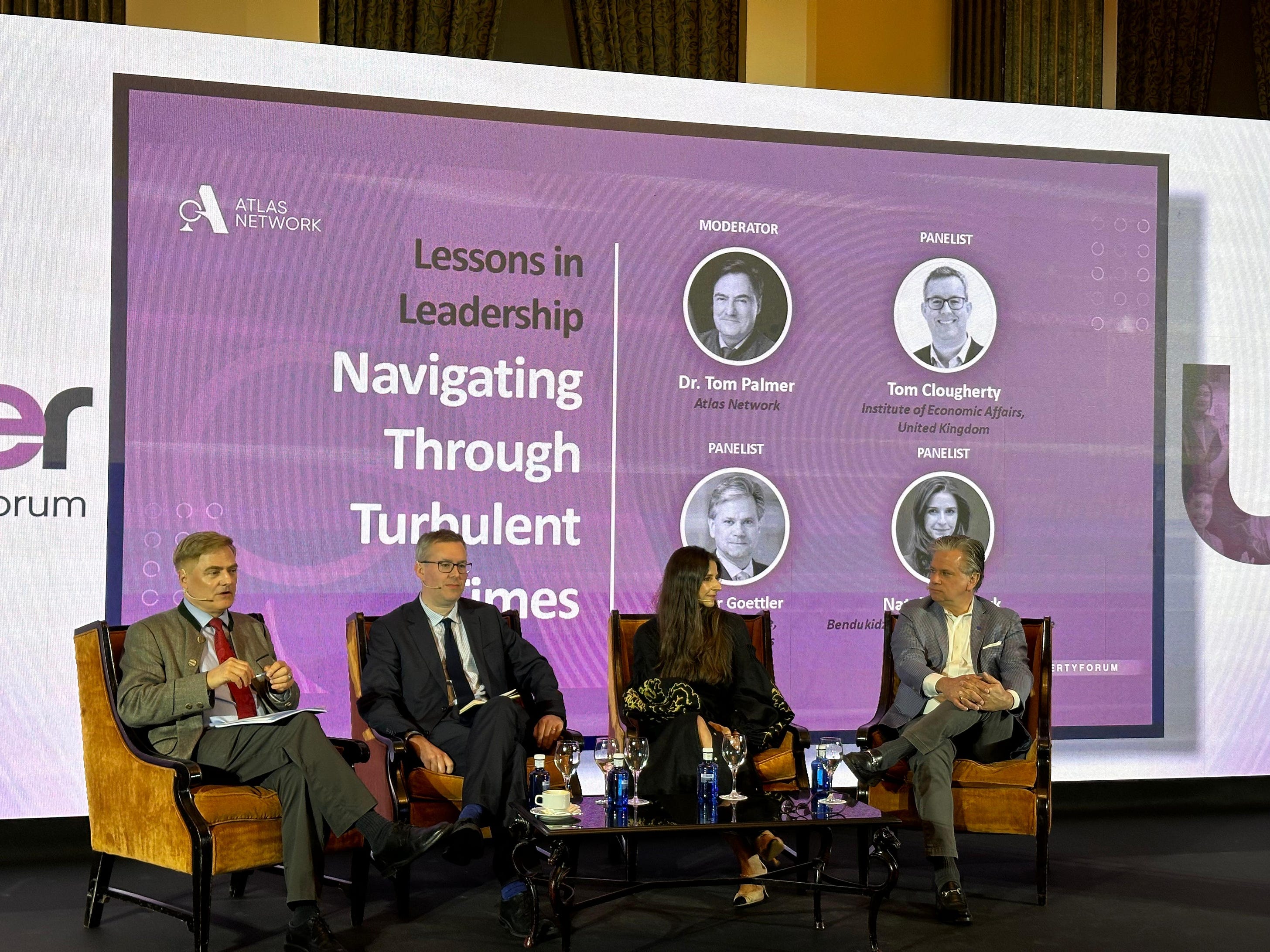 |
Last week Madrid welcomed almost 300 free marketeers from across Europe for the the Atlas Network's annual European Liberty Forum. As always, the IEA was well represented throughout the conference with Tom Clougherty, Director of International Relations Adam Bartha, Christopher Snowdon, and Senior Education Fellow Stephen Davies giving talks.
EPICENTER, our network of pan-European think tanks, had its biennial meeting in Madrid, where it welcome two new members from Bulgaria and Spain, expanding the network to 12 members.
You’re currently a free subscriber to Insider. For the full experience, upgrade your subscription.
Paid subscribers support the IEA's charitable mission and receive special invites to exclusive events, including the thought-provoking IEA Book Club.
We are offering all new subscribers a special offer. For a limited time only, you will receive 10% off forever and a complimentary copy of Dr Stephen Davies’ latest book, Apocalypse Next: The Economics of Global Catastrophic Risks.
| ||||||||||