|
Welcome to You’re Probably Getting Screwed, a weekly newsletter and video series from J.D. Scholten and Justin Stofferahn about the Second Gilded Age and the ways economic concentration is putting politics and profits over working people.
You're Probably Getting Screwed by Walmart
How the corporation's dominance over suppliers threatens us all
|

| |||||||||||||||


 |
Welcome to You’re Probably Getting Screwed, a weekly newsletter and video series from J.D. Scholten and Justin Stofferahn about the Second Gilded Age and the ways economic concentration is putting politics and profits over working people.
Several months ago we wrote about the damage dollar stores are inflicting on communities across the country. Shortly after, the Federal Trade Commission (FTC) issued a report on the impact consolidation had on the grocery supply chain (shocker, it made things worse). The report was a helpful reminder of the immense power of Walmart, the precursor to the dollar store scourge.
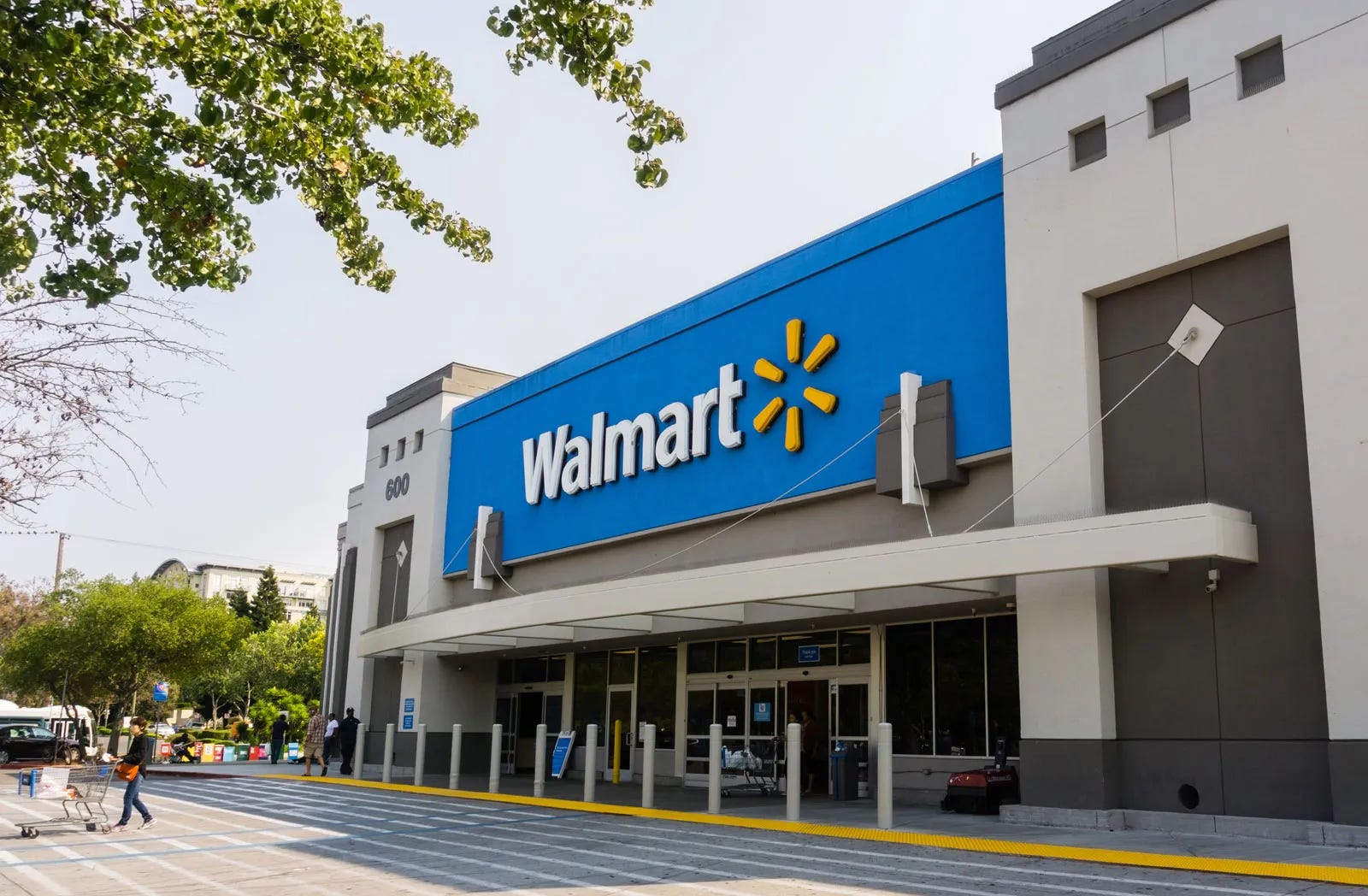
Plenty has been written about the negative impact Walmart has on local businesses and workers, but I want to focus on something the FTC report highlighted, which is the grocery and retail monopolists’ control of the supply chain, which is arguably the most dangerous part of their power. As a Walmart executive once said, “The misconception is that we’re in the retail business. We’re in the distribution business.”
 |
That quote reminds me of a warning from over 80 years ago. In 1940 a subcommittee of the US House Ways and Means Committee held a hearing on the growing power of chain stores and one of the testifiers was Theodore Christianson. Christianson was there representing both the Equal Opportunity Foundation and the National Association of Retail Druggists and had served as governor of Minnesota and a congressman in the state too. Christianson used his testimony to call for stronger antitrust laws to curb the power of retailers.
“Selling the goods is far more important than manufacturing them and a big distributor can dominate the manufacturers by playing one off against another.”
This is exactly what the FTC found Walmart was doing at the height of the pandemic! Like other retailers Walmart has requirements for its suppliers to ensure goods arrive on time and in full. As supply chains broke down during the pandemic, Walmart tightened these requirements and steeply hiked fees for noncompliance. Given Walmart’s control of 10% of retail and nearly one-third of grocery, suppliers had little choice but to comply and leave smaller grocers with empty shelves and frustrated customers unaware that monopoly power was the source of their struggles. Check out this great Washington Monthly piece on buyer power for more details.
But Walmart’s grip on the supply chain is not just an issue during an unforeseen shock. Take an example from Austin Frerick’s book Barons, which includes a chapter on Walmart. Frerick mentions that in 2005 Walmart wanted its beef providers to fit four steaks into a package instead of three and the demand resulted in smaller cows being bred. “You may not shop at Walmart, but that doesn’t mean that its decisions don’t affect the options available on your grocery shelves,” Frerick writes.
Another consequence of Walmart’s power over the supply chain is deindustrialization. Not only has Walmart pushed out local grocers and retailers, it has shuttered factories across the country. Walmart’s push for low prices gave manufacturers a choice, either cut costs or lose access to shelf space. For many manufacturers this meant shifting jobs overseas, further hollowing out communities that Walmart had already begun to dominate and the scars of that kind of loss run deep.
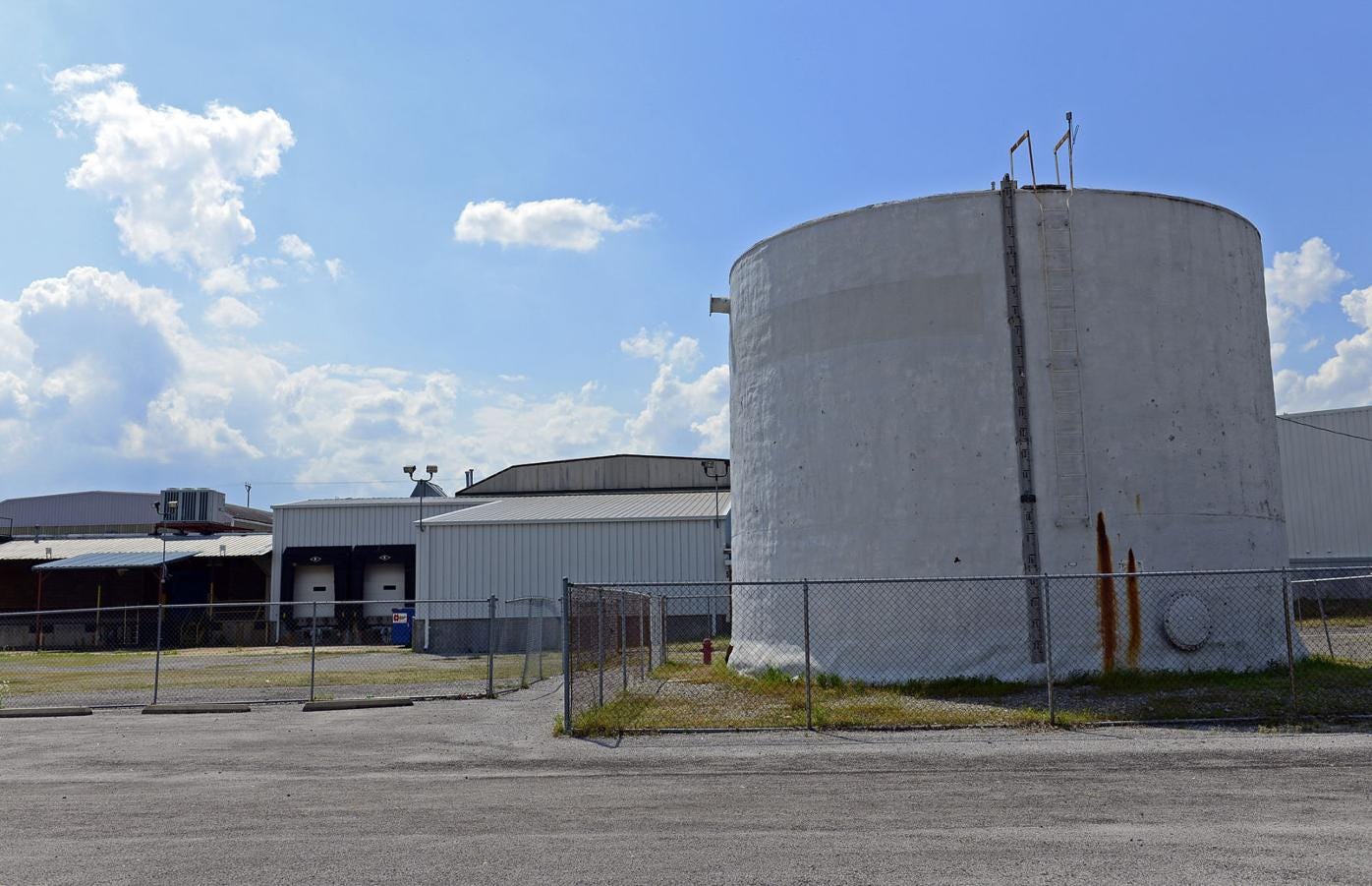 |
I arrived at college in southern Illinois just months after a Maytag plant in Herrin (population 12,000) was closed, eliminating over a thousand jobs. Four years later when I graduated, people still spoke often about that closure. These stories have played out in communities across the country and while Walmart is not responsible for all of them, the Economic Policy Institute estimated in 2015 that the retailer’s growing trade deficit with China had displaced more than 400,000 US jobs!
We can do something to reign in Walmart and other powerful retailers though. The Robinson-Patman Act is a federal law passed in 1936 as part of the movement to curb the chain stores. The law prevents companies like Walmart from using their power to get special deals from suppliers. When it was enforced the law helped create a retail market where both large and small players were able to compete on fair and equal terms. Unfortunately, the law has been ignored over the past several decades, part of the broader pro-corporate project to undermine our antimonopoly laws, but the FTC has signaled interest in reviving it, which cannot happen soon enough.
YOU’RE PROBABLY (ALSO) GETTING SCREWED BY:
Past Trade Policy
I highly recommend you take the time to read Katherine Tai (U.S. Trade Representative)’s OpEd in the Financial Times. Here’s an excerpt:
“A laissez-faire system has allowed short-term profit-driven businesses to maximise their gains, often by partnering with a non-market autocracy to further that goal. While profits and executive pay soared, workers were left behind. Meanwhile concentrated production emboldened monopolistic behaviour by countries such as China. The American economy has been and remains an open one. That, however, has meant that American workers were particularly exposed to the harms from such behaviour. Communities were devastated as trade policy remained isolated from democratic accountability.
This is why the Biden-Harris administration’s approach to trade has been to democratize economic opportunity. We are breaking out of the technocrats’ bubble to meet working people where they are, redesigning the incentive structure so that communities are not pitted against each other. For example, for a long time, workers in Ohio or Pennsylvania or Arizona have been set against workers in Mexico, where rights have been unfairly suppressed. This is what happens when we blindly believe that liberalising trade rules leads to a gradual improvement in labour standards as countries grow wealthier through trade flows.”
The full OpEd can be found here.
Country Of Origin Labeling (COOL)
The Missouri Rural Crisis Center has a COOL new video… Sorry for the bad pun but it’s an informative video about why COOL is important to farmers and consumers but politics get in the way…
Income Inequality
If you ever wanted to learn more about income inequality and how the gap continues to grow, Robert Reich created an online class:
Billionaires
 |
Food Monopolies
Here’s a great 10 minute interview on Make Me Smart about “How Big Food changed the way we eat.”
Billionaires… again…
 |
U.S. Healthcare
Our healthcare system has many problems. This article talks about the experience of trying to strengthen laws that would benefit patient care.
“To combat growing corporate control over physician practices, there is renewed interest in prohibitions against the corporate practice of medicine (CPOM). While CPOM laws exist in many states, they have not stopped corporate investors from exploiting legal loopholes and contractual workarounds to acquire control over physician practices. Bills this legislative session in Oregon, California, Minnesota, and Florida aimed to strengthen CPOM laws and close these loopholes. The Federal Trade Commission and state medical societies are urging state regulators to enforce existing CPOM laws.”
Some Good News
Biden wants to Break Up Ticketmaster!
Here’s The Daily episode talking about “The Government Takes on Ticketmaster” (aka the Government looking out for the American people…).

Some Extra Stuff
Defending the FTC
A bit of shameless self-promotion but I wrote an op-ed in the Star Tribune recently responding to some of the ridiculous attacks on FTC Chair Lina Khan from Big Tech monopolists.
Email Us!
If you have replied via email to the newsletter in the past and have not received a response, we apologize and are not trying to ignore you! We are still working on updating the email that automatically populates when you receive and respond to the newsletter, but moving forward you can contact us at [email protected].
BEFORE YOU GO
Before you go, I need two things from you: 1) if you like something, please share it on social media or the next time you have coffee with a friend. 2) Ideas, if you have any ideas for future newsletter content please comment below. Thank you.
Break ‘Em Up,
Justin Stofferahn
| ||||||||||